NEW DELHI (The Thursday Times) — X locked the account of Anindya Chattopadhyay, a Times of India photojournalist, after he posted photographs and videos of the thick smog that covered New Delhi the morning after Diwali, citing a “violation of its rules”. The Delhi government said it had nothing to do with it.
Chattopadhyay said he was only doing his job. “It was my duty to show the truth of the post-Diwali situation through my camera,” he wrote in a first-person account of what happened on Monday.
He said he left home at 6.30am and headed towards Akshardham. Near the NH9 highway, visibility fell so sharply that he had to park his scooter on the side of the road. He filmed the haze from a footbridge, waited 15 to 20 minutes for it to lift a little, and then rode on to Lodhi Garden, where the city’s Mughal-era tombs were barely visible through the smog.
He began uploading the pictures and clips to X from there. His post, captioned “after #diwali what we breathe”, tagged Delhi Chief Minister Rekha Gupta, Environment Minister Manjinder Singh Sirsa, and the Commission for Air Quality Management. Soon afterwards, the account was locked.
The account was accessible again by Wednesday. X has not said which rule the posts broke, whether a person or an automated system made the decision, or whether any government request came before it.
A month of takedowns
The lock comes after a string of restrictions on journalists and online accounts in India in recent weeks. On October 22, X withheld the prediction-market platform Polymarket’s account in India in response to a legal demand. Two days later, Reddit blocked 26 posts about the India–China border on a government order. On October 27, Instagram restricted the cartoonist Rakesh Ranjan’s account in India, citing repeated legal takedowns.
The next day, the web host Hostinger briefly took down the website of the veteran journalist Paranjoy Guha Thakurta over an old article. In Indian-administered Kashmir, the Kishtwar district magistrate on November 3 imposed two months of curbs on what officials called fake news and provocative content, including reaction videos.
Unlike most of those cases, no legal notice has surfaced in Chattopadhyay’s case. X pointed only to its own rules.
The smog he photographed
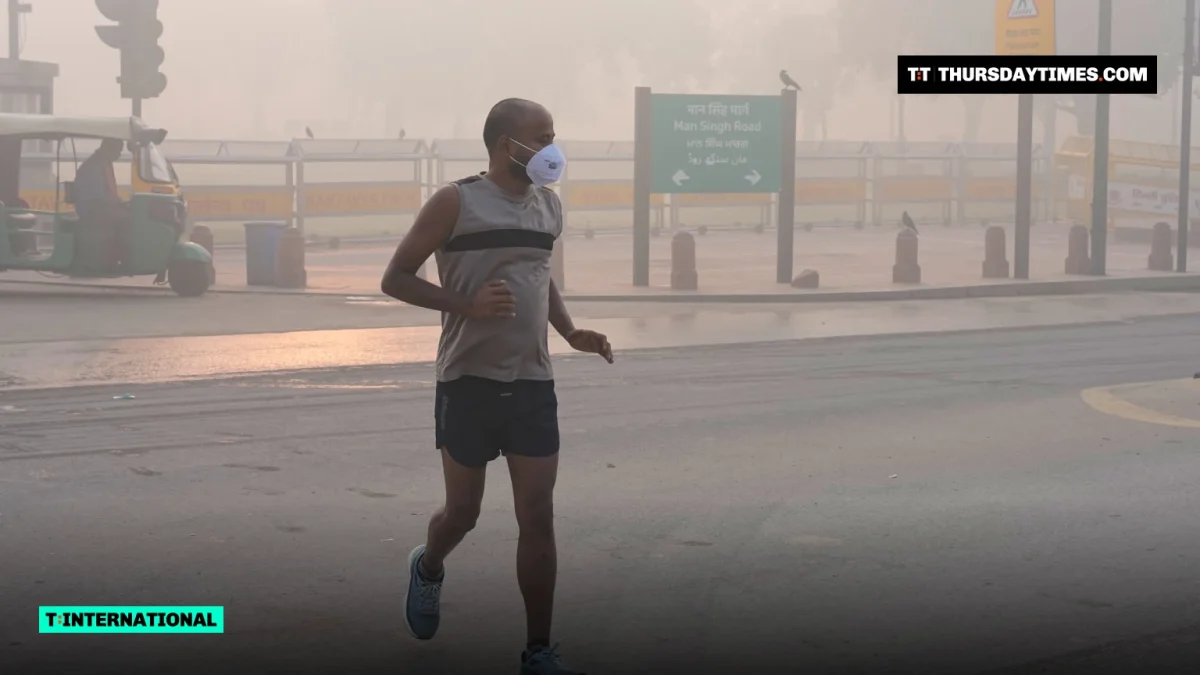
The pictures showed the capital at one of its worst moments of the year. Fireworks went off across the city on Diwali night despite a ban, and by Monday morning a grey blanket had settled over roads, parks, and monuments. Pollution monitors in parts of the city maxed out, and fine-particle levels reached about 66 times the World Health Organization’s limit.
Delhi’s air has become a political fight in its own right. Opposition parties have accused the authorities of playing down the figures, which the pollution regulator denies. Pictures like Chattopadhyay’s, of tombs and highways swallowed by haze, are among the most widely shared evidence of how bad the air gets each winter.