SYDNEY (The Thursday Times) — Usman Khawaja has refused to say which of his former Australia team-mates knew about the 2018 ball-tampering plot, a day after Cricket Australia ruled out reopening its investigation into the scandal his new memoir has revived.
The Pakistan-born former opener, who retired from Test cricket in January, said in a television interview that he would not be responsible for a “witch hunt” against individual players. Pressed on whether Pat Cummins, Australia’s Test captain since 2021, had known about the plan, he said: “I’m not going to answer that.”
“This has never been a witch hunt for me. It’s only been those three guys who’ve had to cop this flak for a long time,” Khawaja said, referring to Steve Smith, David Warner, and Cameron Bancroft, the only players punished after Bancroft was caught using sandpaper on the ball at Newlands in Cape Town.
Warner backs him, Starc and Cricket Australia do not
In his autobiography, Sabr, released on Tuesday, Khawaja writes that the whole team was aware of the tampering. He says sandpaper had already been used on the ball in the dressing room during the previous Test in Port Elizabeth, and that a member of the coaching staff encouraged Bancroft to step up what he was doing.
Smith and Warner, then captain and vice-captain, were banned for a year and Bancroft for nine months. A Cricket Australia inquiry found that the bowlers were unaware of the plan. Cummins, Mitchell Starc, Josh Hazlewood, and Nathan Lyon, who bowled in Cape Town and remain fixtures in the Test side, said in a joint statement in 2021 that they “did not know a foreign substance was taken on to the field”.
Warner has thrown his weight behind Khawaja, saying his account was “100% accurate” and calling the original investigation “rushed and botched”. Khawaja says he was never asked to give evidence to the inquiry.
Starc became the first of the bowlers to respond on Tuesday. “We weren’t aware anything was taken on to the field to be tampered with. We saw [the sandpaper] on the big screen in Cape Town,” he said, adding that he had not read the book and did not plan to.
Todd Greenberg, Cricket Australia’s chief executive, said in a radio interview that there was no “compelling reason” to reopen the case, even though parts of the book contradict other accounts. “You end up at the same intersection where one person’s version of events contradicts the others,” he said.
Book tour ‘adjustments’
Khawaja’s publisher denied reports that he had pulled out of his promotional tour, saying the tour was “100% still going ahead” but that there had been “adjustments” to the schedule this week. Khawaja has also rejected suggestions that he is cashing in on the scandal, saying he does not need the money.
He has said he wanted to go public days after the 2018 bans, but Smith talked him out of it because he wanted to take the blame himself. “I’m hoping other people will come up and talk about it honestly,” Khawaja said. “All I’ve ever wanted is for us to take accountability as a team.”
The memoir also says Khawaja was racially abused by a Marylebone Cricket Club member in the Long Room at Lord’s during the 2023 Ashes, after Jonny Bairstow’s contested stumping. The club expelled one member and suspended two others at the time.
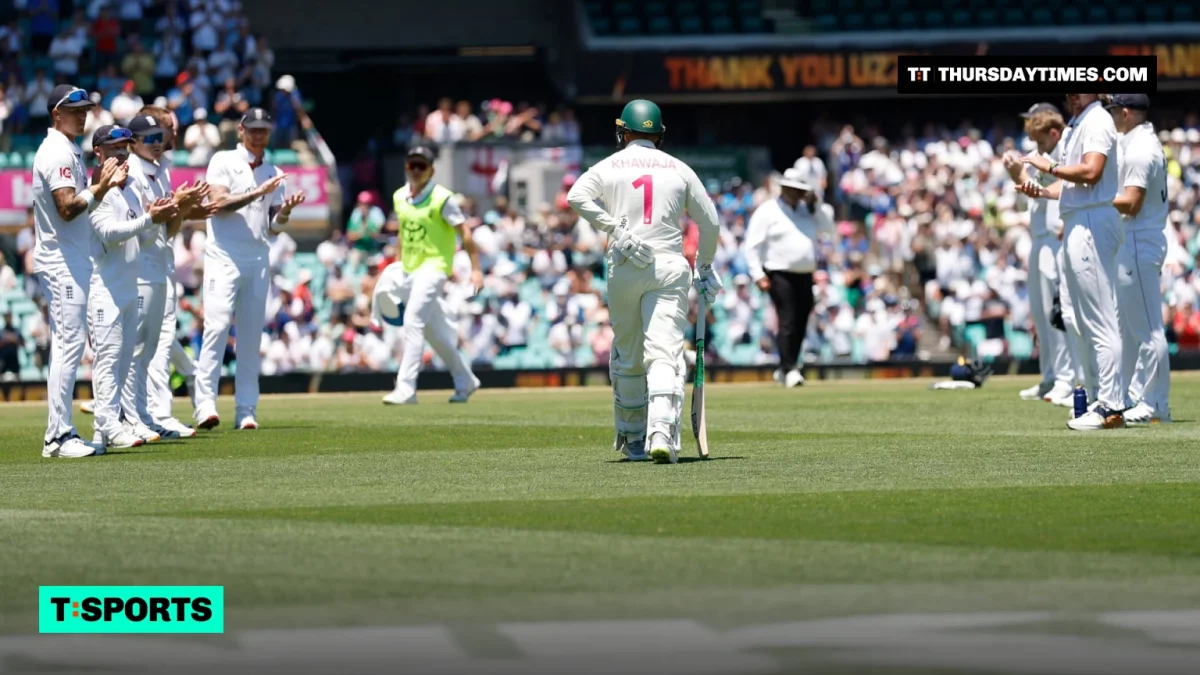
Khawaja was born in Islamabad and moved to Australia at the age of four. He scored 6,229 runs in 88 Tests, the last of them the Ashes Test at the Sydney Cricket Ground in January, where England’s players formed a guard of honour as he walked out.