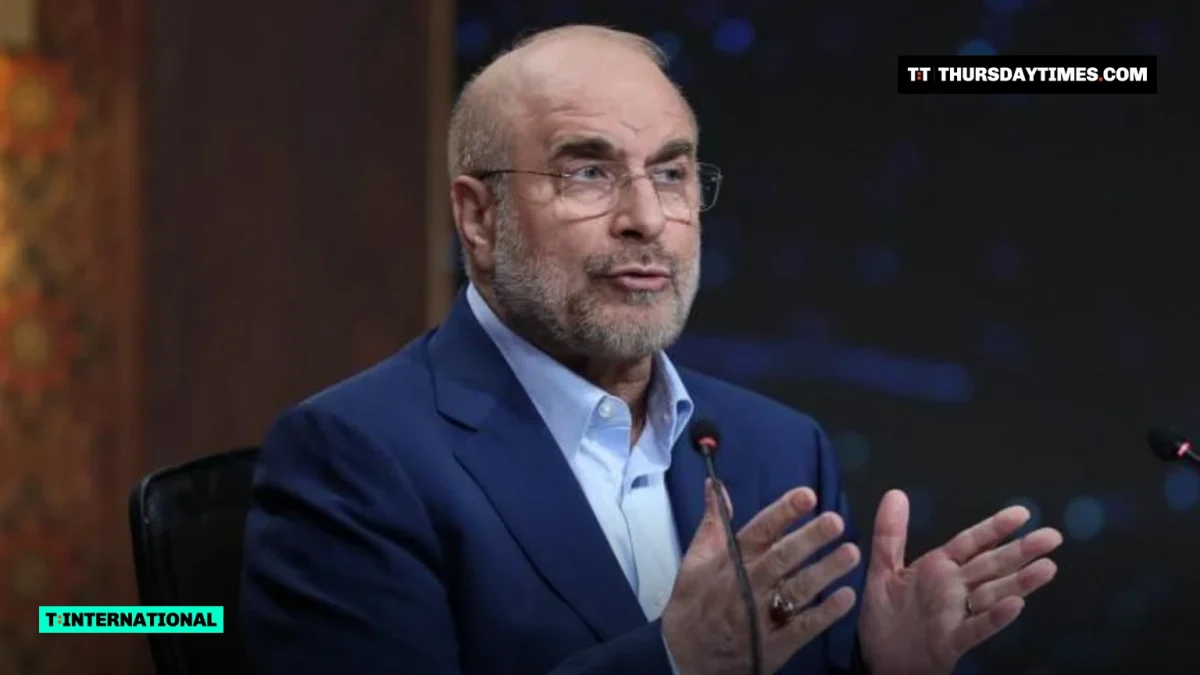
TEHRAN (The Thursday Times) — The Strait of Hormuz will “never return” to the way it was before the war, Iran’s parliament speaker and chief negotiator, Mohammad Bagher Ghalibaf, said in a television interview published on Wednesday.
Ghalibaf said Iran and Oman had reached an understanding to oversee the waterway, through which a large share of the world’s oil passes, as part of Tehran’s proposal to end the eight-month conflict. “There are no free waters there, and the 1982 convention does not apply to the strait,” he said, referring to the UN Convention on the Law of the Sea. “The regulations within the Strait of Hormuz are governed by the laws of the two littoral states that border it.”
The Islamabad memorandum
Ghalibaf said Tehran had sent Washington a clear response through a Qatari mediator setting out its seven conditions for peace talks, and was waiting for an official reply. The conditions include lifting the US naval blockade and sanctions, releasing Iran’s frozen funds, ending the fighting on all fronts, and an explicit declaration that the war is over.
He said the demands were part of the memorandum of understanding signed in Islamabad in June, and had to be implemented before Iran would enter negotiations with the United States. Pakistan hosted the talks that produced that memorandum, and its channel has stayed open since.
“If America limits itself to what has been agreed upon without making excessive demands or engaging in behaviour that breeds distrust, then, naturally, reaching an agreement is possible,” Ghalibaf said. “What stands in the way of an agreement is our lack of trust in the United States.”
Moscow and Yemen
Ghalibaf said US officials had asked Russian President Vladimir Putin to mediate direct talks with Tehran. His remarks came the same day as a US media report that Vice President JD Vance is weighing face-to-face talks with Iran’s security chief, Mohsen Rezaei.
He warned that any new US attack on Iran would end in another defeat for President Donald Trump, and said Iran wanted to move beyond a state of “no war and no peace” by building a lasting deterrent, including military capabilities.
On the fighting in Yemen between government forces backed by Saudi Arabia and the Houthis, Ghalibaf said “no one should interfere”, but that Iran would help resolve the conflict if both the Yemeni government and Saudi Arabia asked.
Oman has not publicly commented on the understanding Ghalibaf described. Iran said on Tuesday it had struck ship navigation aids on Oman’s Didamar island in the strait, a claim an Omani official denied.