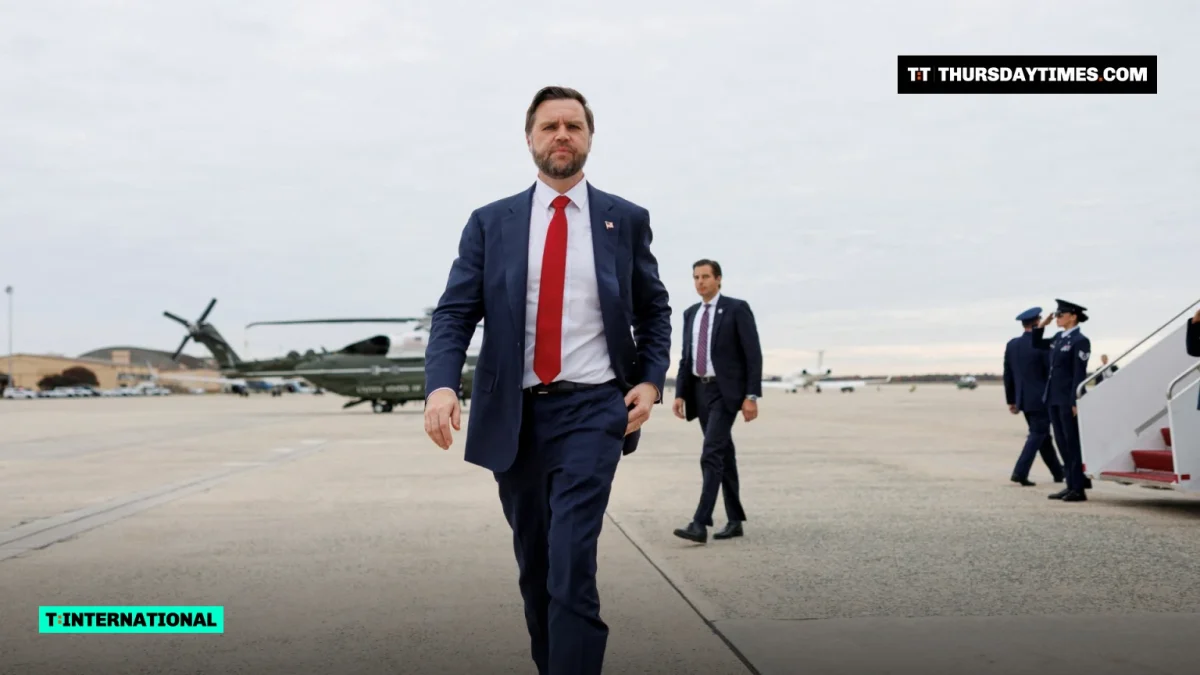
WASHINGTON (The Thursday Times) — US Vice President JD Vance is considering face-to-face talks with Mohsen Rezaei, the secretary of Iran’s Supreme National Security Council, in a push to end the war, according to a US media report on Wednesday that cited people familiar with the matter.
Vance wrote to Rezaei in October asking for a meeting, the report said. President Donald Trump has signalled to aides and foreign counterparts that he is open to his vice president taking the lead in renewed negotiations with Tehran.
Discussions about a meeting are at an early stage and no date has been set, according to the report. Washington and Tehran are communicating through mediators and regional allies about the next steps.
Doubts over the June deal
The report also said Trump had privately questioned the June framework agreement, which was negotiated with Vance’s involvement, arguing that it gave Iran time to recover and earn oil revenue before the United States imposed a naval blockade.
A White House official rejected the suggestion that Trump had second thoughts about the agreement, saying the negotiators had acted in good faith.
Vance has publicly linked the war to the Republicans’ poor showing in last week’s midterm elections, and the administration is under growing political pressure to find a way out of the conflict. Leading the talks would carry a risk for him: he could become the public face of a failure, though a deal could strengthen his standing.
Tehran’s hard line
Rezaei, a former commander of the Islamic Revolutionary Guard Corps, said this week that none of Iran’s enriched uranium would leave the country and that Tehran had told Russia as much. On Tuesday he said the Strait of Hormuz would stay closed until the United States met seven conditions, and dismissed reports of negotiations with Washington as “a pure lie”.
The United States and Israel launched their offensive against Iran on February 28. A ceasefire followed in April, and the two sides signed a framework agreement in June aimed at a full peace deal, but negotiations have yet to produce a final settlement.