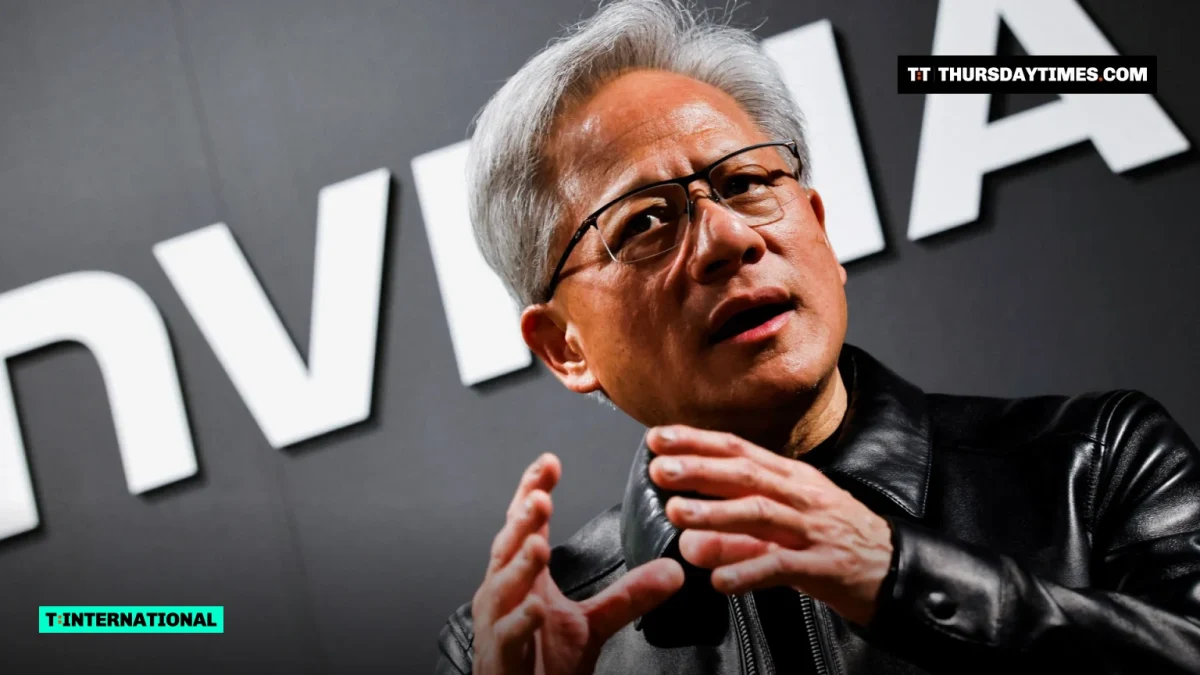
SANTA CLARA (The Thursday Times) — Nvidia’s board is preparing to remove co-founder and chief executive Jensen Huang, according to several US media reports citing people familiar with the matter, sending the chipmaker’s shares down about 8% in after-hours trading on Wednesday.
The board could meet within days to decide his future, the reports said, and is working with an outside firm to identify possible successors while considering an interim chief executive. Nvidia did not immediately comment.
Huang, 63, co-founded Nvidia in 1993 and turned it from a maker of gaming graphics cards into the dominant supplier of chips for artificial intelligence, now worth roughly $4 trillion.
The spy allegations
The company has been in turmoil since reports last week that US intelligence agencies believed Huang had been the target of a Chinese espionage effort through his relationship with Alice Huang, a former executive of Singapore-based Megaspeed International, which bought large amounts of Nvidia hardware. She is not related to him.
In a message to staff at the weekend, Huang said he had been “unfaithful to my wife” and apologised to his family, without naming the woman. The board then opened an independent investigation, saying it had no reason to believe that national security or company secrets had been compromised.
A US newspaper reported on Wednesday that Huang had also had a relationship with a senior Nvidia executive who reported to him.
China’s foreign ministry has called the spy allegations “entirely baseless” and a smear. Megaspeed has denied any involvement in illegal chip transfers.
A company built around one man
Shareholders filed a proposed class action on Monday accusing Nvidia and Huang of concealing the relationship and the risks it posed. Nvidia has no board chair and no chief operating officer, and has not set out a public succession plan; chief financial officer Colette Kress has been mentioned as a possible interim leader.
Huang is close to President Donald Trump, who late last year allowed Nvidia to sell its H200 chips to approved customers in China, with the US government taking a 25% cut. The affair has sharpened the fight over AI chips between Washington and Beijing.