MADRID (The Thursday Times) — Spain goes to the polls on 29 November in its sixth general election in 11 years, and for the first time since the end of the Franco dictatorship the far-right Vox party could end up inside a national government.
Prime Minister Pedro Sánchez called the snap vote on 5 October after the conservative People’s Party (PP), Vox, and the Catalan party Junts voted down his government’s emergency measures on housing. The 15-day campaign opened on 13 November, and Sánchez has been selling the contest as a choice between a progressive government and a right that would roll back social gains.
What the polls say
Polls put the PP, led by Alberto Núñez Feijóo, in first place with roughly 130 of the 350 seats in congress, ahead of Sánchez’s Socialists on about 110 and Vox on about 63. A party needs 176 seats for an outright majority, so the PP would almost certainly need Vox to govern. The two parties already run four Spanish regions together.
Vox has made what it calls “national priority” a central demand, which would give Spaniards precedence over foreigners for subsidised housing, social rentals, and benefits. Feijóo says any such policy must stay within the constitution and European treaties, and he is promising “a return to decency” in government.
Housing and a rail crash
Housing has dominated the run-up. Millions of people joined Spain’s first general strike in 14 years on 11 November to protest soaring rents and evictions, and police made arrests after clashes in some cities.
The campaign has also been shadowed by the high-speed train crash on 28 October that killed 69 people. Transport Minister Óscar Puente resigned days later, a political blow to Sánchez, whose minority coalition has struggled to pass laws and has not passed a budget since 2023.
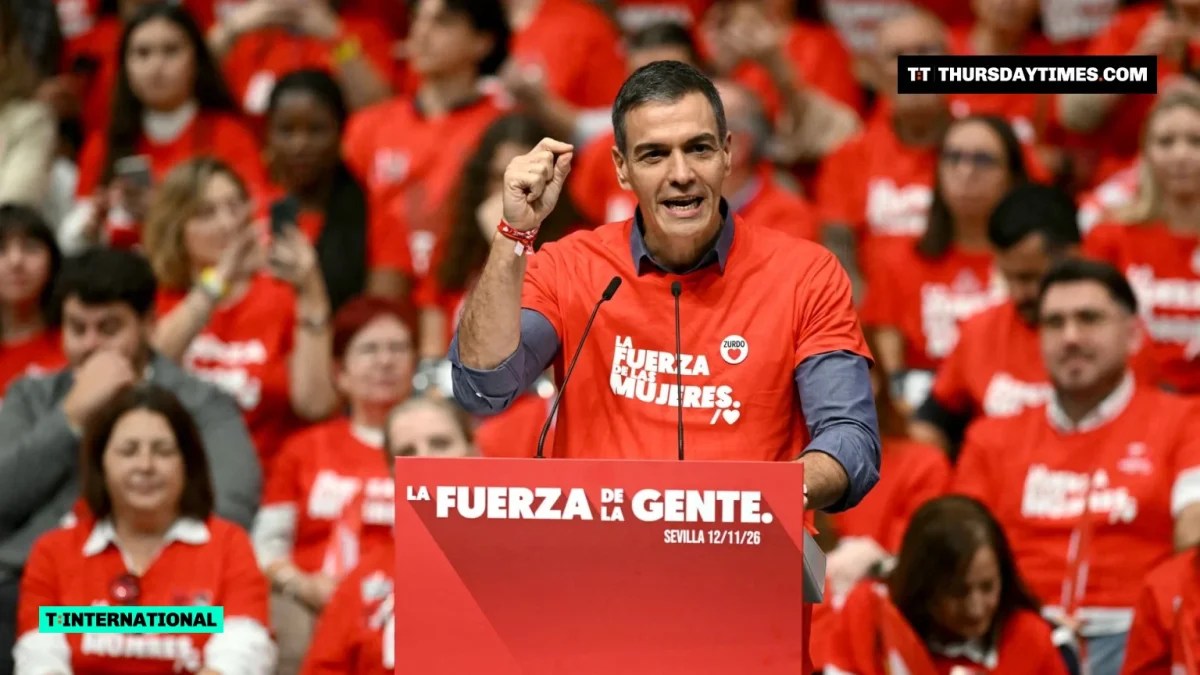
Sánchez told a rally in Seville last week that voters must decide whether to join what he called the far-right wave or keep Spain open and socially just. His opponents say the vote is a verdict on his government and on the corruption allegations that have dogged his circle.