Before the Partition of India in 1947, a third of the people living in Lahore, Pakistan, a city renowned as a great cultural centre, were Hindus and Sikhs. Today only 0.2% of Lahore’s population belong to these two religions.
This means that some of them were killed, and the rest fled to India out of fear for their lives, in or about 1947.
Despite this great tragedy, Lahore still gives me hope because of my journalist friend Sajjad Azhar Pirzada, who lives in Lahore, and other secular-minded people like him who live in Pakistan.
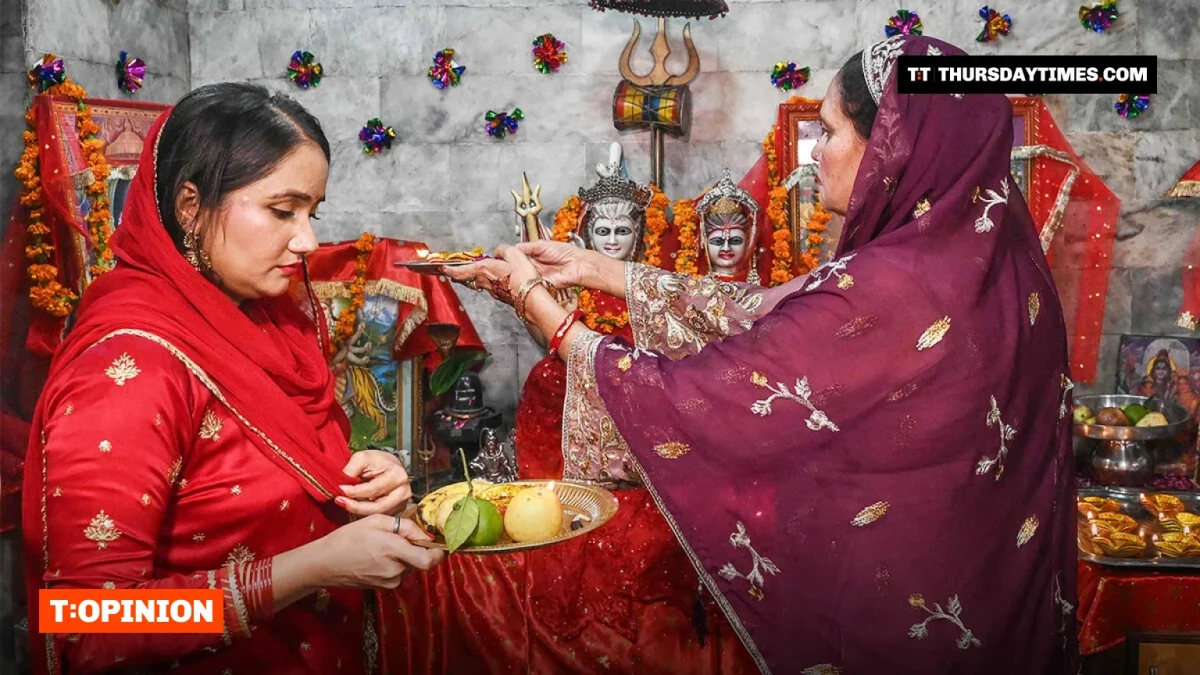
Sajjad regularly visits the Krishna Mandir, a Hindu temple dedicated to the Hindu god Krishna, located on Ravi Road, opposite the Timber Market in Lahore, on Holi, Diwali, and other Hindu religious occasions. In the contemporary era, it is one of two functional Hindu temples in Lahore, the other being the Valmiki MandirLahore’s other working Hindu temple, near Anarkali, dedicated to the sage Valmiki..
This visit by Sajjad, a Muslim, to a Hindu temple does not mean that he has renounced his religion. It represents his respect and brotherhood with his Hindu brothers and sisters, just as my one-day rozaA fast from dawn to sunset, kept by Muslims during the month of Ramadan. during the Muslim holy month of Ramadan (which I have kept for over 30 years) does not imply that I have renounced my Hindu religion, but represents my respect and brotherhood with my Muslim brothers and sisters.
Sajjad’s Hindu friend, Pandit Kashi Ram, is the head priest of the Krishna temple in Lahore. Whenever Sajjad visits the temple (often accompanied by his Muslim friends), Pandit Kashi Ram applies a tikaA mark, usually of red or yellow paste, placed on the forehead as a blessing. on Sajjad’s forehead and gives him prasadFood first offered to a deity and then shared with worshippers as a blessing. to eat.
This year, too, on the occasion of Diwali on 8 November, Sajjad and his Muslim friends visited the Krishna temple.
In an interview by the prominent Pakistani newspaper Nawa-i-Waqt, Sajjad mentioned that Pandit Kashi Ram spoke warmly about the brotherhood and protection he and his family had experienced from their Muslim neighbours.
For Sajjad, a senior Pakistani journalist, anchor, and columnist, his association with Pandit Kashi Ram is rooted in an old friendship and a shared belief in humanity, mutual respect, and interfaith understanding.
As a journalist who values dialogue between different religious communities, Sajjad believes that friendship, respect, and human dignity transcend religious identities. His friendship with Pandit Kashi Ram reflects this belief and represents the softer, more inclusive face of Pakistani society.
People of different faiths need not merely tolerate one another; they can build genuine friendships based on trust, affection, and shared humanity.
The relationship is a reminder that people of different faiths need not merely tolerate one another; they can build genuine friendships based on trust, affection, and shared humanity.
Sajjad wrote on his Facebook page on the occasion of Diwali on 8 November 2026:
Happy Diwali to all my dear friends!
India ke doston, zara dekhiye ki Pakistan mein Hindu aur Muslim kis tarah mohabbat, khushi aur bhaicharay ke saath rehte hain.
Aaj Lahore ke Krishna Mandir mein Diwali ki khushiyon mein Chief Guest ke taur par shirkat ka mauqa mila. Is khoobsurat taqreeb mein mere saath Pakistan Evacuee Trust Property Board ke officers Additional Secretary Nasir Mushtaq, DS Syed Saadat, senior journalist Naeem Hassan Butt (Nawa-i-Waqt), Pandit Kashi Ram, aur Amarnath Randhawa bhi maujood the.
Yeh sirf Diwali ki khushi mein shirkat nahi, balki mohabbat, insaaniyat, mazhabi rawadari aur interfaith harmony ka aik khoobsurat paigham hai.
Sajjad Pirzada ki pehchaan nafrat nahi, mohabbat hai. Hamaara paigham taqseem nahi, ittihad hai. Yeh paigham sarhadon, mazhabon aur dilon tak har jagah pohanchna chaahiye.
Mohabbat zindabad, insaniyat zindabad.
An English translation of what is quoted above is given below:
My Indian friends, please see how Hindus and Muslims live in Pakistan today, with love and brotherhood.
Today I joined in the Diwali celebrations as the Chief Guest in Krishna temple, Lahore. On this beautiful festive occasion, I was joined in the temple by the officers of the Pakistan Evacuee Trust Property BoardThe federal body that manages properties left behind by those who migrated in 1947, including Hindu temples and Sikh gurdwaras., Additional Secretary Nasir Mushtaq, Deputy Secretary Syed Saadat, senior journalist Naeem Hassan Butt of the journal Nawa-i-Waqt, along with Pandit Kashi Ram and Amarnath Randhawa.
This is not just joining in celebration of Diwali, it is also sending a message of love, humanity, and interfaith harmony.
Sajjad Pirzada does not represent hatred but love. The message of me and my Muslim friends who visited the Hindu temple is not division but unity. This message should cross the border (between Pakistan and India), between religions, and will reach the hearts of all.
Long live love and humanitarianism.
Long live Sajjad Azhar Pirzada and his like-minded friends!