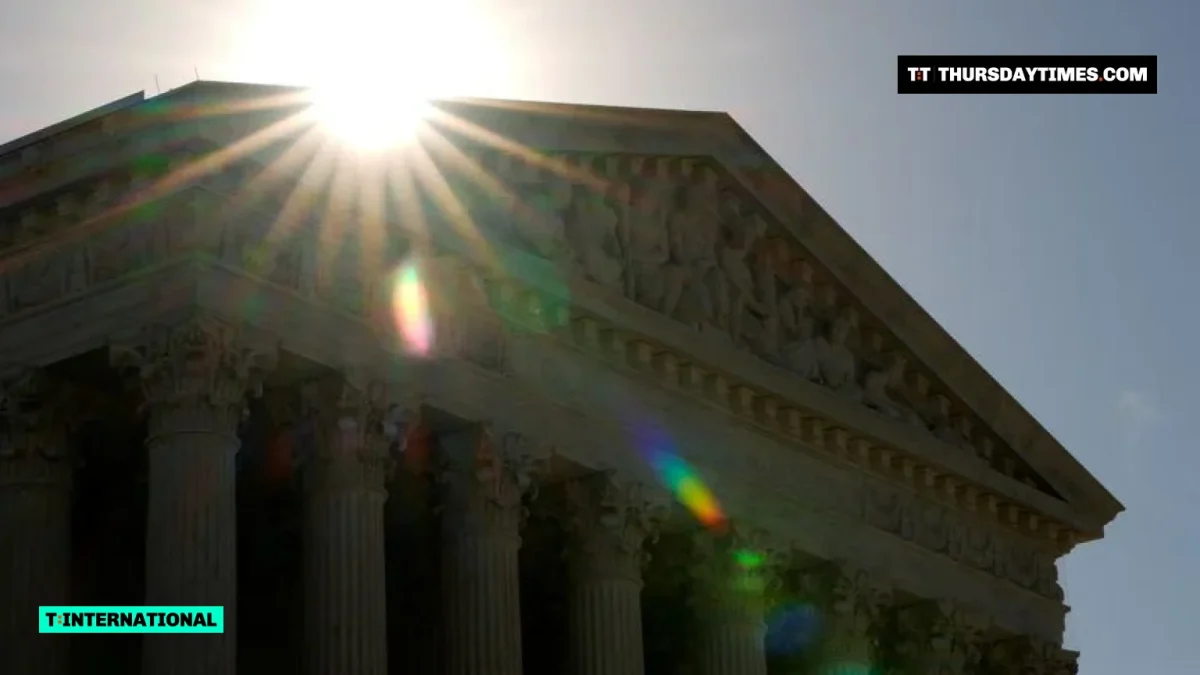
WASHINGTON (The Thursday Times) — The US Supreme Court on Monday declined to hear the Trump administration’s appeal over its abrupt cancellation of research grants linked to diversity, equity and inclusion (DEI), leaving in place lower-court rulings that the cuts violated the free speech rights of University of California researchers.
After returning to office in January 2025, President Donald Trump signed executive orders telling federal agencies to make sure funding matched his opposition to DEI programmes, and to policies on climate change and transgender rights. The grants at issue came from the National Science Foundation and the National Endowment for the Humanities. In all, the administration tried to end $324 million in funding to University of California institutions, although some of it has since resumed.
The researchers sued, saying the grants were cut on the basis of keyword searches for words such as “diversity” and “climate change”. A federal judge and the 9th US Circuit Court of Appeals agreed that the terminations likely breached the First Amendment because they suppressed viewpoints the government disagreed with. The appeals court said that where the government sets up a subsidy programme, it may not discriminate between speakers within it to suppress viewpoints it dislikes.
Among the cancelled projects was a three-year grant to study how to reduce the health risks of wildfire smoke in communities of color and low-income communities, and another aimed at advancing racial equity in outdoor and environmental science education.
The Justice Department told the justices that letting the ruling stand would create “a dangerous precedent” that would “hamstring every future administration” when it chooses which private projects to subsidise. It argued that a new administration may lawfully change spending priorities, as the Biden administration had done in favouring projects on racial equality in STEM education.
The researchers’ lawyers said the difference was that the funding had already been approved. “It is one thing for Congress to set priorities in funding and quite another for the President to terminate already approved funding because of the viewpoints perceived to be expressed in the research,” they wrote, adding that the cancellations threatened thousands of scientists with lab closures and layoffs.
The ruling does not settle everything. In a separate part of the case that was not before the Supreme Court, the appeals court held that the plaintiffs would have to file a separate suit in the Court of Federal Claims if they want to recover lost money.