PASADENA (The Thursday Times) — NASA’s Voyager 1 is due to become the first human-made object to travel one light-day from Earth on Wednesday 18 November, when it reaches a distance of about 26 billion kilometres (16 billion miles). The mark is expected at 10:16 GMT, or 3:16pm Pakistan time.
A light-day is the distance light covers in 24 hours. At that range a radio signal takes a full day to reach the spacecraft and another day to come back, so any message sent to Voyager 1 gets its reply two days later. “If you want to say ‘hello’ to Voyager, you send your message and then you go home and you wait two days before you finally get a response,” said Suzanne Dodd, the mission’s project manager at NASA’s Jet Propulsion Laboratory.
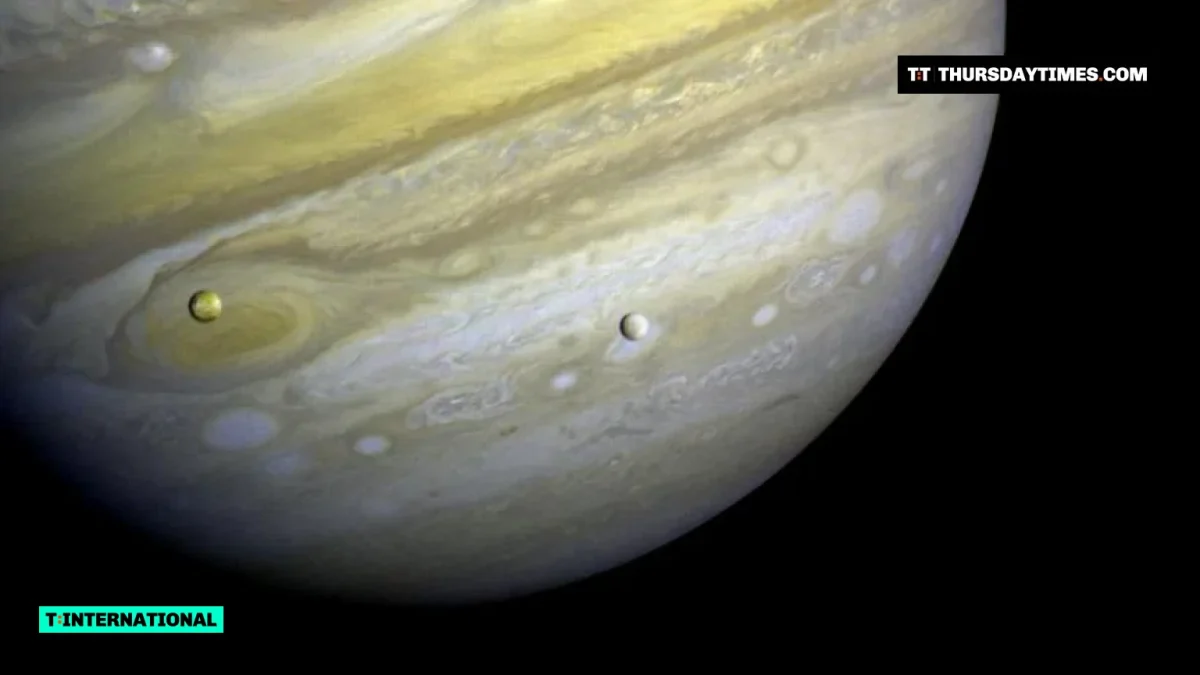
The probe was launched on 5 September 1977 to study the outer planets. It flew past Jupiter and Saturn, and used their gravity to gain speed. It now travels at about 61,000 kilometres an hour. In 2012 it became the first human-made object to enter interstellar space, and in 1990 it took the only portrait of the solar system from the outside, including the “Pale Blue Dot” image of Earth.
The spacecraft is ageing. Only two of its 10 instruments are still switched on, a power-saving measure that helps it keep going. In October it went quiet for 48 hours before engineers recovered it. Nicky Fox, who leads NASA’s Science Mission Directorate, said she felt a “pit in the stomach” when she heard the news. Kareem Badaruddin, the mission manager at the laboratory, said Voyager 1 is “still working great, sending back data from a region of space no other human-made craft has ever explored”.
Its twin, Voyager 2, was launched 16 days earlier but took a different path. It reached interstellar space in 2018 and is about nine years from its own light-day. Voyager 1 will mark its 50th anniversary late next year. NASA has invited the public to join online activities to mark the milestone.