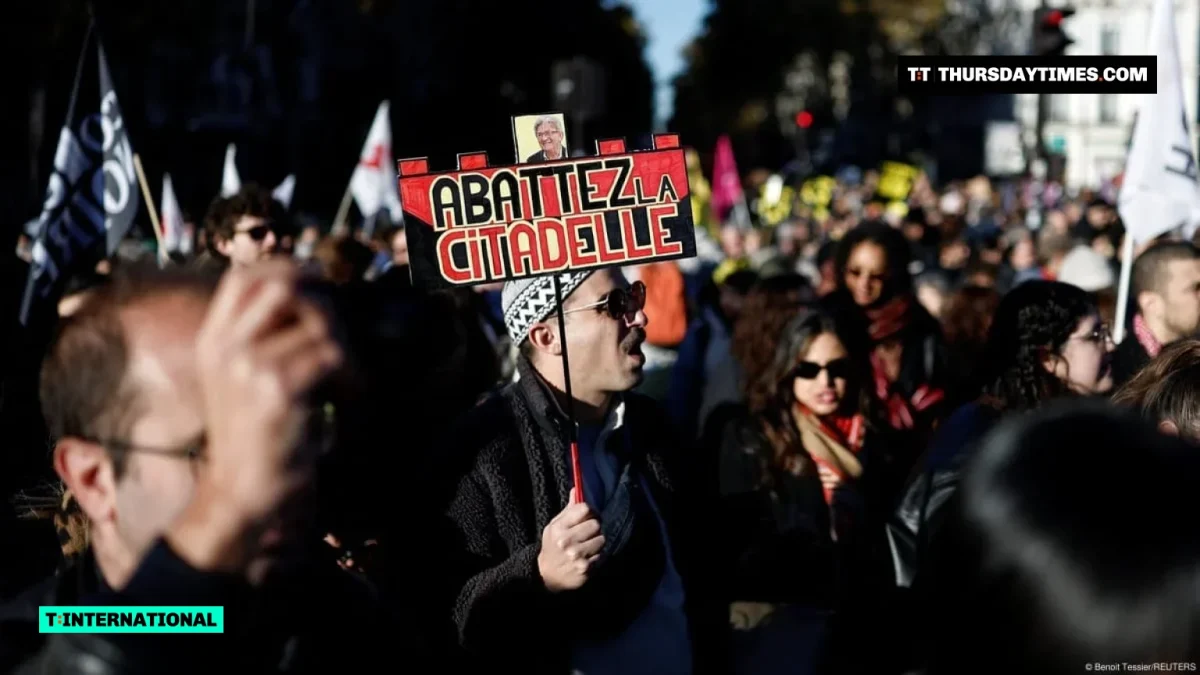
PARIS (The Thursday Times) — France braced for fresh disruption on Tuesday, 17 November, as unions called a nationwide strike by public sector workers to press for pay rises, after talks with the government last week failed to calm tensions.
France’s 5.8 million public sector employees were called out after a meeting with Prime Minister Sébastien Lecornu on Friday failed to satisfy unions. They have been pushing for across-the-board pay rises since the government raised the minimum wage for private sector workers last week. More unions joined the strike call after the meeting, including the CFDT, France’s largest, while rail unions also called a walkout at the national railway SNCF.
It is the third united call for strikes and protests in the public sector since September. A previous day of action on 5 November drew hundreds of thousands of marchers, and police fired tear gas as clashes broke out in some cities.
In Paris, the main rally was due to start at 2:00 pm (1300 GMT), with dozens of other gatherings planned across the country. A police source said 40,000 to 80,000 people were expected to demonstrate in the capital and 220,000 to 300,000 nationwide. Youth unions and Yellow Vest activists also planned to join.
What the unions want
Public sector staff want the government to unfreeze the index point used to calculate civil servants’ basic salaries. The unions say public servants have lost 16 per cent of their purchasing power since 2017. The draft budget rules out a general pay rise for the fourth year in a row, and the government argues that a 1 per cent rise in the index point would cost the state €2.4 billion while the deficit is expected to reach 5.4 per cent of GDP this year.
The government has announced a 1.6 per cent rise in the minimum wage, an extra €24 a month from 1 December. Sophie Binet, who leads the CGT, called the increase “crumbs” and said her union wants about €150 more a month and pay indexed to inflation. After Friday’s meeting, Lecornu announced a month of talks on five areas, including emergency measures for the lowest-paid, and said he would meet the unions again on 11 December. The CFDT said the proposals “do not represent any real progress”.
Weeks of unrest
The protests have rocked the EU’s second-largest economy for more than a month, with high school blockades and cost-of-living demonstrations, and with presidential elections due next year. On Saturday, 106,000 people marched across France, the lowest turnout in recent weeks, according to the Interior Ministry, and 219 people were detained. Most rallies have been peaceful, though there has been fringe violence and accusations of police brutality.
Authorities have restricted undeclared gatherings near several schools and universities in Paris and temporarily banned the sale of firecrackers. The unrest comes as France races to adopt its 2027 budget under pressure to cut the deficit.