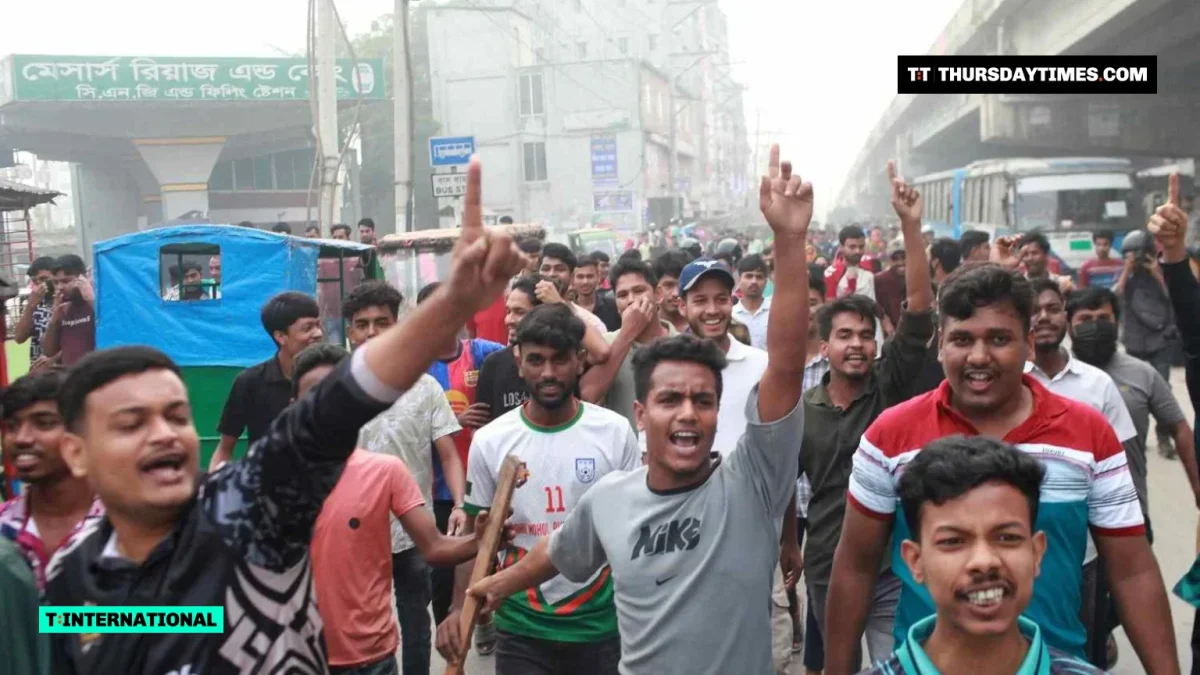
DHAKA (The Thursday Times) — Bangladeshi police fired tear gas and stun grenades on Tuesday at thousands of garment workers who took to the streets after a key wage board meeting was postponed. Protesters threw bricks, set vehicles on fire, and blocked the main highway between Dhaka and Mymensingh as the demonstrations turned violent.
The unrest, centred on Gazipur on the outskirts of the capital, also spread to Savar and Ashulia, according to local reports. Those reports said the wage board meeting was put off because a workers’ representative did not attend.
Workers are demanding a minimum monthly wage of 30,000 taka ($240), a rise of 140 per cent on the current 12,500 taka, as food, housing, transport, and healthcare costs climb. “The owners seem unwilling to meet our salary demands. They are already dragging their feet,” said Khanom, a 24-year-old worker who gave only one name.
Industry sources say about 500 of the country’s 4,500 garment factories are now shut, which has added to the anger among workers. The unrest began in October and has steadily widened, as The Thursday Times reported on Monday when nearly 150 factories had closed.
In a joint statement, the Bangladesh Garment Manufacturers and Exporters Association and the Bangladesh Knitwear Manufacturers and Exporters Association called for wage negotiations to resume as soon as possible.
Bangladesh is the world’s second-biggest garment exporter after China. The industry earns about $38 billion a year, employs more than four million people, and supplies major international brands. The disruption comes in the run-up to Christmas, the busiest export period of the year.