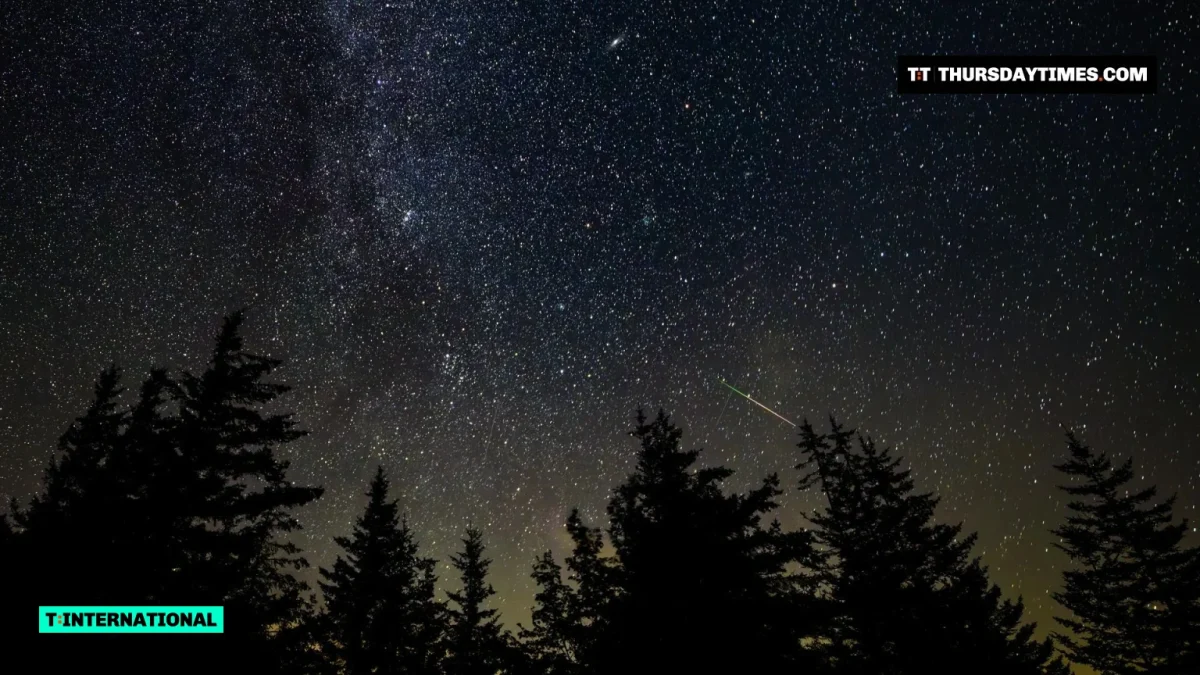
ISLAMABAD (The Thursday Times) — The Leonid meteor shower reaches its peak overnight on 17–18 November, with the International Meteor Organization expecting the maximum at about 23:45 GMT on Tuesday, which is 4:45am on Wednesday in Pakistan. Under dark, clear skies, observers can expect up to 15 meteors an hour.
The rate is modest, but the Leonids are among the fastest meteors of the year, hitting the atmosphere at about 71 kilometres a second. That speed makes them bright and brief. The shower is known for fireballs, unusually bright meteors caused by larger fragments, and for streaks that can leave glowing trails hanging in the sky for a few seconds.
Where to look, and when
The meteors appear to radiate from the constellation Leo, the lion, which rises in the east around midnight and climbs higher as dawn approaches. The best viewing is between midnight and first light, but meteors can appear in any part of the sky, so a wide, open view matters more than staring at one spot.
The moon will be about half full on the peak night and sets around midnight in many places, leaving darker skies for the later hours. Astronomers advise finding a spot away from city lights and giving your eyes about 20 minutes to adjust to the dark. Sky-watching guides also point to Mars and Jupiter, which will form a bright pair just in front of Leo’s chest.
The shower can be seen from both hemispheres, though conditions are generally better in the north, where Leo climbs higher. In the southern hemisphere, the hour or two before dawn is the best chance.
A shower with a history
The Leonids come from dust shed by comet 55P/Tempel-Tuttle, which orbits the sun about every 33 years. Earth passes through the comet’s debris trail every November, and the particles burn up as they strike the upper atmosphere.
When the comet has passed recently, the shower can turn into a storm of 1,000 or more meteors an hour. The 1833 storm over North America helped scientists work out where meteors come from, and in 1966 thousands of meteors a minute fell for about 15 minutes. The most recent storms came in 1999, 2001, and 2002. The comet next swings close to the sun in 2031, so this year’s display will be far quieter.