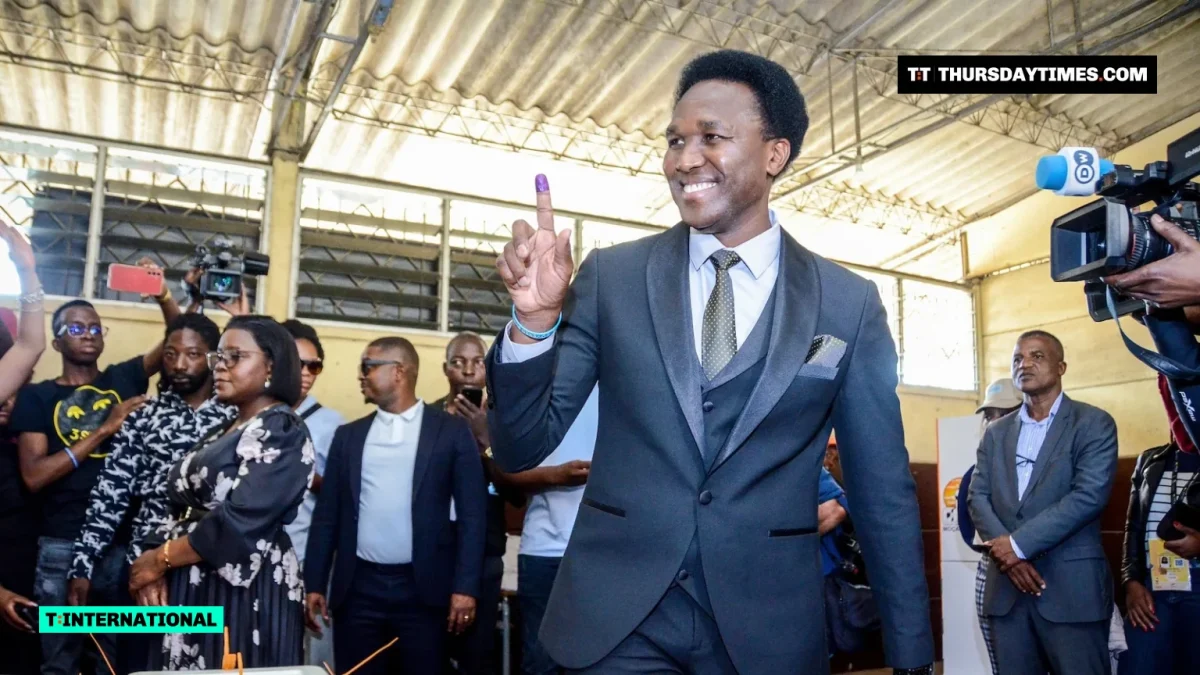
MAPUTO (The Thursday Times) — Mozambican opposition leader Venâncio Mondlane went on trial on Tuesday at the Supreme Court in Maputo over the protests that followed the disputed 2024 election, with a heavy police presence around the capital and the court. Police have appealed to citizens to follow the proceedings calmly.
Mondlane, who came second in the October 2024 presidential vote, faces five counts, including incitement to collective disobedience and incitement to terrorism. He could face up to 24 years in prison if convicted on the most serious charge. He denies wrongdoing, saying his calls for demonstrations were meant to demand electoral transparency and not to encourage violence.
The indictment rests largely on live broadcasts on social media in which he urged protests, strikes, and civil disobedience after the vote. Prosecutors allege a link between those calls and the violence that followed.
A disputed election
Daniel Chapo of the ruling Frelimo party, which has governed Mozambique since independence in 1975, was declared the winner and sworn in as president in January 2025. Mondlane never accepted the result. Months of protests, strikes, and road blockades followed. Amnesty International, citing local civil society groups, said more than 300 people were killed, and rights groups accused security forces of using excessive force. European Union election observers also reported irregularities.
Questions over the process
Mondlane’s party, Anamola, calls the prosecution politically motivated and has demanded an independent and transparent process. His immunity as a member of the Council of State was suspended so that the case could proceed, a decision he has called null and void. The Supreme Court refused a defence request to broadcast the hearing live, saying it could endanger participants and influence witnesses, but the trial is open to the public and journalists.
Chief Justice Adelino Muchanga has said the court will decide on the facts. “The trial is a real test for Mozambique,” said the political analyst Luis Nhachote. “It is an important opportunity to demonstrate that the rule of law applies equally to everyone.” The opening sessions are expected to deal with procedural questions before evidence is heard.