BAGHDAD (The Thursday Times) — Iraq’s ruling Shia alliance failed on Monday night to agree a plan to end the standoff with Kataib Hezbollah at Jurf al-Nasr, leaving Prime Minister Ali al-Zaidi short of political cover days before a withdrawal deadline on Friday, 20 November.
The Coordination Framework, the largest bloc in parliament, held a crisis meeting late on Monday, sources said. Its leaders are split between a negotiated, phased handover of the town and backing al-Zaidi’s plan for a limited military operation. Hadi al-Ameri of the Badr Organisation and Abu Alaa al-Walai of Kataib Sayyid al-Shuhada left the meeting after a heated argument with the prime minister, those sources said.
The deadline
A security source said Kataib Hezbollah has until 8pm on Friday to withdraw, but that this does not mean military action will follow at once, as several options remain open once the deadline lapses. Federal troops are massed outside the town, which lies south of Baghdad and was formerly known as Jurf al-Sakhar. Al-Zaidi asked the alliance to authorise a limited entry, and sources said it refused. If no agreement is reached, the government’s plan is a limited counter-terrorism operation rather than a full assault, one source said.
A phased handover
Former prime minister Nouri al-Maliki, al-Ameri and Humam Hammoudi of the Islamic Supreme Council favour a gradual handover, sources said, and it is seen as the most likely outcome. Under that proposal, Kataib Hezbollah would leave the six oil sites inspected by a government committee, and federal forces and the Atabat brigades, which are linked to the religious authority in Najaf, would take over in stages.
Kataib Hezbollah wants the full handover delayed until 30 June 2027, the deadline for bringing all weapons under state control. Al-Zaidi, who took office in May, is refusing to leave the situation unchanged for that long, the sources said.
The State of Law coalition led by al-Maliki said it rejects any oil smuggling but opposes a slide into armed confrontation. “We reject any form of oil smuggling or tampering with it, and anyone proven to be involved must bear responsibility,” Hisham al-Rikabi, the media director of al-Maliki’s office, wrote on X. “Both sides are our brothers.”
The smuggling inquiry
The standoff grew out of a leaked intelligence report alleging organised oil theft in the area since 2021. An investigative committee confirmed its findings after visiting the town, and nine Babil officials were dismissed and referred to the judiciary. Al-Zaidi has since ordered the army towards the town.
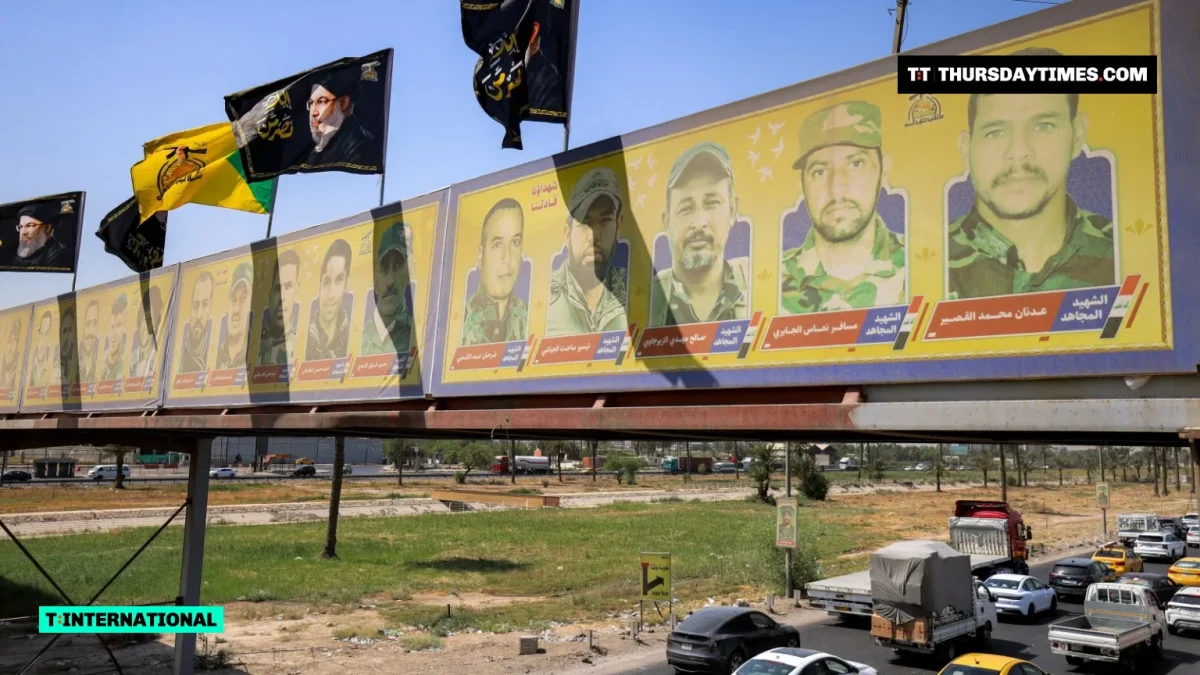
Kataib Hezbollah, which is closely affiliated with Iran’s Revolutionary Guards, denies the allegations. It has published photos of its fighters in the area in full gear, some showing masked drone operators. Opponents of a confrontation within the Framework say any clash, even a limited one, could spread. “At some point it will be expanded and no one can control it,” one source said.