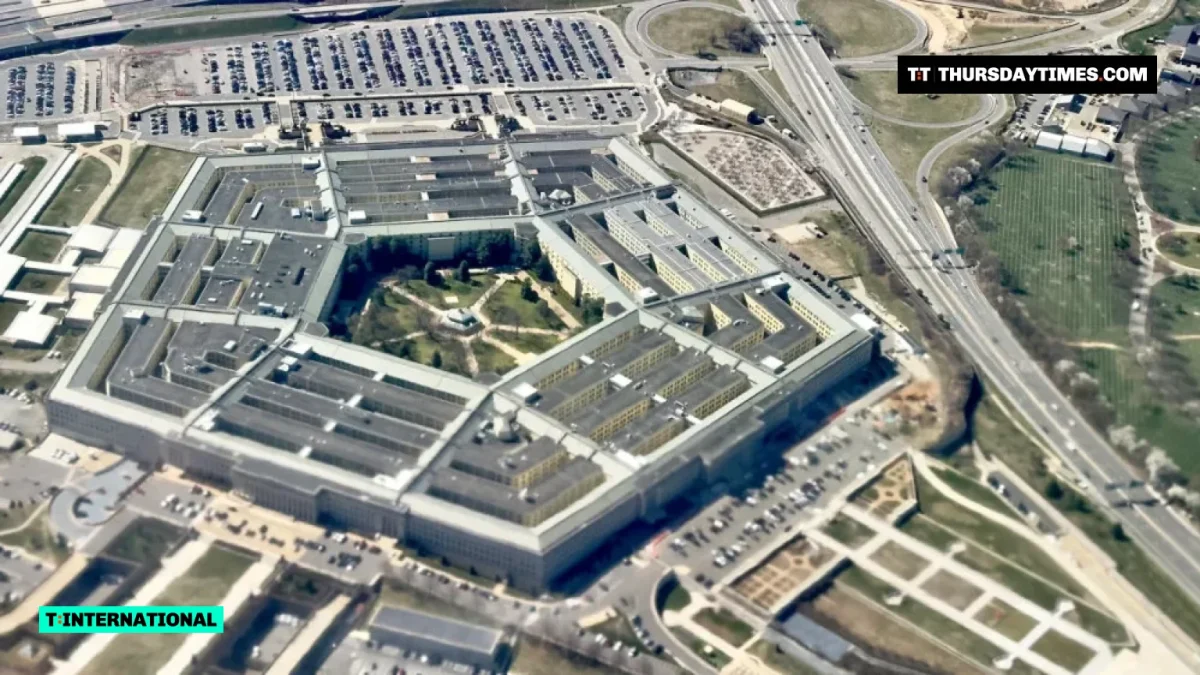
WASHINGTON (The Thursday Times) — The Pentagon failed a financial audit for the ninth consecutive year, according to an inspector general report released on Monday, although a majority of its reporting units passed for the first time.
Jules Hurst, the chief financial officer of the Department of Defense, said an independent auditor found that the financial statements of 14 of the Pentagon’s 25 standalone reporting entities passed in fiscal 2026, which ended in September, up from 11 the year before. Those entities account for 56 percent of the department’s assets and 86 percent of its liabilities.
“For the first time ever, a majority of assets from the department are on clean opinions,” Hurst said.
Old systems, new tools
The Pentagon has struggled with some 149 financial management systems, many of them inadequate and outdated, including technology built on 50-year-old computer code. To complete the audit without relying on those systems, officials drew on 61 core systems in the department’s cloud-based War Data Platform and took statistically significant data samples.
The department is also using artificial intelligence tools from Palantir and xAI, alongside in-house applications, to automate financial reconciliations and documentation. “Passing the audit is ultimately a time problem,” Hurst said, adding that AI allows auditors to test more data.
What comes next
The Pentagon as a whole was first audited in 2018 and has failed every year since. Congress gave it 10 years to pass, a deadline that falls in the fiscal year starting in October 2027. Beginning this year, the department plans to consolidate its 25 separate audit opinions into eight, ahead of seeking a full department-wide opinion in fiscal 2028.
Among the entities that passed for the first time in fiscal 2026 was the Medicare-Eligible Retiree Health Care Fund. The results come as the administration seeks a record $1.5 trillion in national defence spending from Congress, and modernising the financial systems has become a priority as the Pentagon tries to show lawmakers it can be trusted with the money.