HOUSTON (The Thursday Times) — NASA’s Johnson Space Center has marked 65 years as the home of American human spaceflight, with the agency tracing the centre’s path from the first Gemini missions to the space station and the planned return to the Moon.
The centre, which opened as the Manned Spacecraft Center on 1 November 1961, held an anniversary celebration at its Lunar Receiving Park in Houston on 19 November, NASA said in a retrospective published on Sunday. The park honours the laboratory where Apollo Moon samples were first studied; the building was demolished in March 2024.
From Gemini to the shuttle
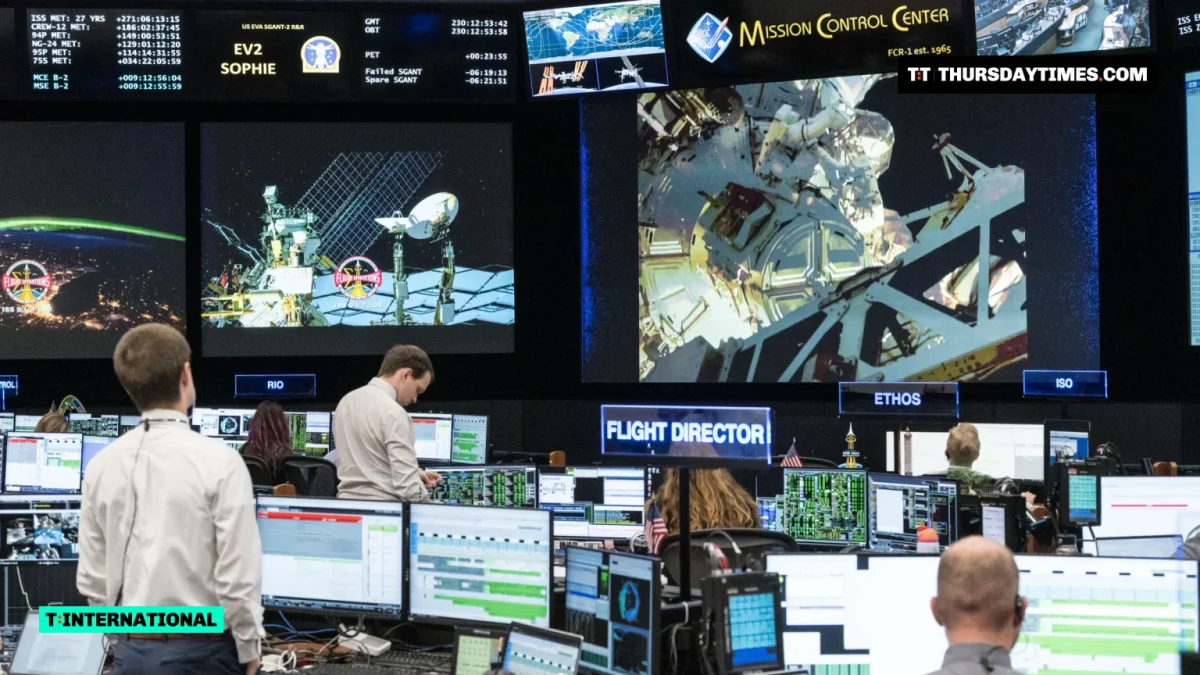
Houston took charge of Project Gemini, and its Mission Control Center became NASA’s primary flight control room in June 1965 with the Gemini IV mission, which included the first American spacewalk. Teams there went on to run the Apollo missions, including Apollo 8’s trip around the Moon in December 1968 and the Apollo 11 landing in July 1969, whose first words from the lunar surface to Earth began with “Houston”.
The centre later supported Skylab, the Apollo-Soyuz mission of 1975, and the space shuttle programme. NASA said the shuttle flew 135 missions that carried 355 people from 16 nations before the programme ended in July 2011.
The space station and Artemis
Johnson manages the International Space Station, which has been continuously crewed for more than 26 years. NASA said 298 people from 26 countries have visited the station, which has hosted more than 4,000 science experiments and educational activities.
The centre is also home to NASA’s Orion and Moon Base programmes. Artemis II, the first crewed Orion flight, launched on 1 April and took four astronauts on a nearly 10-day trip around the Moon, reaching 252,756 miles from Earth. NASA said Artemis III will test docking between Orion and one or both commercial lunar landers in Earth orbit, with a landing planned for Artemis IV.
The Moon Base Programme is planning a phased effort to support a sustained human presence near the lunar south pole, starting with robotic exploration and technology demonstrations before adding infrastructure for astronauts. NASA said Johnson is drawing on 65 years of experience in astronaut training, mission control, spacecraft development, and human health to prepare for those missions.