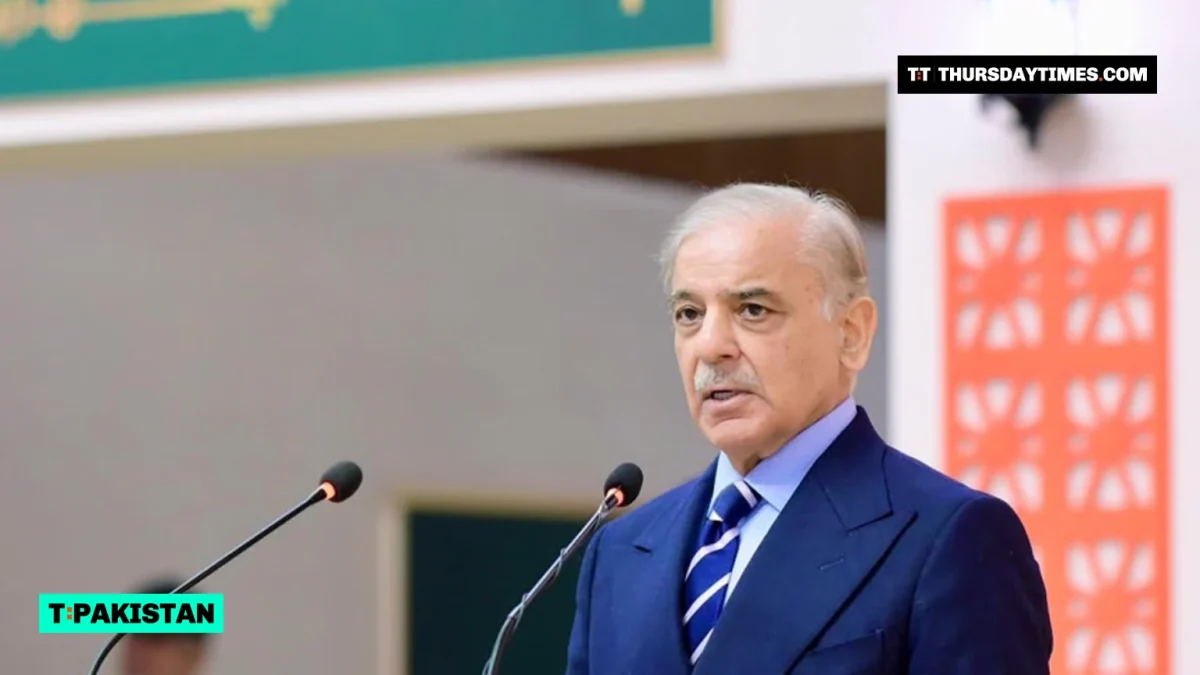
ISLAMABAD (The Thursday Times) — The federal cabinet has approved a resolution restructuring the Planning Commission into what it calls the country’s “principal economic decision-making forum”, with Prime Minister Shehbaz Sharif as chairman of both of its new wings.
The resolution splits the commission into a policy wing and a development and analysis wing. In the prime minister’s absence, the deputy prime minister will head the policy wing and the planning minister will chair the development and analysis wing. The wings will meet every month.
It is the third restructuring of the commission since 2006, following one under Pervez Musharraf and another under Nawaz Sharif in October 2013.
A 22-member policy wing
The policy wing has 22 members. Besides the prime minister and the deputy prime minister, they include the ministers for planning, finance, economic affairs, commerce, power, petroleum, industries and production, food security, IT and telecom, health and federal education. The national coordinator of the Special Investment Facilitation Council, the State Bank of Pakistan governor, the planning secretary, the chief economist, the vice chancellor of the Pakistan Institute of Development Economics and three economists or industry leaders complete the list.
According to the resolution, the wing will set a strategic framework for resource allocation and sectoral priorities, and act as a performance and accountability body for the implementation of economic policies and plans. It will also align them with public investment, including the Public Sector Development Programme, and review approved policies periodically. Once the commission clears a policy, decision or initiative, it will go directly to the federal cabinet.
A 16-member development and analysis wing
The development and analysis wing has 16 members, with the planning minister as deputy chairperson. Its members include the planning secretary, the chief economist, the PIDE vice chancellor and the commission’s members for energy, monitoring and evaluation, private-sector development, climate change, food security and agriculture, technology and innovation, infrastructure, the social sector, population, and governance and reforms.
The wing will carry out the functions listed under the Planning, Development and Special Initiatives Division in the Rules of Business, 1973. It will also make sure development partners’ country plans match national policy, and promote economic and infrastructure initiatives for regional integration.
Provinces not included
The resolution does not give provinces seats on either wing, a step many had sought after the 18th Constitutional Amendment. Planning Minister Ahsan Iqbal, responding to a question, said provincial representation exists in the National Economic Council, its Executive Committee and the Central Development Working Party, while the Planning Commission is a federal body.
Iqbal also said the Economic Coordination Committee remains in place because it performs operational coordination functions. The Ministry of Finance has handled much of the economic planning role in recent years, and one test for the new policy wing will be whether decisions such as the need for a new IMF programme are taken by it next year or bypass the commission.
The resolution says the commission will continue as a think tank for strategic foresight, bringing in the private sector, civil society, academia, ministries, provinces, development partners and other stakeholders, and will use data and technology to produce evidence-based policy options.