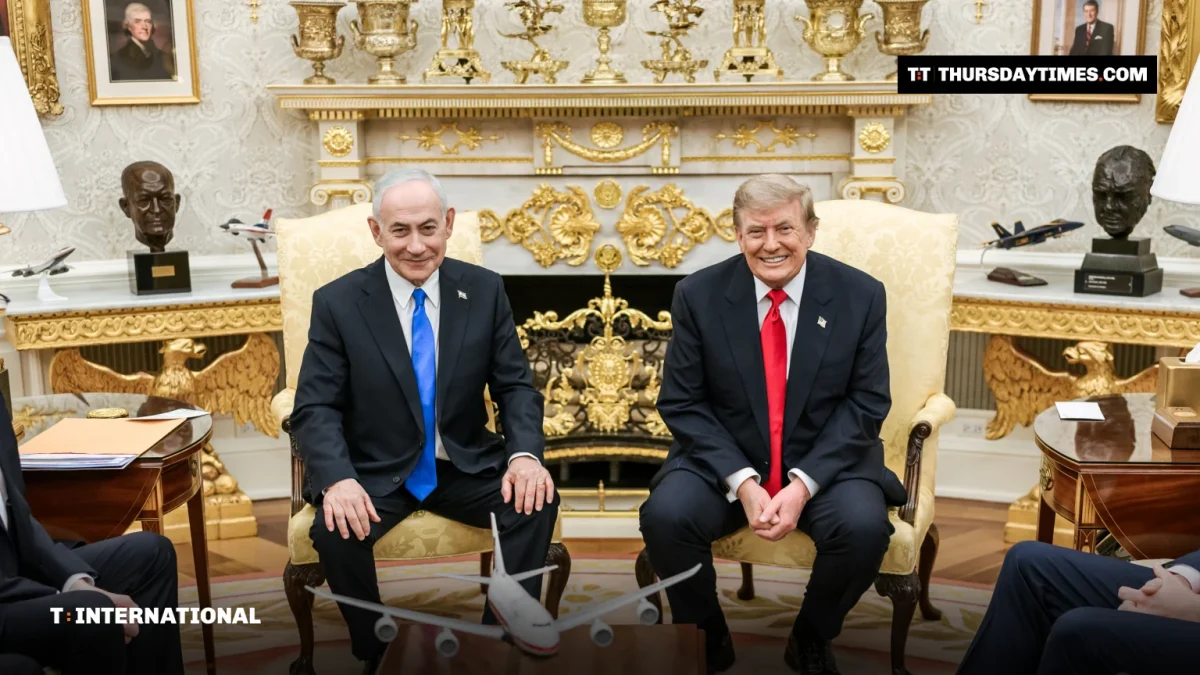
WASHINGTON (The Thursday Times) — Israeli Prime Minister Benjamin Netanyahu pressed US President Donald Trump in a phone call on Saturday to launch strikes on Iran immediately after Tuesday’s US midterm elections, while Trump favoured giving negotiations more time, one US official and one Israeli official said.
The Israeli official called the conversation “tough”. The American official called it “direct”. The White House and the Israeli prime minister’s office declined to comment.
Trump told reporters on Saturday that talks with Iran were “going fine” and that he was not “in much of a hurry”, but he questioned whether Tehran would keep its word. “They make a deal, and then they back out,” he said. He also said the US could still hit a suspected underground nuclear site known as Pickaxe Mountain. “We can do that in 10 minutes,” he said.
Secretary of State Marco Rubio said Trump had not decided whether to order new strikes and preferred a diplomatic outcome. “He hasn’t made a decision,” Rubio said after a G20 foreign ministers’ meeting in Atlanta. Trump was briefed on military options at the White House on Thursday by Admiral Brad Cooper, the head of US Central Command.
Israeli officials sound less hopeful. “It looks like we’re heading toward war rather than an agreement,” one senior official said on Saturday evening, adding that Israel was preparing in case fighting resumes right after the vote.
At sea, the Islamic Revolutionary Guard Corps Navy said late on Sunday that two oil tankers had exploded after striking mines while using what it called an “unauthorised route” through the Strait of Hormuz, according to Iranian state media. There was no independent confirmation, and Iran did not name the ships. Iran has made similar claims several times in the past week, saying ships on the southern lane promoted by the US are entering waters it has not approved.
Separately, the UK Maritime Trade Operations centre said on Sunday that the master of a merchant vessel had relayed a Mayday call saying another vessel had been struck by an unknown projectile in the strait. It was not clear whether that incident was linked to the Iranian claim.
Diplomacy continued alongside the threats. Qatari mediators met Iranian officials on Sunday for a third day running, and Foreign Minister Abbas Araghchi said no agreement had been reached and that progress depended on Washington answering questions raised by Tehran. He said he hoped the other side would “choose diplomacy over other paths”.
Iran’s army struck a harder note. Spokesman Mohammad Akraminia said on state television that any new war could last longer than the last one, and that the American president would not be able to dictate when or how it ended.