PARIS (The Thursday Times) — Hackers changed the temperature settings on freezers used by France’s national blood service overnight, from about -30C to 110C, the latest in a wave of attacks on refrigeration systems across Europe.
France’s Health Ministry said the abnormal temperatures were spotted in time and the incident had no operational consequences. An on-call technician reportedly noticed the rise during the night of November 1 to 2, allowing teams to step in.
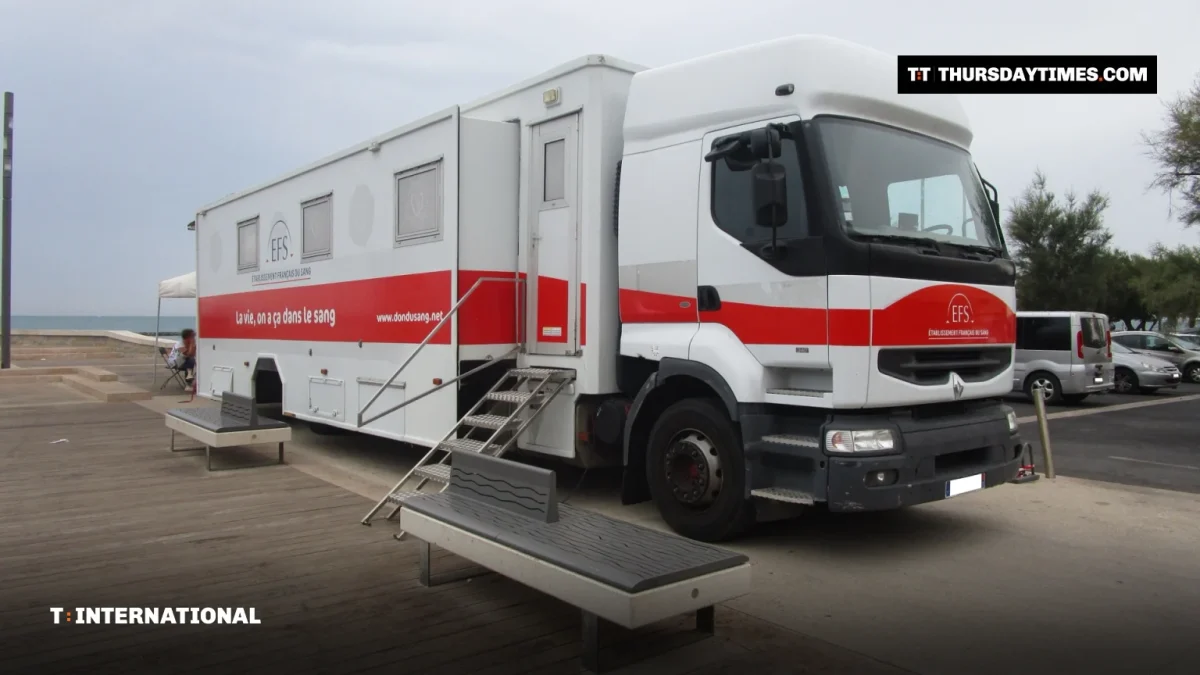
The attack went through Coolworld, a company that supplies and maintains cold-storage equipment for the French Blood Establishment (EFS), according to reports in France. Facilities in the Bourgogne-Franche-Comté region are said to be among those affected.
The EFS first said the units held donor samples kept for safety monitoring. It later said frozen plasma meant for transfusions was stored in them too. No loss of plasma, disruption to transfusions or harm to patients has been reported.
The 110C figure is the setting entered into the control system, not the temperature reached inside the freezers. Fresh frozen plasma must be kept at -25C or below, and a long rise above that could make it unfit for use. Authorities have not said how many units were affected, how long the settings stayed changed or how warm the contents became.
Fridges across Europe
No one has been publicly identified as responsible, and no technical findings have been released on how the attackers got in. Nor have investigators publicly tied the blood service incident to the attacks on shops.
Those began last month in France, where hackers tampered with supermarket fridges and freezers in the night of October 11 to 12, spoiling large amounts of food. On Monday, shops in eight European countries had to throw away stock after an attack of the same kind. Coop in Sweden said its seven affected shops were running again with their refrigeration systems disconnected from the internet.
France’s national cyber response team warned on October 12 of numerous compromises involving controllers made by Danfoss, Copeland and Dixell, and told operators not to expose them directly to the internet. Danfoss, whose systems were again among those hit, has given the same advice.
The EU’s cybersecurity agency, ENISA, said the scale of the attacks on shops “underscores the importance of European co-operation, rapid information-sharing and co-ordinated responses to cyber incidents”.