NEW YORK (The Thursday Times) — US inflation accelerated again in October, with the core measure of the Federal Reserve’s preferred gauge reaching its highest annual rate in three years, just as a deepening sell-off in artificial-intelligence stocks dragged Wall Street sharply lower on Wednesday.
The Bureau of Economic Analysis said the personal consumption expenditures (PCE) price index rose 0.3 per cent in October from September and 3.8 per cent from a year earlier, up from 3.6 per cent in September. Excluding food and energy, the core index also rose 0.3 per cent on the month and 3.3 per cent on the year, up from 3.1 per cent in September and above the 3.2 per cent economists had expected.
Personal income rose 0.7 per cent in October, beating forecasts, while consumer spending rose 0.3 per cent in cash terms, slightly below expectations. After adjusting for inflation, real spending slipped by less than 0.1 per cent, and the saving rate stood at 4.1 per cent. In a separate release, the bureau revised third-quarter growth up to an annualised 4.3 per cent from the 3.4 per cent reported last month. Economists had forecast 3.5 per cent.
The Fed looks set to raise rates
The figures leave the Fed on course to raise its benchmark rate by a quarter of a percentage point at its 8–9 December meeting, with markets pricing in a further increase in January, according to CME FedWatch. Governor Christopher Waller had signalled before the release that he could support a larger half-point rise. The October reading is the last major inflation report before that meeting.
“America’s inflation problem is bigger than an energy shock,” said Heather Long, chief economist at Navy Federal Credit Union. Some policymakers regard tariffs and supply shocks as temporary, while others fear the price rises have begun to spread through the economy and could become embedded.
Tech shares tumble
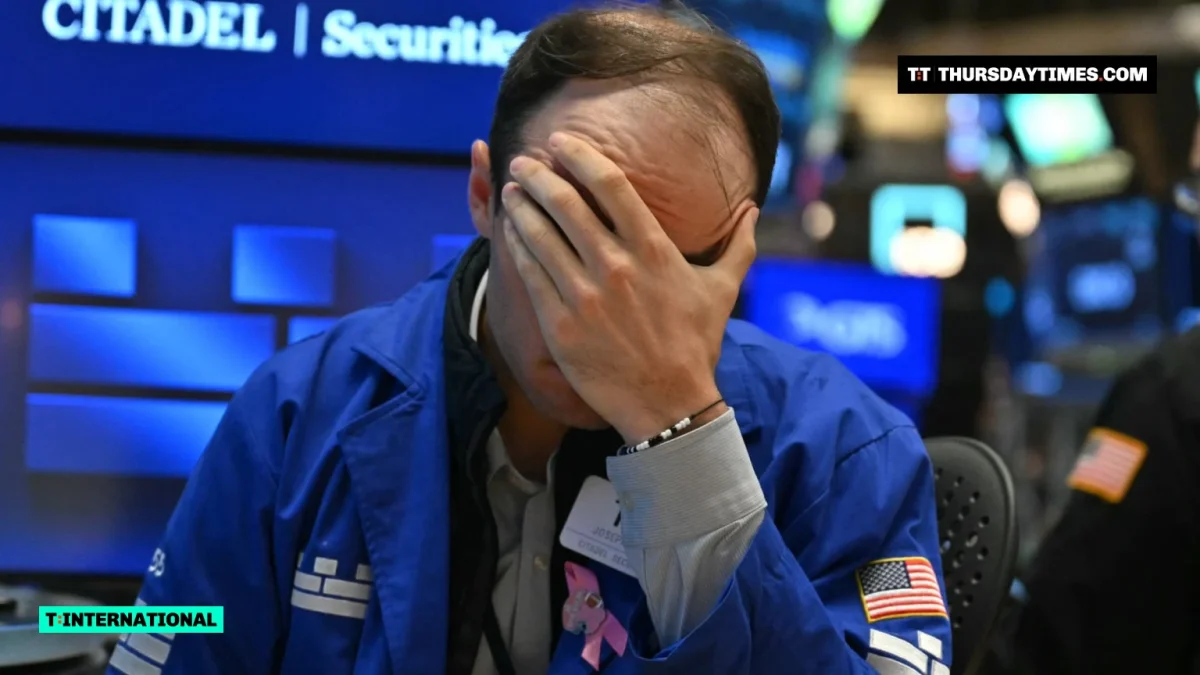
Stocks fell after the releases as investors weighed strong growth against sticky inflation. All three main US indices were lower, and the tech-heavy Nasdaq shed almost 4 per cent. Nvidia was down 8 per cent in early trading, extending Tuesday’s slide as the lift from Jensen Huang’s return as chief executive faded. Anthropic shares stayed below the $83 at which they debuted last week, and Amazon fell by more than 5 per cent, with Tesla, Microsoft, and Meta also lower.
Worries about the scale and sustainability of AI spending have rattled investors in recent weeks, along with the prospect of tougher regulation after Democratic gains in the US midterm elections. Goldman Sachs expects AI investment to exceed $1 trillion this year and to remain the “dominant driver of business investment growth” next year. Todd Schoenberger, chief investment officer at CrossCheck Management, said the companies were trying to “one-up each other” on spending, but “you have to show that it’s worth it”.
The sell-off came on the day Washington also unveiled new tariffs on more than a dozen trading partners. US markets close on Thursday for Thanksgiving and reopen for a shortened session on Friday.