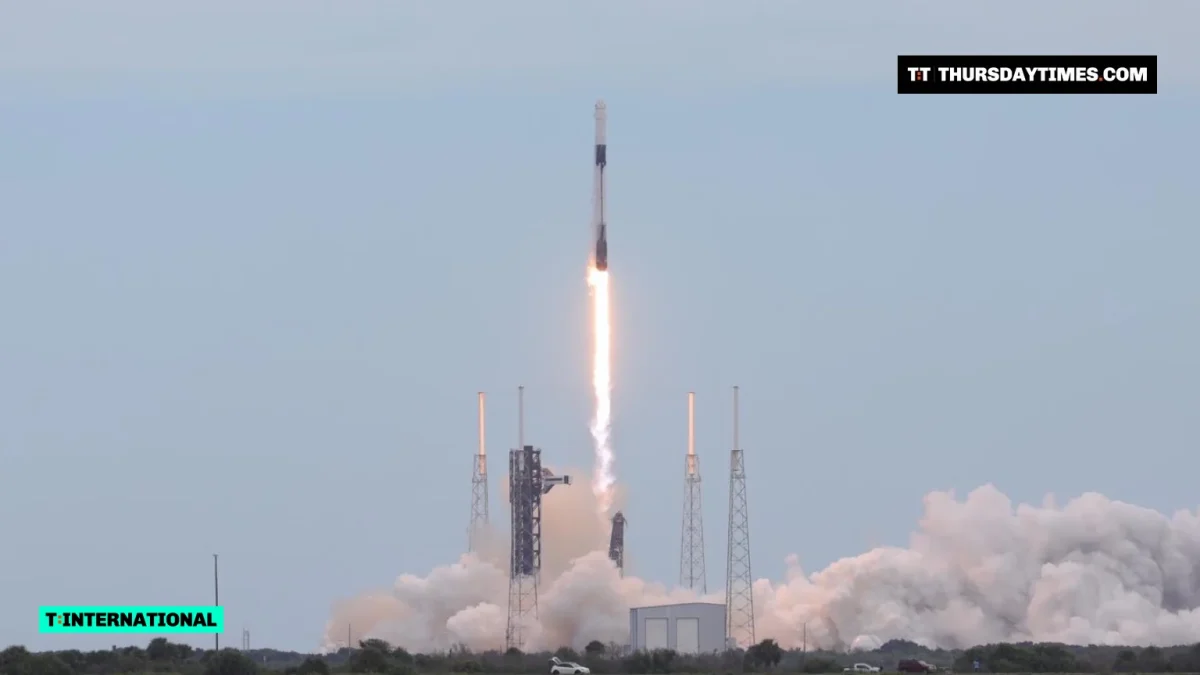
WASHINGTON (The Thursday Times) — The US Federal Communications Commission has authorised SpaceX to deploy a constellation of data centres in orbit, called Starmind, in what the regulator said was the first approval of its kind. The order covers 1,000,000 “orbital compute modules” that would process data for use on Earth, as demand for artificial intelligence computing grows rapidly.
“At this pivotal time in America’s development of super intelligence, the FCC is granting SpaceX authorisation to deploy 1,000,000 orbital compute modules to process massive amounts of data to be used back here on Earth,” the commission said in a press release on Wednesday, 25 November. FCC Chairman Brendan Carr said the decision “opens a bold new frontier for the computing infrastructure needed to power America’s leadership and growth”.
Elon Musk, SpaceX’s chief executive, welcomed the decision on X. “Much appreciated. This will be a great asset to America and the world,” he wrote. SpaceX filed for permission to deploy Starmind earlier this year.
The approval does not mean a million satellites will soon be in orbit. About 17,000 satellites are currently in space, and it is unclear how many Starmind modules SpaceX will actually launch. Operators sometimes ask for approval for more satellites than they intend to deploy, to keep design flexibility: SpaceX sought permission for 42,000 Starlink satellites before it began deploying that network, which now has just over 11,000 in orbit. Researchers are still at an early stage of working out how data centres could run in space.
Amazon’s rival satellite unit, Leo, and others have criticised the plan, suggesting SpaceX is unlikely to deploy all of the satellites and that doing so could take centuries. Carr hit back, saying Amazon should focus on getting its own launches and constellation in order rather than worrying about a company that is launching satellites “at the pace and cadence that SpaceX is”.
Data centres, the physical backbone of AI, need huge amounts of power, and concerns about their environmental impact, noise, and electricity use have led some US states and local governments to slow construction. In early October, Google launched its Project Suncatcher test satellites on a SpaceX mission to explore whether AI computing could be done in orbit.