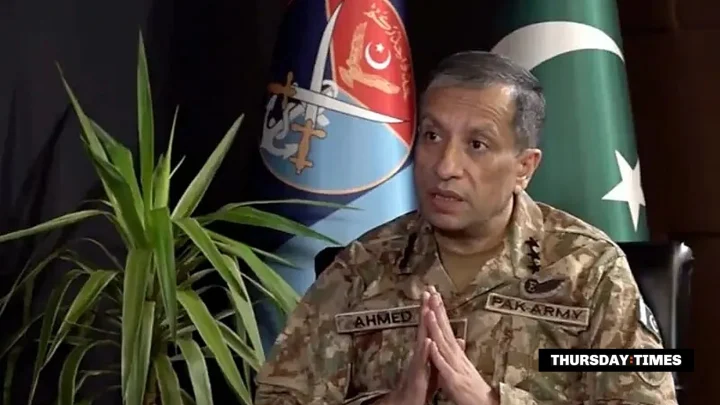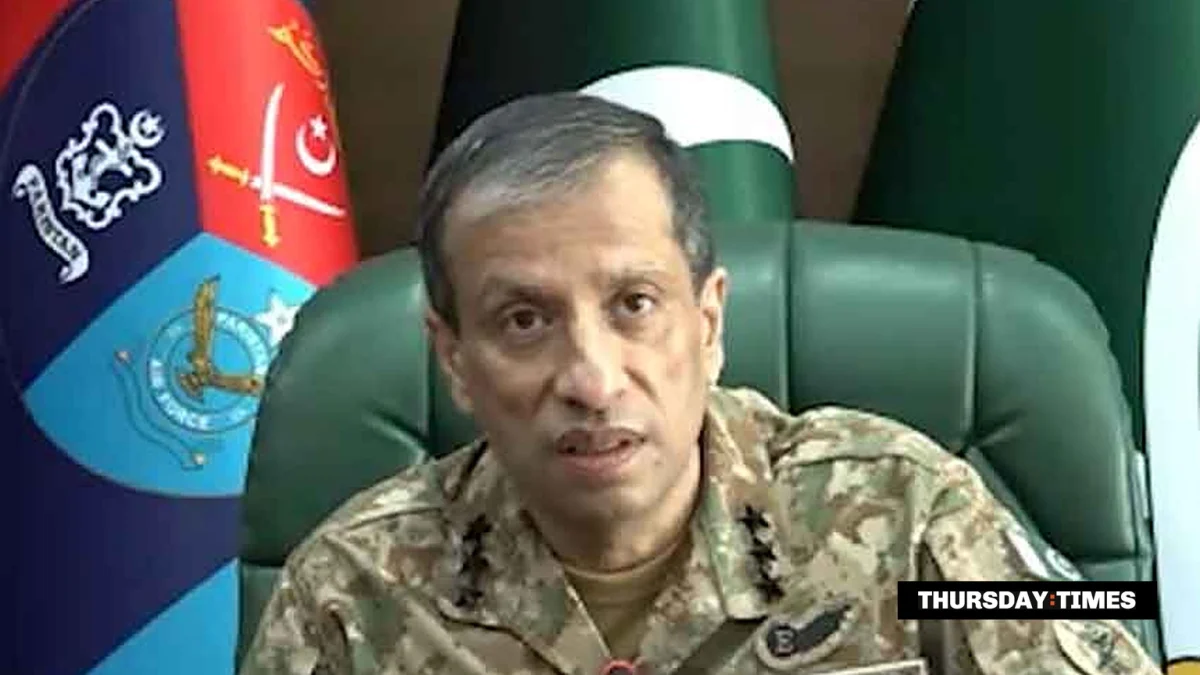
RAWALPINDI (The Thursday Times) — Pakistan will provide Saudi Arabia with “whatever support is needed” to defend the kingdom against continuing Houthi attacks, the Director General of the Inter-Services Public Relations (DG ISPR), Lieutenant General Ahmed Sharif Chaudhry, has said, describing the security of the Two Holy Mosques as non-negotiable.
In an interview with Independent Arabia that aired on Sunday, Chaudhry said Saudi Arabia’s sovereignty, territorial integrity and the safety of Makkah and Madinah sit above ordinary diplomatic calculation. “There can be no ifs and buts when it comes to the holy sites,” he said, adding that Pakistanis “from children to the leadership” were angered by the strikes on the kingdom.
Pressed on what exactly Pakistan was providing, the DG ISPR declined to give operational specifics, saying no member of a defence alliance publishes the scale or nature of its support. “We will take all necessary measures to support Saudi Arabia’s security and territorial integrity,” he said, without elaborating further.
The remarks build on the Strategic Mutual Defence Agreement signed between Islamabad and Riyadh, which was folded in August into the broader Makkah Joint Defence Alliance alongside Türkiye. Pakistan, Saudi Arabia and Türkiye agreed that an attack on one member, direct or indirect, would draw a collective response. Chaudhry told Independent Arabia that principle is now being tested in practice. “If any party wages war, directly or indirectly, against any of the three countries, the response will be collective,” he said.
He grounded the pact’s legal basis in Article 51 of the UN Charter, which recognises the right to collective self-defence, and insisted the alliance carries “no offensive intent” and is “not aimed at any specific country.” Any actor that threatens regional peace and stability, he said, would trigger the same collective deterrence mechanism Pakistan, Saudi Arabia and Türkiye have built since August.
The DG ISPR rejected the idea that the alliance was over-reaching, describing its progress since its founding as “phenomenal” and dismissing criticism as coming from quarters opposed to the pact in principle. Asked whether Yemen’s internationally recognised government had sought Pakistani military assistance, he said he was not aware of any such formal request, but that Islamabad would weigh one if it came.
Chaudhry’s comments follow an emergency meeting earlier in October between Pakistani, Saudi and Turkish officials in Riyadh, at which the three countries agreed to move toward practical implementation of their collective defence commitments, including the rapid deployment of forces to the kingdom. Pakistan’s government has separately confirmed that its troops are present in Saudi Arabia, a presence Islamabad says predates the current crisis by decades.
“How can any sane person attack Saudi Arabia,” Chaudhry asked, framing the Houthi strikes on the kingdom as an attack on the wider Muslim world rather than on Riyadh alone. He closed his remarks to Independent Arabia with a direct appeal for unity among Muslim-majority states: “We need to stop attacking each other.”∎