Islamabad has decided that vehicles without a valid fitness and emission test will no longer be allowed into the capital. It is the right instinct. A smoky truck is a moving chimney, and a city that has watched its skyline fade into haze has every reason to act. But a ban is a promise, not a system. Whether it cleans the air depends on what stands behind it: places to test, inspectors who cannot be bought, certificates that cannot be forged, buses for those who lose a vehicle, kilns that can switch, and data that tells the state where to look next.
What was decided, and what was not
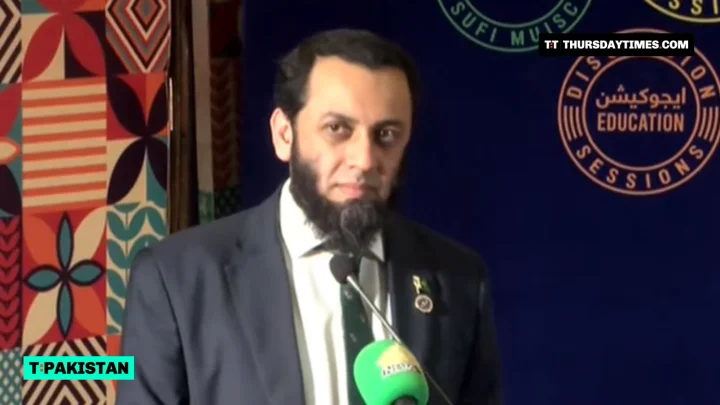
At a smog meeting on 17 November, chaired by Minister of State for Interior Talal Chaudhry, the capital agreed that vehicles without valid fitness and emission tests would be barred from entering Islamabad. The meeting also said that people burning waste in the open or causing smog in other ways would face heavy fines, that cases would be registered and violators arrested, and that action would be taken against brick kilns and industrial units that emit smoke. Chaudhry said Interior Minister Mohsin Naqvi was personally monitoring the measures, and that Islamabad’s air quality index in October and November had been better than in the same period last year.
Separately, the Islamabad Traffic Police made fitness certificates mandatory for every vehicle in the capital and told transporters to make their vehicles smoke-free by 30 November, warning of strict legal action after the deadline. Its Chief Traffic Officer, Kainat Azhar Khan, also said that trucks carrying sand, gravel, and cement must be covered with tarpaulins, and transport union representatives promised cooperation.
These are serious steps, and they deserve a fair hearing. But the details reported so far leave several things open. Reports put the start of strict action against smoke-emitting vehicles on 1 December, the day after the transporters’ deadline of 30 November, which falls on Monday. Nor is it clear how a driver will prove compliance at the capital’s entry points, or where a vehicle that fails will be repaired and retested. Those details decide whether the ban is a filter or a fine-collection exercise.
A ban is a promise, not a system. The system is what the driver meets at the testing bay.
Testing that people can trust
An emission rule is only as good as the test behind it. If a fitness certificateA document showing that a vehicle has passed a roadworthiness inspection, which can include brakes, lights, and exhaust emissions. Without a valid one, a vehicle is not supposed to be on the road. can be had without the vehicle ever being looked at, the certificate becomes a toll, and the owners of the dirtiest engines are exactly the people most willing to pay it. A quick, cheap test will be used. A test that takes a day, a queue, and a favour will be skipped or bought.
So the first requirement is capacity: enough testing centres, in enough places, open long enough, that a transporter with a deadline of 30 November can actually meet it. The second is honesty, which means calibrated equipment, trained staff, and spot audits of the testers as well as the tested. The third is a record that cannot be forged. A digital certificate, linked to the registration number and checked by a camera or a handheld device at the gate, would turn a piece of paper that anyone can photocopy into a fact that an officer can verify in seconds.
Pakistan already has evidence that digital enforcement can work at scale. Karachi’s traffic police have issued more than 1.947 million e-challans in the first year of their ticketing system, officials said, including 54,443 for missing fitness certificates and 18,519 for expired ones. Those numbers show two things. Plenty of vehicles on a big city’s roads lack a valid certificate, and a camera system can find them without an officer standing in the sun. The same logic could guard Islamabad’s entry points, provided the certificate database is real and up to date.
Punjab has begun to build this kind of record. Senior Minister Marriyum Aurangzeb said on 11 November that six million vehicles in the province had been issued fitness certificates, and that 9,000 industrial units had installed systems to monitor their smoke. The task now is to make sure a certificate means a vehicle was actually tested, and that the figure can be checked in a public register. Islamabad should not start with paper.
A ban needs an alternative
The hardest part of any vehicle rule is the person on the other side of it. A truck owner with an old engine can be given a deadline, a workshop, and a retest. A daily-wage worker who commutes from Rawalpindi on a shared van is in a different position. If the vehicle is turned back and there is no affordable way to reach work, the burden falls on the people least able to carry it, and it invites exactly the pressure that leads to exemptions.
Public transport is therefore not a side issue. It is the other half of the policy. A credible plan would pair the entry rule with frequent, cheap bus links between the twin cities and the capital’s sectors, timed for shift workers, with park-and-ride points at the edges. Punjab officials have said about 2,000 electric buses have been provided across their province, with a target of 5,000 by next year. Islamabad needs the habit of announcing a ban and a bus route on the same day.
Enforcement should also be phased. A first notice, a repair window, and a retest do more for the air than a fine that is quietly negotiated at the roadside.
The smoke that is not on the road
Vehicles are one source among several, and the capital’s announcement rightly names brick kilns too. Here the lesson from Punjab is that technology change is possible but has to be verified. A zigzag kilnA brick kiln in which hot air is forced along a zigzag path through the stacked bricks. The design burns fuel more completely, so it releases less smoke than a traditional straight-fire kiln. costs money to build, needs trained firemen, and only helps if it is actually used the way it was designed. Aurangzeb said 14,000 brick kilns in Punjab had moved to the cleaner technology. The province’s environment director general has cited a figure of more than 8,000 on another occasion. Both may be right, depending on what is counted and when, but a public register of kilns and their last inspections would settle the question.
For Islamabad, the first task is simple: list the kilns, inspect them, and publish the list. The goal should be conversion with help, not just closure, because a shuttered kiln moves its smoke and its jobs somewhere else.
A kiln that is sealed in one place and reopened in another has not been regulated. It has been relocated.
What the capital cannot fix alone
Islamabad and Rawalpindi share one airshedThe body of air over a region that tends to hold and carry the same pollution. Smoke released in one district can be breathed in another, whatever the administrative boundary. with the Punjab plains, and smoke does not wait at the Islamabad Capital Territory boundary. This is where coordination matters. Punjab has this year formed a 750-member Environmental Protection Force, organised in 67 rapid-response units across its main rice-growing districts, aiming to reach a reported field fire within 10 to 15 minutes. In a single 24-hour period in November it received 679 reports of field fires and put out 650 of them, the department said.
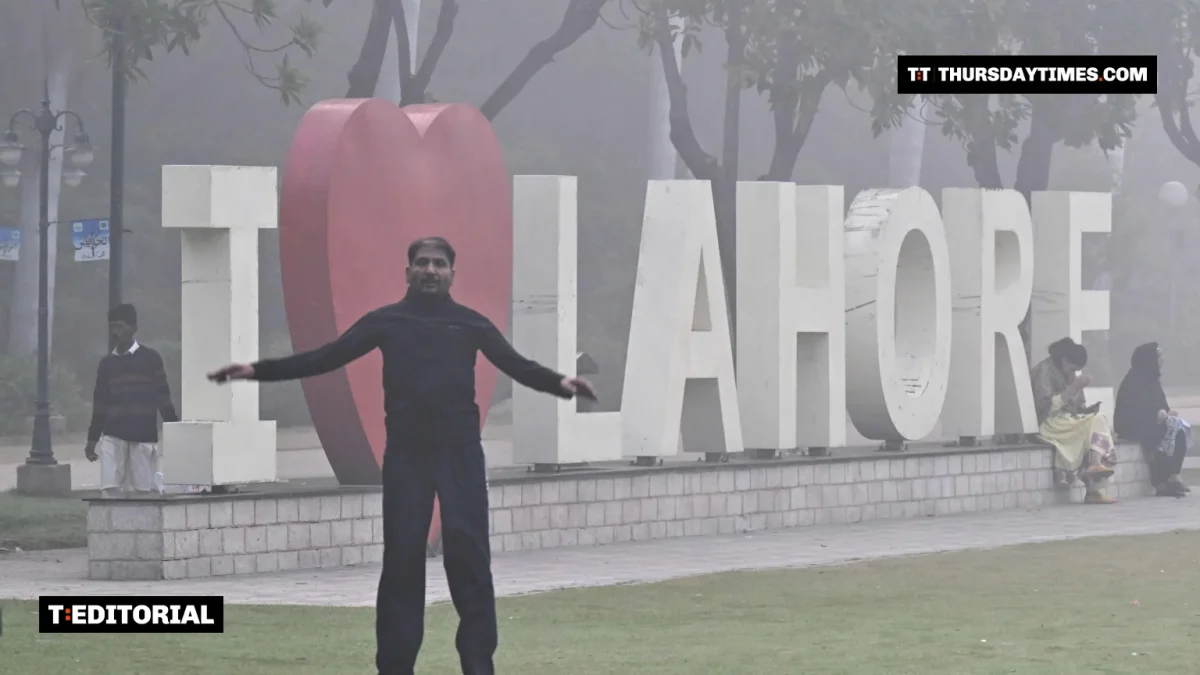
That is the kind of operating capacity a ban needs. Farmers who burn stubble face fines of Rs15,000 an acre, with possible prosecution and up to six months in jail for those who do not pay, officials said, and the government has handed out more than 10,000 super seedersMachines that sow wheat directly into the stubble left after the rice harvest, so farmers do not need to burn the field to clear it. Punjab says it pays 60% of the cost. at a 60% subsidy. The farm-fire numbers are moving in the right direction, and Punjab’s department says smog-related throat hospitalisations in October were 69% of the level a year earlier. Yet Lahore was ranked the world’s most polluted city on 14 November, with an air quality index of 244, and on 20 November heavy smog pushed readings in Lahore, Gujranwala, and Multan into the hazardous range, according to real-time air quality data. Many residents say they have not yet noticed the difference.
For the capital, the practical step is a standing channel with Punjab’s environment authorities: shared fire alerts, shared wind and trajectory data, and agreed responses on the days when smoke from the plains is heading north-west. Smog is not a competition between provinces. Aurangzeb has said smog is a scientific, environmental, and public health challenge rather than a political issue, and that is the right spirit for cooperation with a neighbour whose air the capital breathes.
Data that tells the truth
Everything above depends on measurement. A ban cannot be judged if nobody knows whether the air got better. Punjab’s environment officials say the number of monitoring stations in the province has grown from two to about 81 in two years, and Aurangzeb has put the number of industrial air-quality monitors at 59. That growth is real progress.
Capacity, in the figures officials have given
Figures as given by Punjab officials and by Karachi traffic police. Bars are scaled within each group, not across groups.
The next step is to use that data as a public tool. Chaudhry’s claim that the capital’s air quality index in October and November was better than last year is encouraging, and a published daily record from the capital’s monitors would let residents check it for themselves. Punjab’s coming climate observatory, which the chief minister says will track air quality, water, soil, and weather in real time, is a sign that the province sees the value. No opening date has been given, and the capital should plan its own data pipeline rather than wait.
Good data also corrects policy. If readings fall near a converted kiln cluster, the programme can be defended and extended. If they do not, the money can go elsewhere. A ban without feedback is guesswork, and the same season returns every year.
A short list for the deadline and the days after it
None of this requires a new institution. It requires the existing ones to publish, connect, and finish what they have announced. Around the deadline, a handful of plain questions need answers. Where can a driver get a test and a certificate, and how long does it take? What is the date the entry ban begins, and what will a driver without a certificate be told at the gate? Which bus or van service replaces the vehicle that is turned away? Which kilns and units are on the inspection list, and who inspects them? What data will be published each day, and who will check it? Answers before the deadline are the difference between a crackdown remembered for what it achieved and one remembered for its announcement.
The decision taken on 17 November is a good one. The people behind it are right that cooperation from the public, from transporters, and from industry will be essential, and the early signs of that, from the goods transport union and the chamber of commerce, are encouraging. What turns cooperation into clean air is the unglamorous work behind the rule: a testing bay with a working analyser, an honest inspector, a certificate that scans, a bus that arrives, a kiln that has been converted, and a monitor that tells everyone the truth. The capital has a chance to get those right before the winter peak. It should take it.