DUSHANBE (The Thursday Times) — Deputy Prime Minister and Foreign Minister Ishaq Dar told leaders of the Shanghai Cooperation Organisation that Pakistan had “only one expectation” of Afghanistan’s Taliban rulers, that Afghan territory not be used for terrorism, as he pitched the China-Pakistan Economic Corridor to the bloc and set out Islamabad’s plans for its SCO chairmanship.
Dar led Pakistan’s delegation at the 25th meeting of the SCO Council of Heads of Government in Dushanbe on October 19 and 20, at the invitation of Tajik Prime Minister Qohir Rasulzoda, and attended both the members-only and expanded sessions. According to Pakistan’s Foreign Office, the meetings were attended by the prime ministers of Belarus, China, Kazakhstan, Russia, Tajikistan and Uzbekistan, Iran’s vice-president, Kyrgyzstan’s first deputy chairman of the cabinet of ministers and India’s defence minister, along with guests from Mongolia and Turkmenistan.
‘Only one expectation’
“Sustainable economic development cannot be guaranteed without durable peace and security in the region,” Dar said. He said Pakistan wanted a peaceful, stable and regionally integrated Afghanistan, and had made sincere efforts to support its development. “In return, Pakistan has only one expectation from the Afghan Taliban regime: that Afghan territory should not be used for terrorism against Pakistan and the world.”
CPEC, and an SCO bank
Dar said the China-Pakistan Economic Corridor “offers every SCO partner a compelling opportunity” to take part in regional economic integration, and called for targeted investment in energy and transport, as well as in agriculture, mining and minerals, and information technology. He urged faster progress on settling trade in national currencies and on establishing an SCO Development Bank, an SCO Development Fund and an investment fund, saying such tools would help the region withstand international financial shocks.
“Protectionist policies and unilateral coercive measures contradict the principles of international law,” he said, adding that reform of the global financial architecture and trade regimes was essential. He also named artificial intelligence, digital transformation, energy and international information security as future pillars of SCO cooperation.
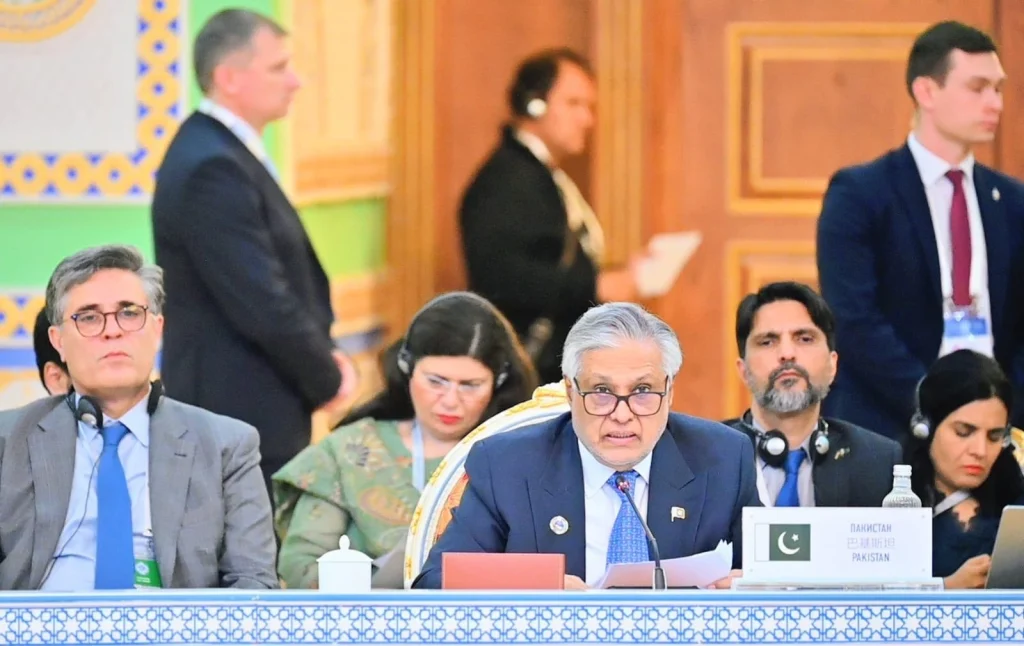
In the expanded session, Dar described Pakistan as a natural bridge between South Asia, Central Asia and wider Eurasia, according to the Foreign Office, and proposed reinvigorating the SCO Chambers of Commerce and Business Council and giving a bigger role to the SCO Interbank Consortium. For the organisation’s next 25 years, he called for joint work on climate resilience, technology, secure supply chains and Eurasian energy corridors.
Pakistan’s chairmanship
Dar outlined the theme Prime Minister Shehbaz Sharif has set for Pakistan’s SCO chairmanship, “Turning Vision into Action: Connectivity, Innovation and Shared Prosperity”, with five priorities: peace, security and mutual trust; regional connectivity and trade; innovation, artificial intelligence and digital transformation; climate resilience and sustainable energy; and people-to-people exchanges. He congratulated Uzbekistan’s prime minister on taking over the chair of the Council of Heads of Government for 2026-27, and said Pakistan looked forward to hosting SCO heads of state in Islamabad for their summit in August next year.
On the sidelines
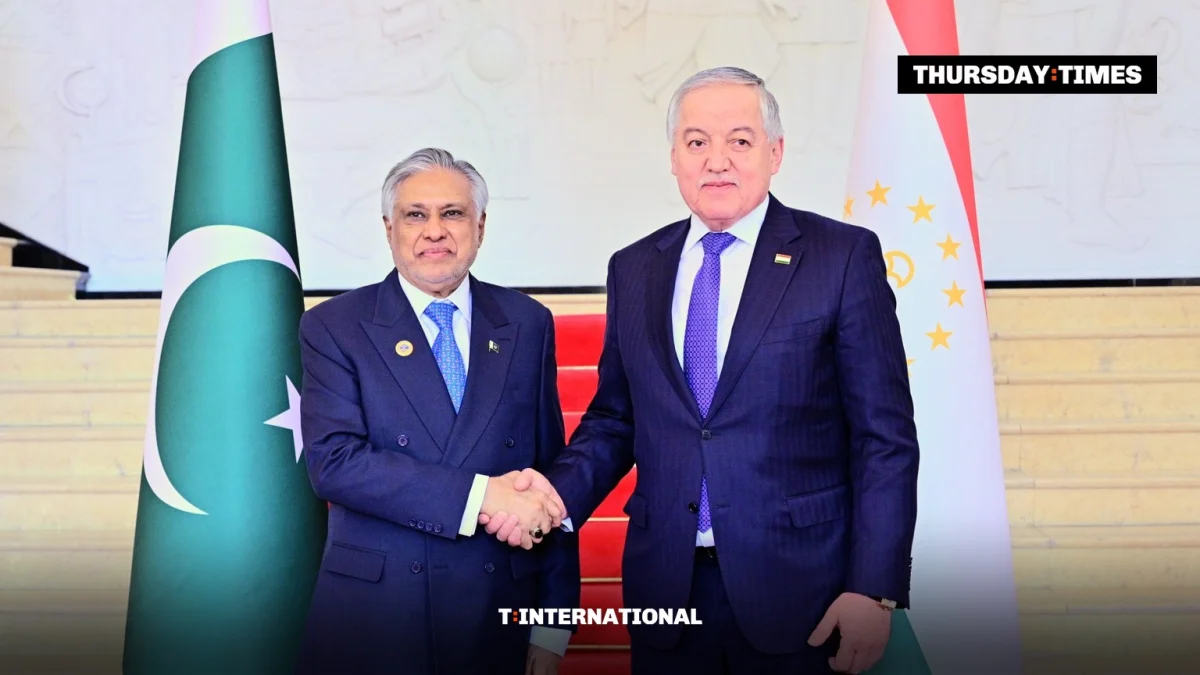
Dar called on Tajik President Emomali Rahmon along with other SCO heads of delegation, and held bilateral talks with Tajik Foreign Minister Sirojiddin Muhriddin. The two ministers reaffirmed what the Foreign Office called longstanding brotherly ties “rooted in shared history, culture and faith”, and agreed on the need to expand trade and economic cooperation, regional connectivity, and cooperation in energy, security and people-to-people exchanges.
He was received on arrival and seen off at the airport by Daler Juma, Tajikistan’s minister of energy and water resources and co-chair of the Pakistan–Tajikistan Joint Commission, and Pakistan’s ambassador to Tajikistan, Irfan Ahmed. Dar returned to Islamabad on Tuesday evening, writing on X that he had concluded “a successful visit” and “productive bilateral engagements”.∎