ISLAMABAD (The Thursday Times) — The International Monetary Fund has urged Pakistan to build on its “hard-won” economic stability with a broader, fairer, simpler and more predictable tax system, saying the next milestone is to turn stabilisation into stronger and more durable growth.
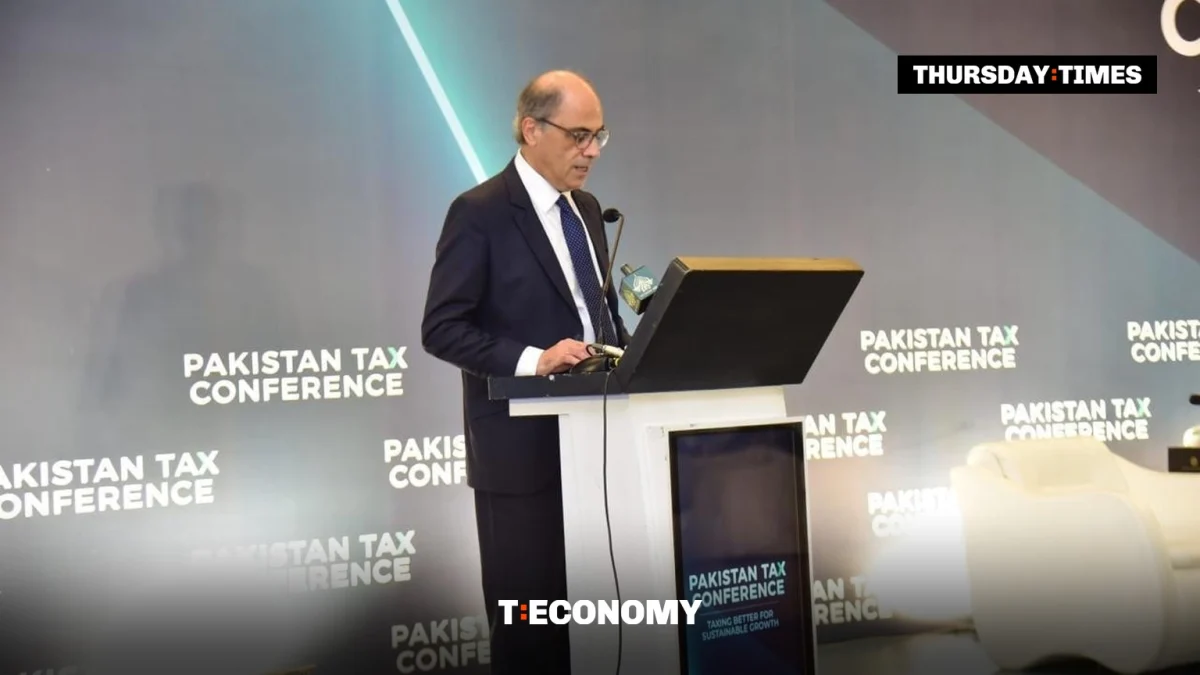
Jihad Azour, director of the IMF’s Middle East and Central Asia Department, made the call at the opening of a two-day workshop on “Reforms for a Modern and Growth-Friendly Tax System in Pakistan”, held by the Ministry of Finance and Revenue with the Fund in Islamabad on October 20 and 21. He said tax reform was critical to Pakistan’s growth agenda and sat “at the centre” of the objectives of the Extended Fund Facility (EFF).
“A stronger, broader, fairer and more predictable tax system can support fiscal sustainability while reducing distortions that hold back investment, productivity, growth and formal job creation,” Azour said. He said Pakistan had made important progress in restoring stability, rebuilding confidence and strengthening its external buffers, but that fiscal policy now had to do more than hit primary-balance targets and protect debt sustainability: it had to reinforce credibility, support the recovery and create room for public investment and social spending.
He warned that exposure to higher energy and food prices, disruption to trade and supply chains, weaker external demand and a sudden tightening of global financing conditions had raised the premium on preserving stability.
Four themes
Azour set out four themes for the reform effort. The first was credibility: Pakistan’s gains depended on continuing to meet fiscal and external targets, and a medium-term tax strategy with clear sequencing could anchor them. The second was growth, since “stabilisation is necessary but not sufficient”, and a simpler, more neutral tax system lowers the cost of entering the formal economy. The third was fairness. “Addressing under-taxed sectors, rationalising concessions and reducing disproportionate burden are elements of a fair tax system,” he said. The fourth was implementation, which he said required ownership across institutions, coordination between the federal government and the provinces, engagement with business and civil society, and administrative capacity to match policy.
The government’s numbers
Finance Minister Muhammad Aurangzeb told the workshop that Pakistan’s twin deficit had fallen from a combined 12.5 per cent of gross domestic product to 2.6 per cent. He said the country had recorded a 22-year low in its fiscal deficit last fiscal year and primary surpluses for three consecutive years.
The Federal Board of Revenue’s tax-to-GDP ratio had risen from 8.8 per cent to 10.3 per cent, he said, with tax revenue up 40 per cent over the past two fiscal years. Of the 1.5-percentage-point increase over the last two and a half years, 0.9 points came from enforcement and 0.6 points from new policy measures, according to the minister.
Aurangzeb said foreign exchange reserves had recovered from about two weeks of import cover to more than three months, a record high, and that external debt had grown by around $4 billion over the past four years, compared with $6 billion to $7 billion a year between 2015 and 2022.
He said the economy had returned to growth after a 0.3 per cent contraction, but that Pakistan needed export-led growth rather than the consumption-driven expansions behind past boom-and-bust cycles. “We will not let that repeat,” he said. He named a broader tax base, a simpler tax code and predictable policy as the government’s priorities, warning that frequent and unexpected tax changes deterred private investment.∎