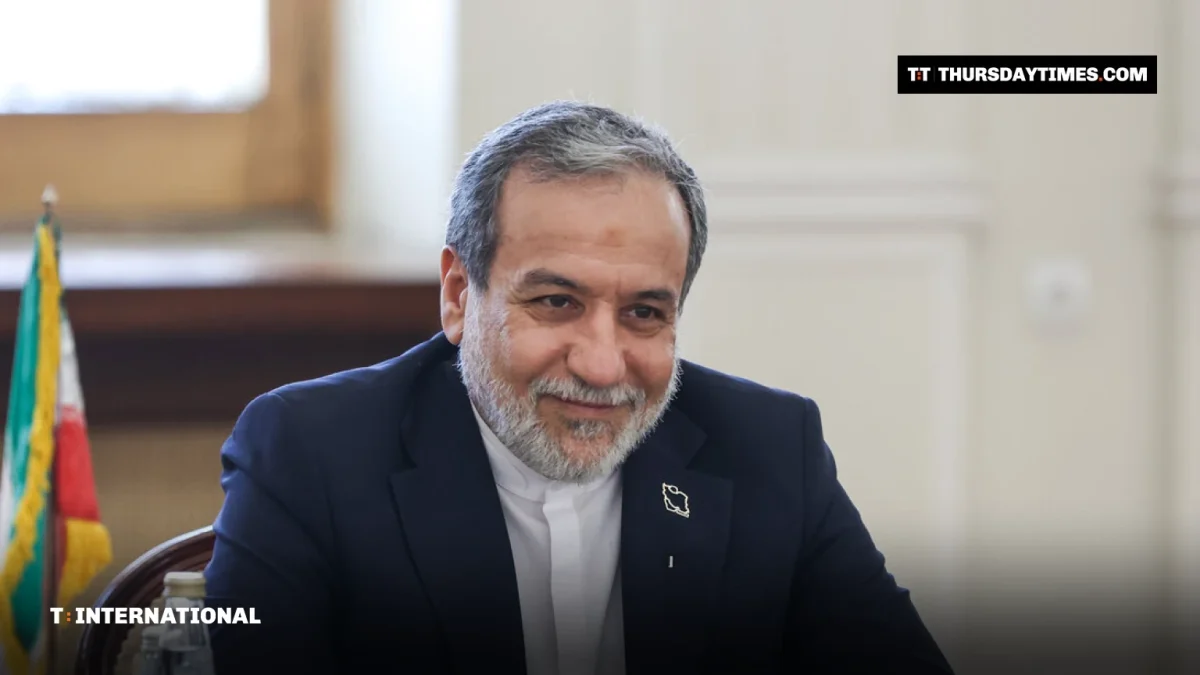
TEHRAN (The Thursday Times) — Iran’s Foreign Minister Abbas Araghchi told the United States on Sunday that its midterm election result had left the White House with a choice between accepting Tehran’s two-day plan to reopen the Strait of Hormuz and a return to war.
“American voters have made their choice. Time for the White House to make its own. Our 2-day proposal stands: meet the requirements, including end to war on all fronts, and you will see results. Or choose war, and see our alert and battle-hardened Warriors rain down hell.” Araghchi wrote on X.
The offer: under the plan, worked out with Qatari and Pakistani mediators, Iran would reopen the Strait of Hormuz within two days once the United States met its conditions. Qatar had proposed cutting the original timetable to five days, and the two sides settled on two, Araghchi said last month. Iran’s five conditions are the lifting of recently imposed US sanctions, the restoration of oil waivers granted in June, a smaller US military presence in the region, recognition of new shipping lanes in the strait drawn up by Iran and Oman, and an end to fighting on all fronts, including Israel’s strikes on Lebanon.
Washington has not publicly accepted the plan. Vice President JD Vance has spent the past two weeks speaking almost every day to Field Marshal Asim Munir and Qatar’s prime minister about a new ceasefire and a return to nuclear talks, and the mediators have discussed a working-level meeting between US and Iranian officials that has not yet taken place. President Donald Trump has said the US is “talking to” Iran, but US officials say the military is ready to resume strikes at short notice.
Araghchi’s message came as Democrats prepare to take control of both houses of Congress in January, and hours after Trump said on Truth Social that America had taken “a giant step back in History” with the result. Vance has said the war was the main reason Republicans lost. On Saturday, the US military set up a task force to choke Iran’s land and Caspian routes, extending the naval blockade that has cut off its oil exports.