KARACHI (The Thursday Times) — Pakistan’s state-owned LNG importer has invited fresh bids for two cargoes of liquefied natural gas for the winter, after rejecting offers it considered too expensive earlier this week, as disruption around the Strait of Hormuz squeezes supply from the Gulf.
Pakistan LNG Limited (PLL) issued the new tender on Thursday for two cargoes delivered to Port Qasim in Karachi, one for December 14 to 16 and one for January 9 to 11, according to reports of the notice.
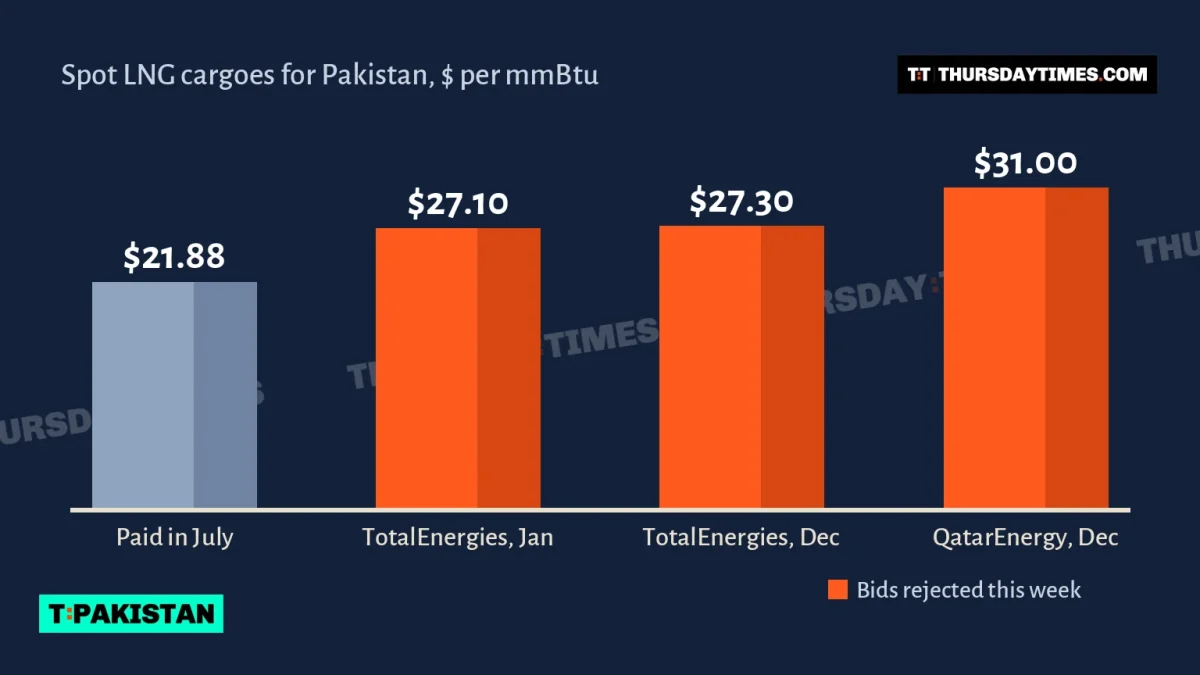
In its previous tender, which closed on Tuesday, TotalEnergies Gas & Power was the lowest bidder for both windows, at $27.30 per million British thermal units (mmBtu) for December and about $27.10 for January. QatarEnergy Trading offered $31 for the December cargo. PLL turned down all three offers, citing high prices.
That tender was issued on November 4 for two cargoes of 140,000 cubic metres each. Its deadline was pushed back from November 6 to November 10 after suppliers asked for more time.
Winter demand
The rejected offers were well above the $21.88 per mmBtu Pakistan paid for a cargo in July, which was reported to be its highest price since the war with Iran began.
Qatar has supplied most of Pakistan’s LNG, but its exports through the strait have been disrupted for months, with buyers elsewhere already walking away from long-delayed contracts. Pakistan is seeking extra cargoes under its two long-term agreements with Qatar, and Petroleum Minister Ali Pervaiz Malik has held talks with Qatar’s energy minister, Saad Sherida Al-Kaabi, on raising deliveries, according to reports.
The head of PLL has said Pakistan needs to buy about 10 extra spot cargoes between November and February, at roughly double the price of its Qatari contract gas, reports said.
The search for winter gas comes as the country’s gas utilities seek higher prices from the regulator and as the government looks for other ways to keep fuel flowing, including storage and supply arrangements with Kuwait. For more on how the Gulf conflict is moving energy markets, read our analysis, “In Hormuz, claims move faster than the tankers”.