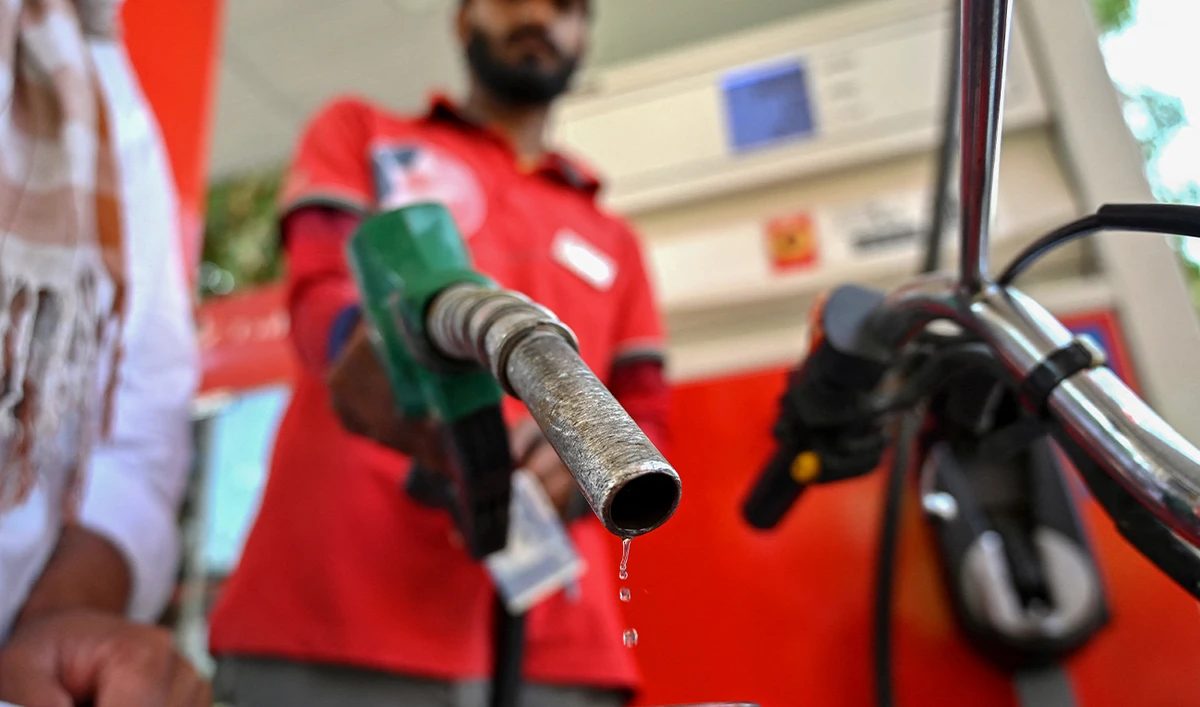
ISLAMABAD (The Thursday Times) — The government collected Rs381.82 billion through the petroleum levy in the first quarter of the 2026-27 financial year, the most ever raised from the charge in the July to September period, according to the Finance Ministry’s fiscal operations figures.
The total was Rs10.21 billion higher than in the same three months of the last financial year, when the levy brought in about Rs371.6 billion. The figures do not show how much came from petrol, diesel, or other products, and they give no reason for the increase.
The same report shows the government collected Rs22 billion through the carbon levy and Rs9 billion through the electric vehicle adoption levy over the quarter.
A large share of non-tax revenue
The levy figures come from the same quarterly data that showed the federal and provincial governments running a combined surplus of Rs1.27 trillion, down from Rs2.12 trillion a year earlier. Total revenue was about Rs6 trillion, of which Rs3.39 trillion came from taxes.
The rest, about Rs2.62 trillion, was non-tax revenue. Most of it was the State Bank of Pakistan’s profit of Rs1.93 trillion, and the petroleum levy made up almost 15 per cent. Interest payments on domestic and foreign debt took about Rs1.7 trillion over the three months.
The levy is a fixed charge on every litre of fuel sold, and it goes straight to the federal government. It now stands at about Rs80 a litre on petrol and diesel. The government has said it cannot simply remove it, because the budget and the International Monetary Fund programme both count on the money it raises.
Prices down, levy debate open
The figures come as pump prices fall. Petrol has been cut four times in four days, by a total of Rs16 a litre, and costs Rs330 from Saturday, while diesel is unchanged at Rs360.
Jamaat-e-Islami is campaigning for the levy to be abolished. Its chief, Hafiz Naeemur Rehman, said this week that after about ten rounds of talks the government was considering a phased reduction. The party plans a gathering in Quetta on November 22 and a rally at Minar-e-Pakistan in Lahore on November 29.
How much the levy raises over the rest of the financial year will depend on fuel sales and on whether the rate per litre changes.