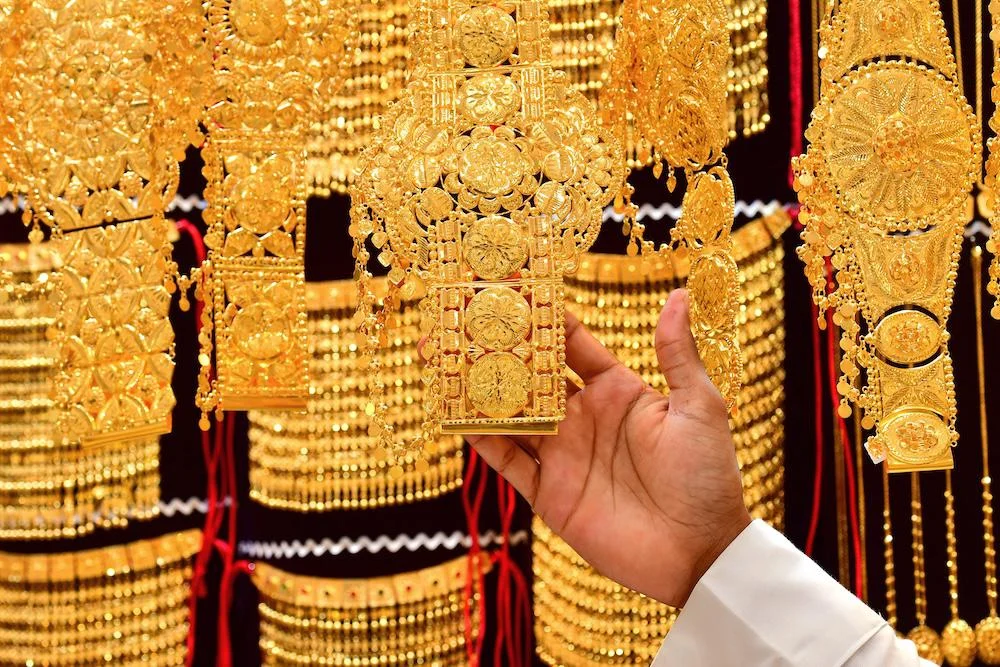
DUBAI (The Thursday Times) — The United Arab Emirates took in at least 591 tonnes of illicit gold worth about $74 billion in 2024, a year after it brought in rules meant to clean up the trade, according to a report by Swissaid, a Swiss development organisation.
The gold, either smuggled out of the countries where it was mined or shipped from places at war or under sanctions, made up 42 per cent of all the gold the UAE imported that year, the report says.
Most of it, some 453 tonnes worth more than $56 billion, reached refineries in Dubai from African producers including Guinea, Mali, and Sudan. Another 137.7 tonnes, worth nearly $17 billion, came from Russia and Yemen, which are both under international sanctions. Nearly 29 tonnes originated in Sudan.
“The findings of this study are deeply concerning. They show that the United Arab Emirates remains a hub for smuggled and conflict gold,” said Marc Ummel, who heads Swissaid’s commodities unit and co-wrote the study.
The UAE was the world’s second-biggest gold exporter after Switzerland in 2024, refining and processing the metal for markets such as Switzerland, India, and China.
Rules on paper
The UAE introduced due diligence rules for gold refiners and traders in 2023, requiring them to check where their gold comes from. The rules followed pressure from the Financial Action Task Force, the global anti-money laundering body, which placed the UAE on its “grey list” of countries under increased monitoring in 2022 and removed it in 2024.
Swissaid says the rules have failed to stem the flow. Many refiners and traders are not following them and enforcement is lax, the report says, and the inflow of smuggled African gold has even risen slightly since the rules took effect.
“We had hoped that with the new regulations, conflict gold from countries subject to international sanctions would be stopped,” Ummel said.
The report’s authors recommend that the task force put the UAE back on its grey list.
The UAE did not respond to requests for comment on the findings. Responding to an earlier Swissaid report, an Emirati official said the country had taken significant steps against gold smuggling and brought in new regulations on gold and other precious metals.
Sudan’s war gold
Illicit gold has been central to Sudan’s war between the army and the paramilitary Rapid Support Forces, which began in April 2023. UN experts say large quantities have been smuggled out to finance the RSF, which controls gold-producing areas in the Darfur and Kordofan regions.
“From our point of view, since April 2023, all gold from [Sudan] should be considered as conflict gold,” Ummel said.
The UAE denies backing the RSF and says its role in Sudan is humanitarian. In October, an Abu Dhabi court jailed eight people for life for smuggling arms to Sudan’s army.
Across Africa, the pull of the Emirates is overwhelming, the report says. More than 95 per cent of the gold that trading partners declared as imports from Sudan, Niger, the Central African Republic, Zimbabwe, Libya, Togo, and Cameroon went to the UAE, and about 70 per cent of all the gold mined in Africa was shipped there in 2024.
Switzerland, in turn, was the biggest buyer of gold from the UAE. Its imports from the Emirates rose from 155 tonnes in 2024 to 420 tonnes in 2025, according to the report.
Swissaid based its findings on UN data, official trade statistics, and interviews with more than 150 people in the trade. Its authors said data for 2025 was incomplete but pointed to the same trend.