PHNOM PENH (The Thursday Times) — The Democratic Republic of Congo said on Saturday it would withdraw its candidate to lead the Francophonie and back Romania’s Dacian Cioloș instead, two days before the 53-member group of French-speaking states chooses its next secretary-general in the Cambodian capital.
Kinshasa said it was pulling out Juliana Amato Lumumba, a former culture minister and the daughter of independence leader Patrice Lumumba, to help the organisation reach a consensus. After talks with Romania, it said it would support Cioloș, a former Romanian prime minister and European agriculture commissioner.
The move is aimed at Rwanda’s Louise Mushikiwabo, who has led the Organisation Internationale de la Francophonie (OIF) since 2019 and is seeking another term. DR Congo accuses Rwanda of backing the M23 rebels in its east, which Kigali denies.
“We have called on all member states to work towards a consensus and, in that spirit, we would be prepared to withdraw our candidate’s nomination in order to facilitate the emergence of a consensus,” DR Congo’s foreign minister, Thérèse Kayikwamba Wagner, said in Phnom Penh.
Macron’s request
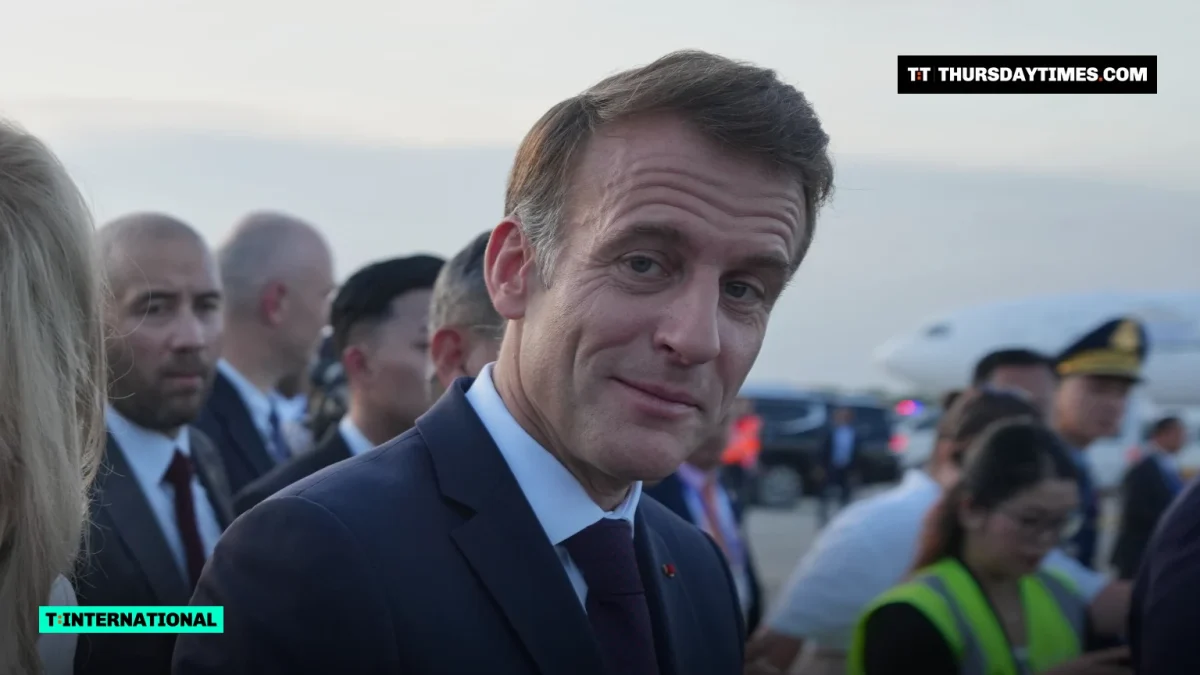
French President Emmanuel Macron, who arrived in Cambodia on Saturday for a state visit and the summit, was reported to have asked Rwanda to withdraw Mushikiwabo in favour of a compromise candidate. Rwanda’s foreign minister, Olivier Nduhungirehe, said his country had “rejected” the request.
Nduhungirehe welcomed Lumumba’s exit, saying it could help build agreement around Mushikiwabo. But he questioned why Kinshasa had backed a European rather than one of the two remaining African contenders, and said the choice went against an African Union decision in July that endorsed three African candidates: Mushikiwabo, Lumumba, and Mauritania’s Coumba Bâ.
Mushikiwabo has said she will stay in the race to the end. Responding to reports that DR Congo would quit the organisation if she won, she said: “A great country, a great people cannot resort to blackmail.”
Kinshasa has not made that threat in public, but its communications minister, Patrick Muyaya, said this week that “if the choice made in Phnom Penh does not reflect the values we stand for, there will be consequences”.
Consensus or a vote
The secretary-general is normally chosen by consensus, but rules adopted at the 2022 summit in Djerba, Tunisia, allow a simple-majority vote among the 53 member states if leaders cannot agree. The summit opens on Sunday, and the decision is due on Monday.
DR Congo is one of the largest French-speaking countries in the world, and its departure would be a heavy blow to an organisation already weakened by the exit of Burkina Faso, Mali, and Niger last year.
Mushikiwabo, who was Rwanda’s foreign minister before she took charge of the OIF, also faces criticism inside the organisation over her management style and over what critics call an activism that serves Kigali’s interests. An OIF spokesperson has rejected that criticism, saying Mushikiwabo “will never apologise for bringing discipline and carrying out reforms”.