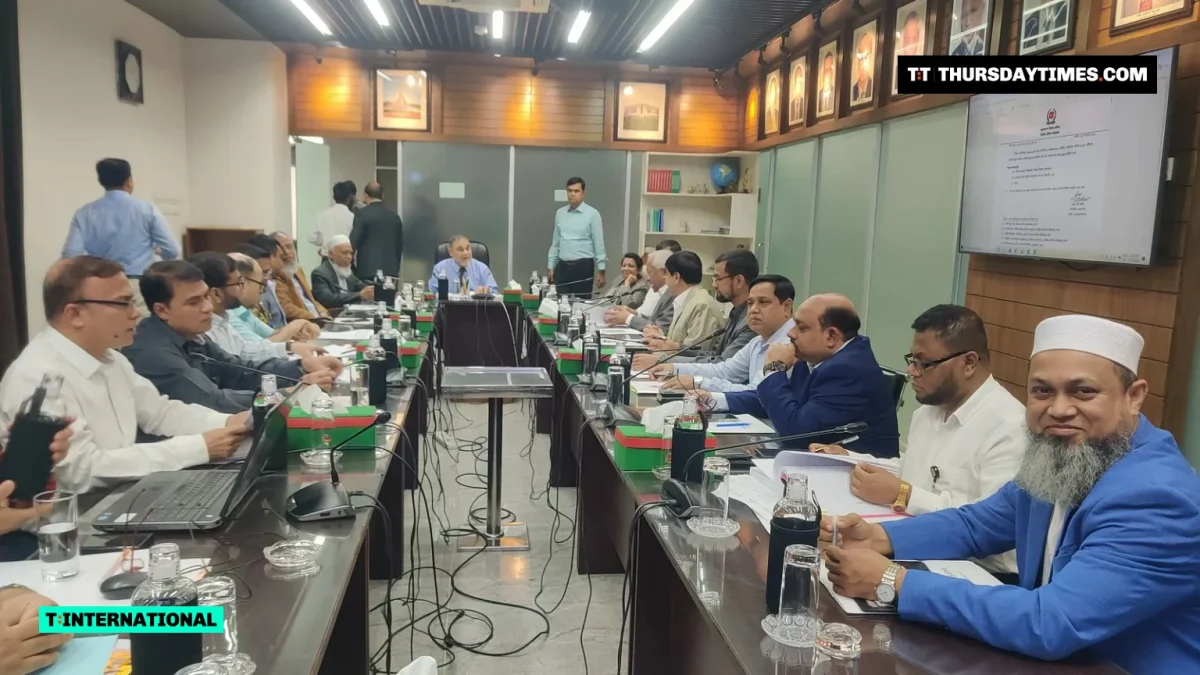
DHAKA (The Thursday Times) — Bangladesh will hold elections to about 4,300 union parishads, the lowest tier of local government, in five phases starting on 21 January, Election Commissioner Abul Fazal Md Sanaullah said after a commission meeting on Monday.
The first phase will cover 1,026 unions, the second 1,113, the third 1,002, the fourth 793, and the fifth 356. The commission had already announced the voting dates: 21 January, 4 February, 29 April, 13 May, and 27 May next year. Sanaullah said the phase-wise figures are tentative and that a full list showing which unions vote on which date will be published on the commission’s website by Thursday.
The commission had first outlined a seven-phase plan in September, then cut it to five because of time constraints, he said.
Room left in the last round
The fifth phase is deliberately the smallest. Sanaullah said that leaves space for unions that are caught up in legal or other complications, if those are resolved or if new problems arise elsewhere. District election officers will announce the specific schedules about 50 days before or after the first-phase date, he said.
Talks with parties, no army request yet
The commission plans to hold a dialogue with all registered political parties before the polls begin, as it did before the national election, and to finish it before 10 December. Parties will be invited over three days, in order of their registration, either late this month or in early December, to discuss how to hold free, fair, and peaceful local elections.
Asked about deploying the army for the local polls, Sanaullah said no party had raised the demand and no request had reached the commission. He said the commission would weigh the availability and effectiveness of law enforcement agencies in each area and take whatever steps were needed to keep the situation manageable. The commission does not expect the law-and-order or political situation to disrupt the elections, he said, and the polls could in some cases help improve it.
The commission also announced after the meeting that electronic voting machines will no longer be used in any election. A committee is working out how the machines now in storage should be disposed of, and Sanaullah said the commission would wait for its recommendations before choosing a method.