THE HAGUE (The Thursday Times) — The International Court of Justice will deliver its judgment on Thursday on whether Myanmar committed genocide against its Rohingya minority. The court has scheduled the ruling for 10am on 19 November, ending a case that judges have weighed for seven years. The ICJ has never before found a state responsible for genocide.
The Gambia, a Muslim-majority country, accuses Myanmar of breaching the 1948 Genocide Convention through its repression of the Rohingya. Eleven other states have intervened in the case. Myanmar denies carrying out a genocide and says its actions were aimed at an armed uprising. Public hearings on the merits ran from 12 to 29 January, and the court also heard survivors in closed sessions.
From Rakhine to the Hague
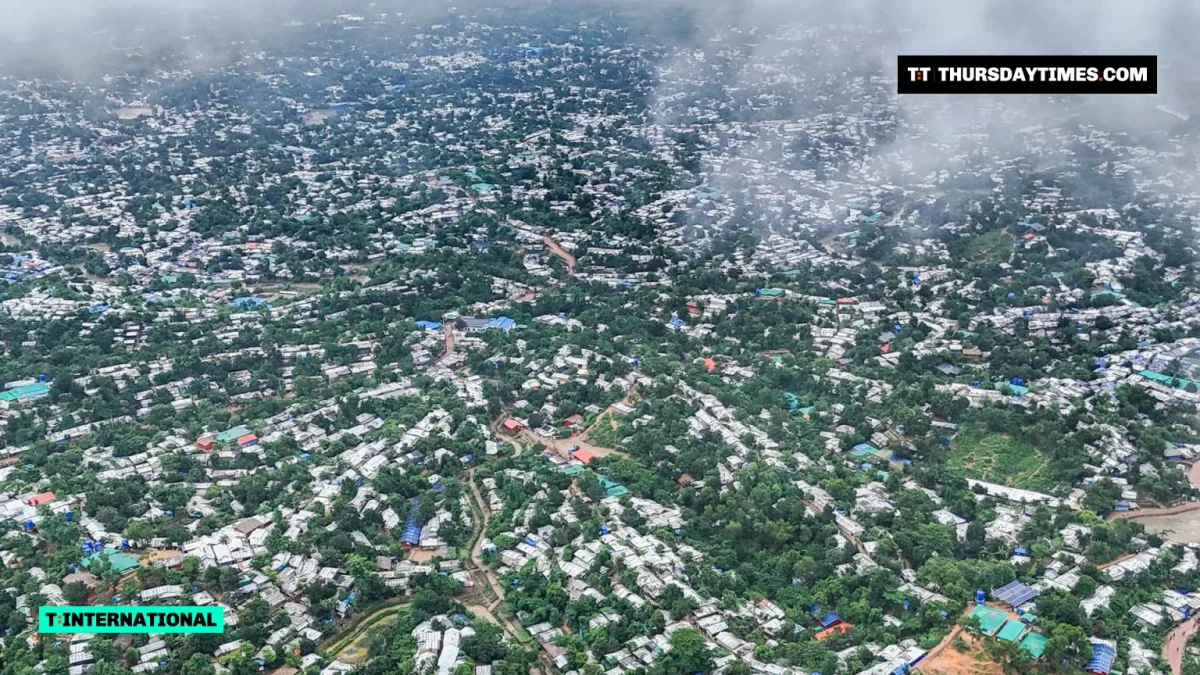
Nearly a decade ago, a military campaign in Rakhine state forced hundreds of thousands of Rohingya to flee across the border into Bangladesh. The Myanmar army launched what it called “clearance operations” after attacks by a Rohingya armed group in the summer of 2017. Refugees have described massacres, including at the village of Tula Toli, which satellite images later showed had been razed. Many of the Rohingya had long been stripped of citizenship and faced discrimination in Rakhine.
Rakhine remains a conflict zone. On Saturday a Myanmar airstrike on a displacement camp in Rakhine killed 12 people.
The question of intent
The central legal issue is intent. The convention defines genocide as acts committed with the intent to destroy, in whole or in part, a national, ethnic, racial, or religious group, and that has been hard to prove in earlier cases. In two cases arising from the Balkans, the ICJ stopped short of holding a state directly responsible for genocide, although it found Serbia failed to prevent the killings at Srebrenica.
Antonia Mulvey, founder of Legal Action Worldwide, which represents hundreds of Rohingya survivors, said she was “cautiously optimistic” that the court would hold Myanmar accountable, pointing to patterns of conduct across villages. She said how the judges treat rape and sexual violence will be a key part of the judgment. Yanghee Lee, a former UN rights investigator on Myanmar, called the ruling historic for survivors and their families.
Wider stakes
A finding of genocide would add pressure on Min Aung Hlaing, who commanded the army during the 2016–2017 attacks, overthrew the elected government of Aung San Suu Kyi in a 2021 coup, and was installed as civilian president in April after elections widely condemned as a sham. He is separately under investigation by the International Criminal Court, which prosecutes individuals rather than states.
Observers say the judgment will also show how the court might approach the genocide case South Africa has brought against Israel over the war in Gaza. The US ambassador to the UN, Mike Waltz, has warned that the ICJ should not set a standard for genocide that could be used against allied soldiers.