BAGHDAD (The Thursday Times) — Iraqi Prime Minister Ali al-Zaidi on Saturday dismissed nine senior security, intelligence, and oil-sector officials in Babil province and ordered everyone implicated in oil smuggling from the Jurf al-Sakhar district to be referred to the courts, after a government committee told him it had confirmed smuggling operations and illegal refineries there.
Al-Zaidi, who is also commander-in-chief of the armed forces, issued the orders at an emergency security meeting called to review the committee’s findings, according to a statement from his military spokesperson. The committee said it had verified an earlier report by the Federal Intelligence and Investigations Agency, and had identified smuggling operations, oil refineries, and what the statement called manipulation in the sector.
Those removed include Babil’s police chief, the director of North Babil Police, the province’s director of intelligence and counter-terrorism, the head of the National Security Service in Babil, the Defence Ministry’s director of intelligence and security in the province, and the provincial intelligence director. The commander of the Popular Mobilization Forces in Babil, the commander of the Sixth Energy Police Brigade, and the director of the state Oil Pipelines Company were also dismissed.
“No part of Iraq will remain a place where smuggling is practiced, from Zakho to Basra,” al-Zaidi said, according to the statement, naming towns at the country’s northern and southern ends. He told operations commanders, provincial police chiefs, and the heads of security and intelligence agencies that they would bear full responsibility for any smuggling in areas under their watch, and said officials found negligent or involved would be held to account.
A district closed to the state
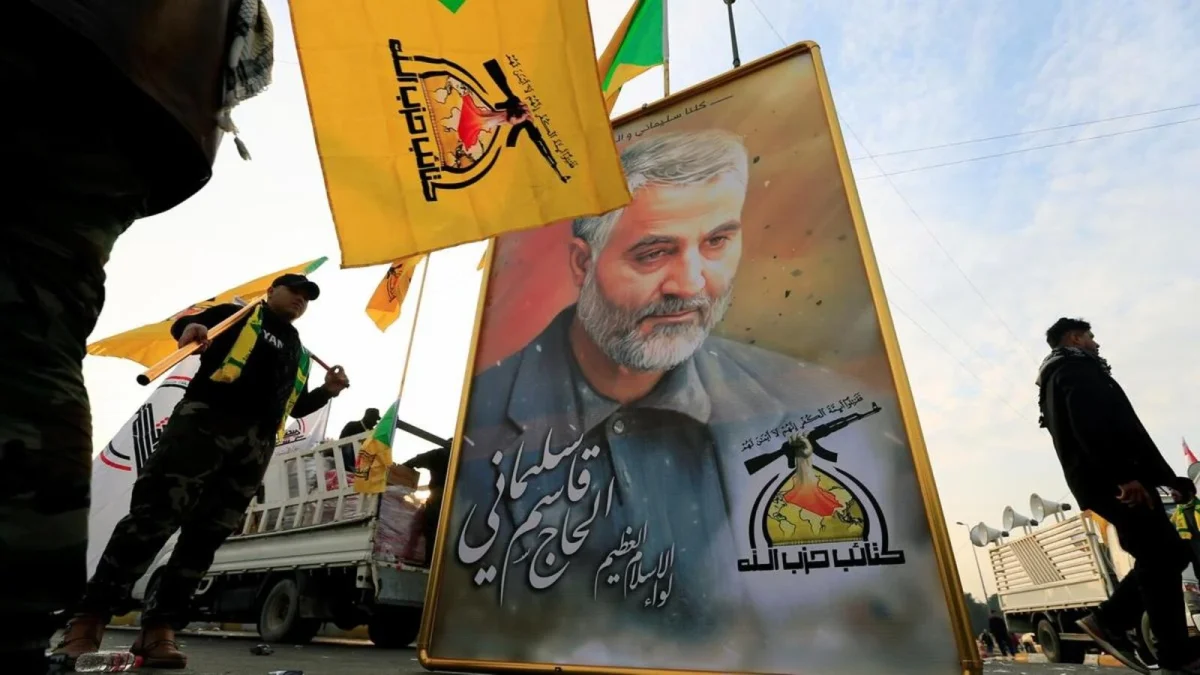
Jurf al-Sakhar, officially renamed Jurf al-Nasr, lies in northern Babil, about 60 kilometres southwest of Baghdad. It has been held by the Iran-aligned armed group Kataib Hezbollah since Iraqi forces and allied groups retook it from the Islamic State group in 2014, and its residents have not been allowed to return. The United States lists Kataib Hezbollah as a terrorist organisation.
The inquiry followed an intelligence report that began circulating on Monday. According to details of the report published this week, crude has been drawn from Oil Ministry pipelines in the area through drilled openings since 2021, processed in makeshift refineries, and kept in concealed storage pits before being moved out by tanker.
Al-Zaidi formed the investigating committee on Thursday and placed it under the Popular Mobilization Forces, the state-funded umbrella of mostly Shiite armed groups that includes Kataib Hezbollah. Its members went into the district under heavy military escort on Friday after agreeing procedures with faction leaders, and left the same day.
Babil’s governor, Ali Turki, who had denied that there were any smuggling sites in the town, resigned on Thursday after his remarks became public. On Tuesday a Kataib Hezbollah security official, Abu Mujahid al-Assaf, warned that al-Zaidi would bear “full responsibility” for any strike on the group’s positions or those of the Popular Mobilization Forces.
Iraqi security sources have said that a planned operation by three army brigades to enter the town was postponed after details leaked to leaders of the ruling Coordination Framework and the Popular Mobilization Forces. The government has not confirmed that account.
Saturday’s dismissals take the government’s response beyond the alleged smugglers to the officials responsible for policing the province, including the Popular Mobilization Forces’ own commander in Babil. The committee’s full report has not been made public.
A temporary parliamentary committee ordered by Speaker Haibet al-Halbousi on Wednesday is also following up the intelligence report, alongside the November 8 drone attack on the Khor Mor gas field in the Kurdistan Region. The pressure on the faction comes as Iraq trucks crude overland to Syria’s Baniyas port while shipping through the Strait of Hormuz stays disrupted.