LONDON (The Thursday Times) — Britain on Tuesday announced its first sanctions on Israeli companies working in West Bank settlements, imposing asset freezes and director disqualifications on eight construction firms and sanctioning an activist group that it says has blocked aid trucks bound for Gaza.
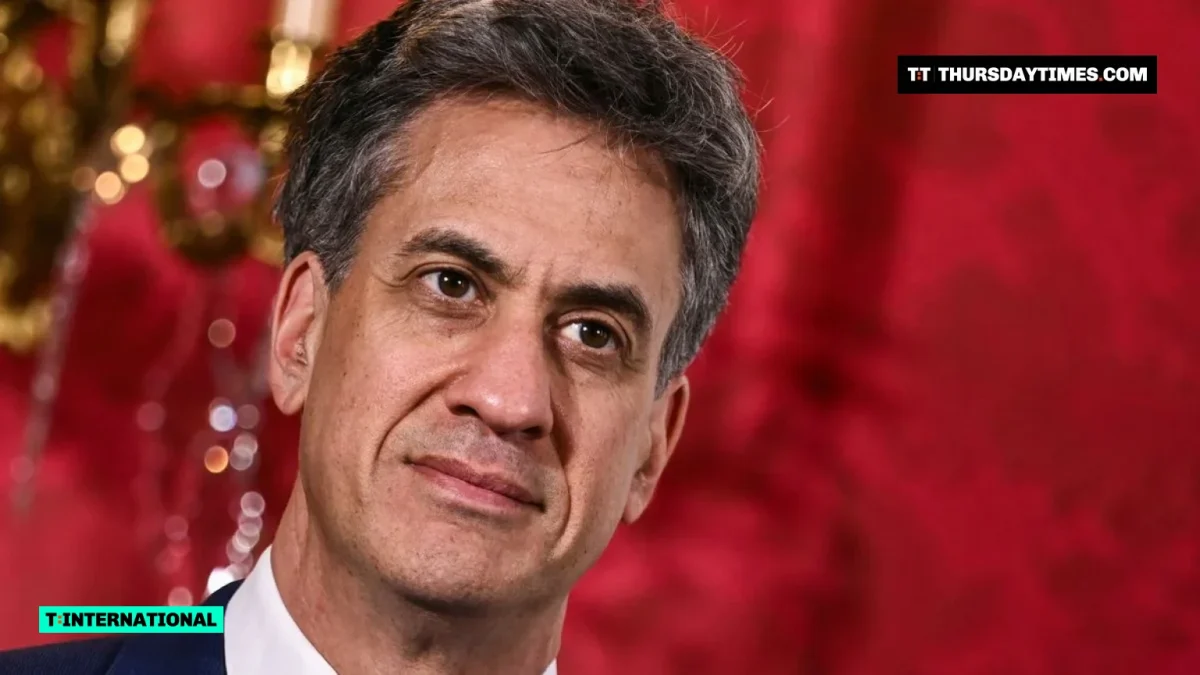
Foreign Secretary Ed Miliband announced the measures shortly before the final deadlines for tenders on the E1 settlement project, which would bisect the occupied West Bank and cut it off from East Jerusalem. The firms include Har Hevron Development Company Ltd, Hemdat Shomron Ltd, and S.A.G. (Velvel) Construction and Development Ltd. The government said the group Tzav 9 had regularly blocked trucks carrying food, water, and fuel into the Gaza Strip, most recently last month.
“Protecting the two-state solution is the north star of this government’s approach,” Miliband said in a statement. “That is why my message on E1 is clear: do not bid, do not build, and do not profit from the destruction of the two-state solution.”
Who is targeted
The Foreign Office said the targeted businesses are Israeli construction, property development, and architectural firms that helped plan, build, supply, or market housing and public infrastructure in settlements in the occupied West Bank. It said the current Israeli government had “not only refused to clamp down on illegal settlement, but has facilitated and encouraged them”, with more settlements approved in its four years in office than in the previous 20. The sanctions are meant to cut the flow of finance to the firms, although how far any of them depend on British money has yet to be tested.
Gaza aid
Miliband and his Middle East minister, Stephen Doughty, have repeatedly criticised Israel’s refusal to let a range of dual-use goods into Gaza. The Foreign Office said civilians there urgently need winter supplies after floods left nearly 4,000 households without shelter, with 1.4 million people living in tents or makeshift shelters. According to the United Nations, more than 150,000 tents and 300,000 tarpaulins bought by aid partners and donors are waiting outside Gaza, held by the Israeli authorities. Israel says some goods must be blocked to stop Hamas getting items it could use in attacks.
“The status quo in the West Bank and Gaza is unacceptable,” Miliband said.
A strained relationship
On 8 September Miliband expanded Britain’s global human rights sanctions regime and set out measures, not yet in force, to ban trade in goods from illegal settlements. The Foreign Office said it welcomes and encourages trade with “green line Israel” and draws a firm distinction with settlement activity. Israel threatened that month to close the British consulate in East Jerusalem in response, and diplomats from the two countries reached a last-minute agreement last month to avoid that.
Miliband also struck a conciliatory note, saying Britain is “committed to working productively with a new Israeli government and the Palestinian Authority to advance lasting peace”. Gadi Eisenkot, who may become Israel’s next prime minister, has said that if appointed he will take a tougher approach to settler violence than Benjamin Netanyahu.