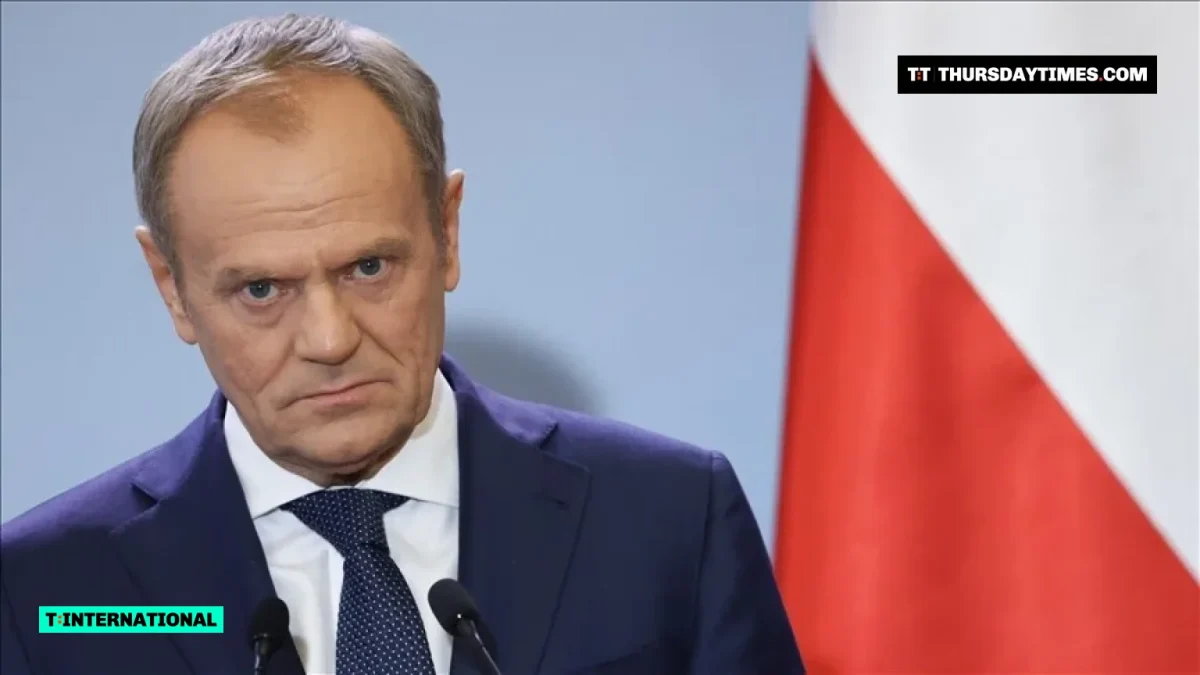
WARSAW (The Thursday Times) — Poland’s coalition government survived a constructive no-confidence vote in the Sejm on Tuesday, with the lower house rejecting the motion by 242 votes to 200 amid a deepening dispute over the Constitutional Tribunal.
The motion was brought by the opposition Rozwój Plus (Development Plus) group, led by former prime minister Mateusz Morawiecki. It proposed Marek Jurek, a former Sejm speaker, as head of an interim government.
Under the constitution, a constructive vote of no confidence needs at least 231 votes in the 460-seat Sejm and the simultaneous election of a replacement prime minister. The motion fell well short of that threshold.
What the opposition argued
Morawiecki accused Prime Minister Donald Tusk’s administration of undermining democratic institutions, pointing in particular to its recent moves over the Constitutional Tribunal. He argued that the row was distracting attention from economic and social problems, and said Jurek could lead a transitional administration to ease tensions.
Coalition lawmakers rejected the accusations and defended the government’s record on the economy, infrastructure investment, and defence spending. Tusk dismissed the motion as a political spectacle and challenged Morawiecki’s claims about inflation, the rule of law, and government integrity.
The court dispute behind the vote
The Tribunal has been split since October, when judges backed by the government took control of the court. Five of the eight newly elected judges have yet to be sworn in by President Karol Nawrocki. The government-backed judges have declared the court’s chief justice, Bogdan Święczkowski, and his deputy, Bartłomiej Sochański, suspended and started disciplinary proceedings against them. On 10 November the Supreme Court revoked that suspension, though its validity is disputed.
On Monday, the National Bank of Poland froze all payment orders from the Tribunal’s accounts. The bank said it had received documents that “mutually cancel each other out” and that it had no authority to decide who is entitled to control the court. Finance minister Andrzej Domański criticised the move, saying the central bank should safeguard its independence, including its political independence. Justice minister Waldemar Żurek also condemned it.
The government, which took office in December 2023, remains in power ahead of parliamentary elections due in autumn 2027.