WASHINGTON (The Thursday Times) — NASA will release the first images from its Nancy Grace Roman Space Telescope on Monday 7 December, in a live stream from the American Geophysical Union’s annual meeting in San Francisco, the agency said in a media advisory.
The release is set for 3:30pm US Eastern time (12:30pm Pacific), which is 1:30am on Tuesday 8 December in Pakistan. NASA said the pictures will show off the telescope’s scientific capabilities, and that Roman will soon capture deep, panoramic views of the universe that have not been seen before.
What happens on the day
At noon Eastern, NASA will preview the images for media under embargo at the San Francisco meeting; journalists must register with the AGU by 8pm on Sunday 6 December to take part, in person or remotely. At 2:45pm, NASA Administrator Jared Isaacman will join a fireside chat moderated by the journalist Alex Witze on the links between Earth and space science.
The live broadcast will follow at 3:30pm on NASA’s platforms and the AGU’s channels, and the pictures will be posted on the agency’s website at the same time. On Tuesday 8 December, from 6am to 1pm Eastern, mission experts will be available for live remote interviews with broadcasters.
NASA is also inviting the public to “adopt” a pixel. Each pixel in one of Roman’s select first images will stand for a unique piece of the cosmos, and once the image is revealed, participants can look up their pixel and get a digital trading card to share. People can also host their own events for the reveal.
From launch to first look
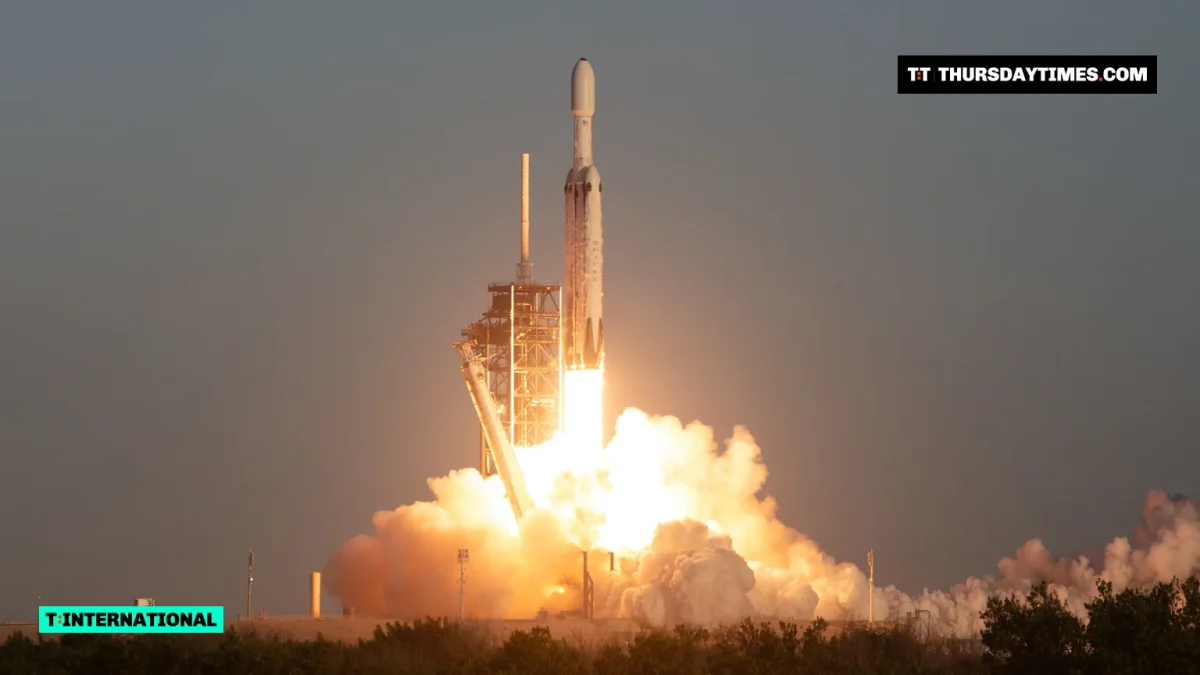
Roman launched on 30 August on a SpaceX Falcon Heavy rocket from Kennedy Space Center in Florida. It then began a three-month, million-mile trip to its final orbit at the Sun-Earth Lagrange Point 2, and has spent the journey being commissioned: its systems have been switched on, adjusted, calibrated, and prepared for science.
With its wide field of view and sharp infrared vision, Roman will survey vast areas of sky to help scientists study dark energy, dark matter, and planets beyond our solar system. It will also carry a coronagraph, a technology demonstration designed to image planets directly around other stars. NASA’s Goddard Space Flight Center in Maryland manages the mission, with the Jet Propulsion Laboratory, Caltech/IPAC, and the Space Telescope Science Institute taking part.
Roman’s first pictures will arrive weeks after another European space telescope released its own big data haul; see our report on the Euclid map of 900 million galaxies.