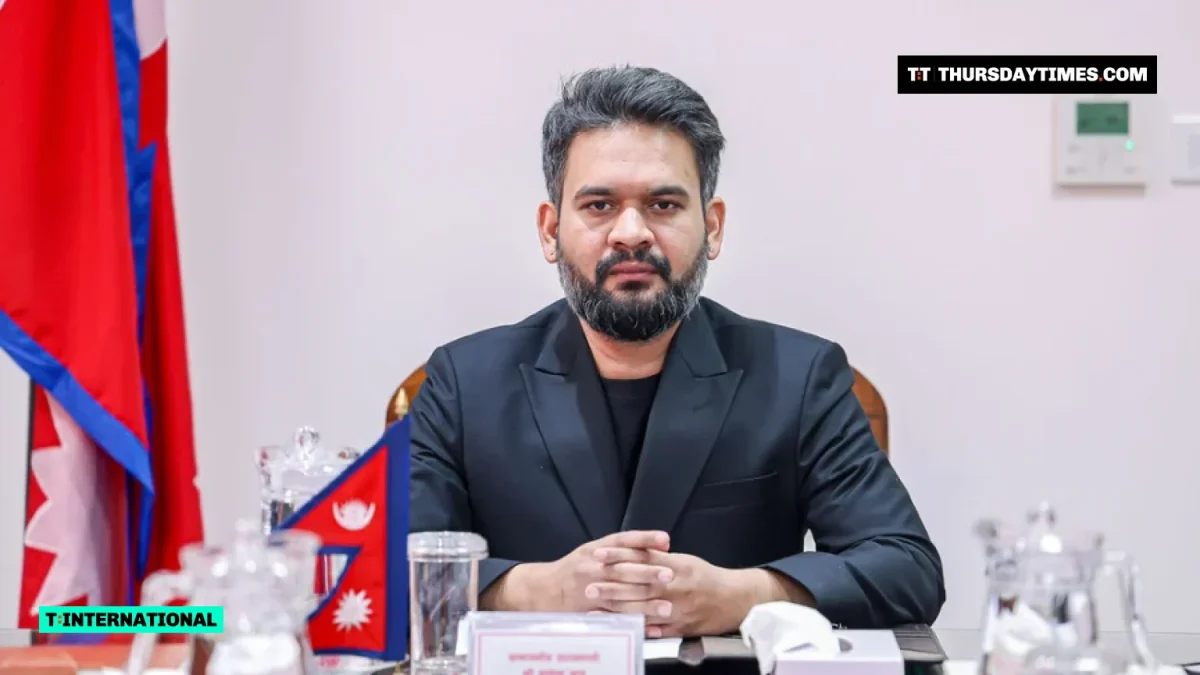
KATHMANDU (The Thursday Times) — Nepal’s Prime Minister Balendra Shah is due in New Delhi on Sunday, 22 November, for his first bilateral visit abroad since taking office, a trip being watched as a chance to reset ties between the two neighbours. Officials in Kathmandu say the visit will last about 30 hours, including travel time.
What is on the agenda
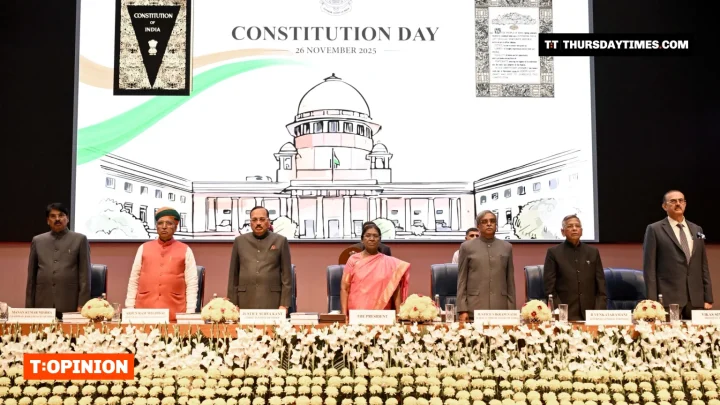
Shah, 36, is a rapper-turned-politician whose Rastriya Swatantra Party swept to power in March, six months after a Gen Z uprising against corruption and nepotism toppled K P Sharma Oli’s government. He is due to meet Prime Minister Narendra Modi and other senior Indian officials. Formal talks are scheduled for Monday, 23 November, when he is also expected to meet President Droupadi Murmu, according to an official at Nepal’s foreign ministry.
The talks are expected to cover economic and energy cooperation, new air corridors, and a reconstruction assistance package after the flash floods that struck Nepal in August. The disaster killed more than 1,450 people, and thousands remain missing.
Envoy and analysts see an opening
India’s newly appointed ambassador to Nepal, Sudhakar Dalela, told Shah on Wednesday that the meeting with Modi would be “historic and significant” and that the agenda had already been finalised.
Ranjit Rae, a former Indian ambassador to Nepal, said the new Nepali leadership appeared “more pragmatic, less ideological” and called it “an optimistic moment”. Nepal’s communist parties, which long dominated governments in Kathmandu, were seen as closer to China and often criticised Delhi over what they viewed as unequal agreements.
Close ties, old frictions
The two countries share a largely open border of more than 1,750 kilometres. Bilateral trade exceeds $9 billion and is heavily skewed in India’s favour, a long-standing source of resentment in Nepal. India is also Nepal’s main supplier of petroleum products and a key transit route for its trade. On energy, India has approved projects to import up to 1,200MW of electricity from Nepal and is looking to buy more.
Relations have at times been strained by territorial disputes, allegations of political interference, and what many in Nepal see as a “Big Brother” attitude in Delhi. Wedged between India and China, Nepal remains a strategic buffer that both capitals court.