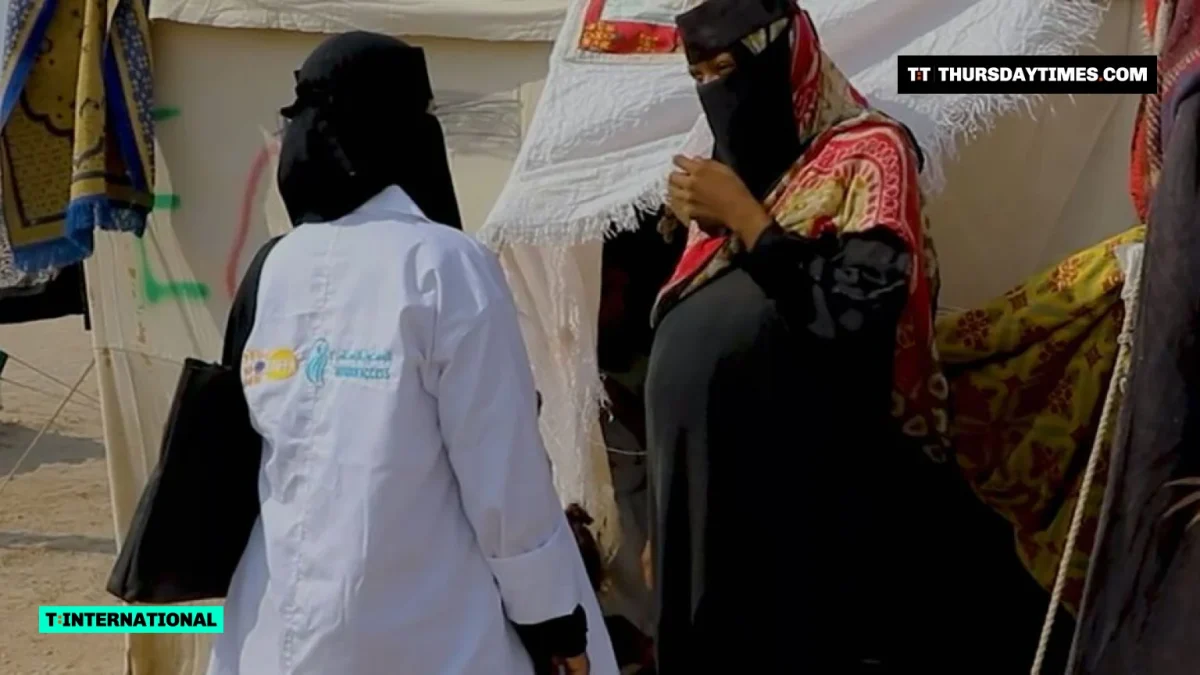
UNITED NATIONS (The Thursday Times) — More than 6,400 displaced women in Yemen are expected to give birth, about 600 of them this month, according to the UN sexual and reproductive health agency UNFPA, many without basic sanitation or medical facilities.
Surges in fighting have displaced more than 320,000 people since August, including over 80,000 in October alone, according to the International Organization for Migration. More than 22 million people in Yemen were already estimated to need humanitarian assistance this year.
UNFPA says about 1,500 women may need emergency obstetric and newborn care, while fewer than two-thirds of health facilities are fully functional. Yemen has one of the highest maternal mortality rates in the region, with three women dying every day from preventable pregnancy complications, the agency says. It also reports widespread sexual violence against displaced women.
Midwife Anisa Fadhl fled escalating fighting around Taiz, in the south-west, about two months ago, without time to pack. She told UNFPA that her home and clinic were later looted and destroyed. “We escaped with only our lives,” she said, adding that chairs, mattresses, electronic medical equipment, and examination beds were taken.
While fleeing, she kept caring for people in the heat, with little transport and water, and a passing cargo truck carried pregnant women, elderly women, and children. She returned to work two days after settling in Aden, where she now delivers babies, provides prenatal and postnatal checkups, and offers breastfeeding and hygiene advice, psychosocial support, and family planning.
One of her patients, Um Mohammed, fled Taiz heavily pregnant, on foot with her young children, and went into labour within hours of reaching a host family. Fadhl delivered the baby without any tools, tying the cord with thread from a flour sack and cutting it with a razor blade borrowed from a neighbour.
As of 30 October, UNFPA had reached nearly 180,000 people with emergency reproductive health and protection services. The agency is appealing for $71.9 million in 2026, of which only a quarter has been funded so far.