PASADENA (The Thursday Times) — NASA has released “The Europa Concept”, a documentary that follows the Europa Clipper mission from a distant idea to a spacecraft on its way to Jupiter, the US space agency said on Monday.
The film is available from 23 November on NASA+, the NASA app and the agency’s website, and is due on YouTube soon. NASA says it traces the decades of work, and the thousands of people, behind getting the spacecraft to the launch pad in 2024.
A spacecraft built for Jupiter’s radiation
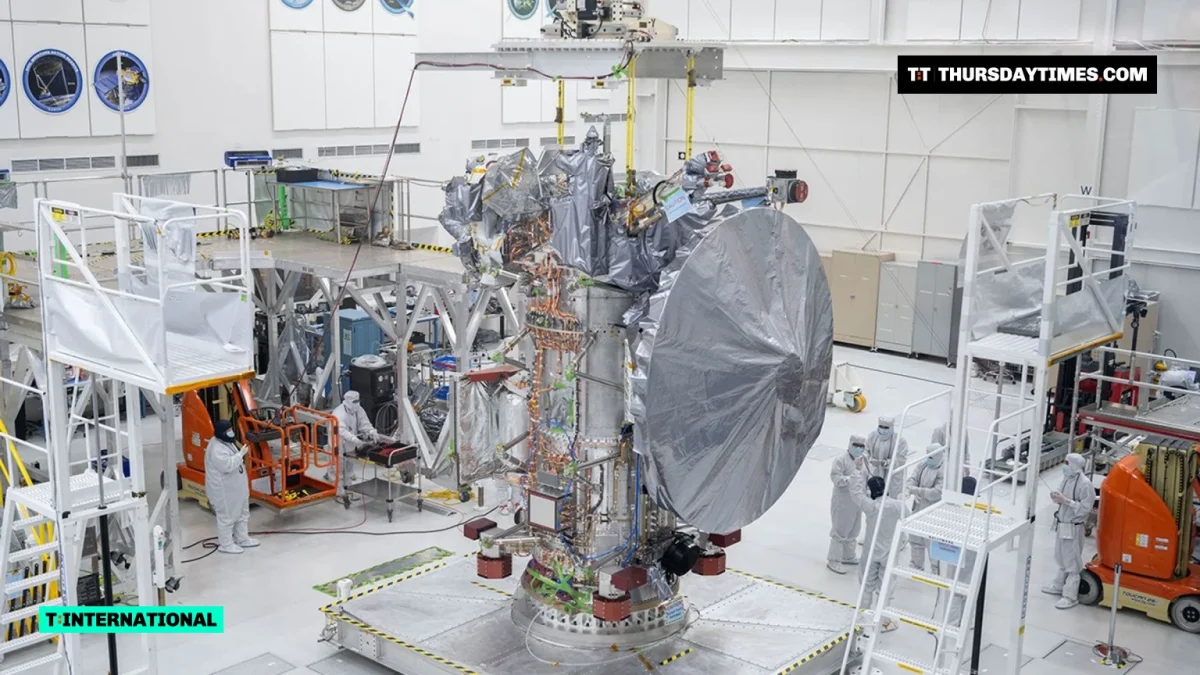
Europa Clipper is the largest orbiter NASA has sent into deep space. It is now two years into a five-year, 1.8 billion-mile (2.9 billion-kilometre) journey to the Jupiter system, where it will make flybys of the moon Europa to look for the conditions for life in the ocean thought to lie beneath its icy shell.
The documentary shows how the team built a spacecraft able to survive some of the harshest radiation in the solar system. NASA says that radiation, a product of Jupiter’s powerful magnetic field, may itself have helped create a potentially habitable environment on Europa.
From a 2013 start to a hurricane at launch
Work on the mission began at NASA’s Jet Propulsion Laboratory in Southern California in 2013. Engineers then spent 11 years building the spacecraft and its nine science instruments in time for a launch window set by planetary alignment. NASA says the team met a global pandemic along the way and, just before launch on 14 October 2024, a Category 5 hurricane and tornadoes near the Kennedy Space Center in Florida.
“The things we will learn from Europa Clipper will be so sensational, so fantastic, that everyone will be screaming for the next mission,” said Curt Niebur, program scientist in NASA’s Planetary Science Division.
Jordan Evans, director of flight projects at the laboratory and the mission’s previous project manager, said the film pays tribute to the ingenuity, teamwork and dedication behind the mission. The laboratory, managed by Caltech in Pasadena, leads development of Europa Clipper in partnership with the Johns Hopkins Applied Physics Laboratory.