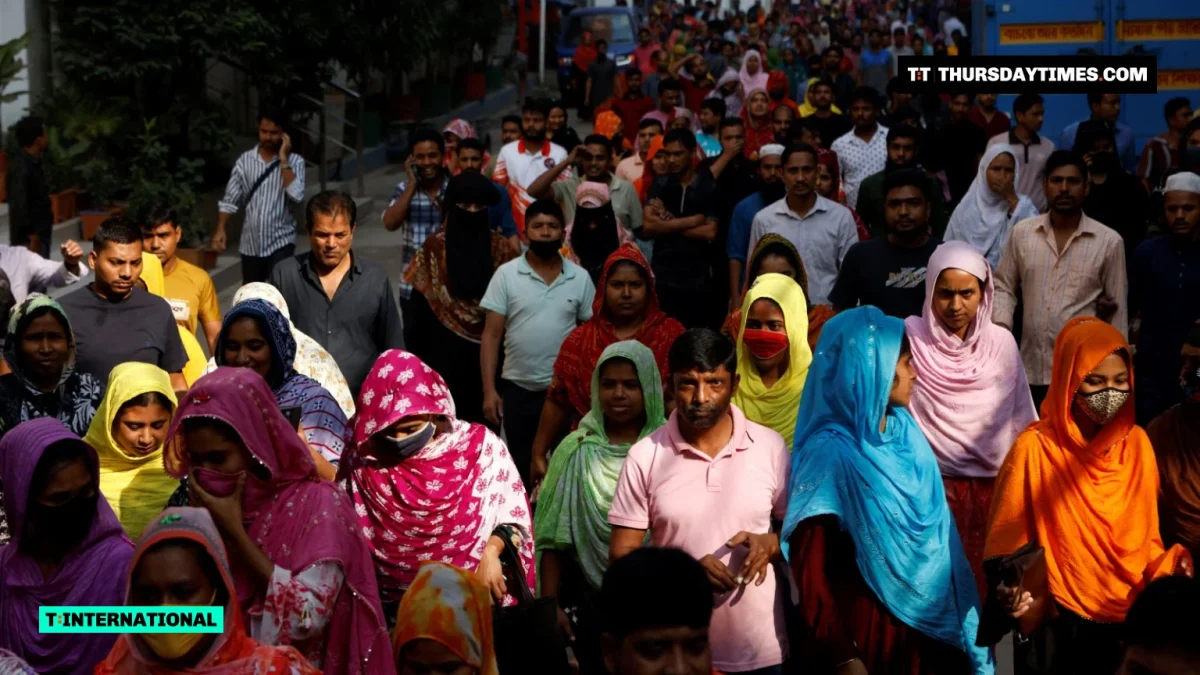
DHAKA (The Thursday Times) — Bangladesh’s garment workers have won a 36 percent rise in the minimum wage, lifting monthly pay from 12,500 taka to 17,000 taka after weeks of protests that sometimes turned violent.
Judge Syed Azad Subhani, who chairs the government-appointed wage board, said the majority backed the 17,000 taka figure in a vote early on Wednesday. Workers had been demanding 30,000 taka a month, about $240. The new pay is due to reach workers from January.
“Although we are not completely satisfied, the outcome is not entirely bad either,” said Babul Akhter, the workers’ representative on the board. He noted that wages used to be revised every five years, but this time the revision comes after three. Akhter urged workers to return to their factories.
It is not yet clear whether protesters will accept the offer. Workers blocked a major highway near Dhaka after the decision was announced, and police fired tear gas at one blockade in Gazipur.
The unrest has been costly. The Bangladesh Garment Manufacturers and Exporters Association said on Sunday that the protests had cost the industry an estimated $428m in losses, while orders worth $254m had moved to other countries.
The stakes are high for the wider economy. Garments earn Bangladesh roughly $38bn a year, employ about four million people, and account for around four-fifths of the country’s exports. Bangladesh is the world’s second-largest garment exporter, behind China, and many of its workers are women from rural areas.