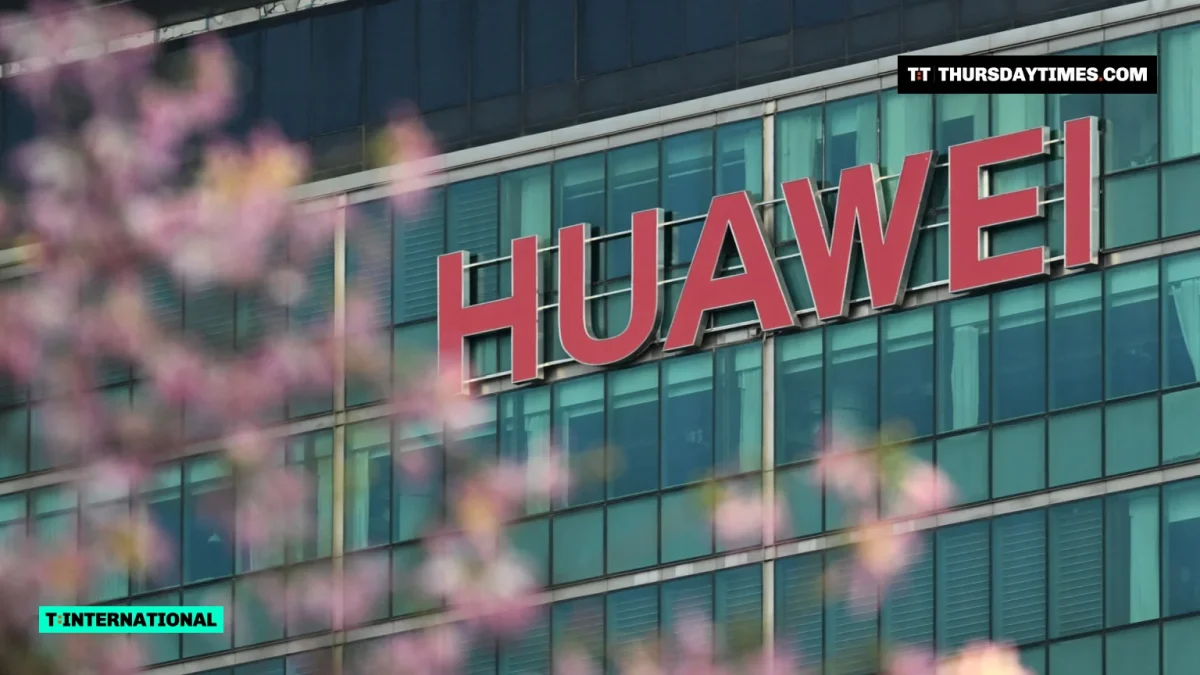
NEW YORK (The Thursday Times) — Chinese technology giant Huawei has been convicted in a United States federal court of conspiracy to steal trade secrets and of bank fraud, in a landmark criminal case that began with the 2018 arrest of one of its top executives.
A jury in Brooklyn on Tuesday found the company guilty on 10 of the 12 counts it faced, including conspiracy to defraud the US and conspiracy to violate US sanctions. It cleared Huawei of the most serious charge, racketeering conspiracy, which alleged the company had acted as a criminal enterprise.
The charges
Prosecutors said Huawei spent two decades lying to banks about its business in Iran and taking technology from rivals to gain an edge. The 2018 indictment alleged the company misled HSBC, Standard Chartered, and BNP Paribas, and new charges added in 2020 covered the alleged theft of trade secrets from US firms.
At trial, prosecutors tried to show that Huawei took source code from Cisco for its routers, copied antenna technology from the wireless company Quintel, and hired a professor to gain access to a circuit board developed by the chipmaker CNEX. Jurors also watched a video that, according to prosecutors, showed a Huawei employee slipping a piece of a T-Mobile testing robot into a backpack. The trial ran for more than two months, with prosecutors calling more than 60 witnesses and the defence calling 15.
The case began when Meng Wanzhou, Huawei’s chief financial officer and the founder’s daughter, was detained in Canada on a US warrant in December 2018. She fought extradition for nearly three years before reaching a deferred prosecution agreement and returning to China. The charges against her were dropped.
Reaction
US Attorney General Todd Blanche said: “No person or company is above the law.” He added that “for decades, Huawei and three of its subsidiaries conducted their business in the United States on the basis of lies and theft”.
Huawei said the racketeering acquittal “confirms that these allegations lack factual basis” and that it would “take all necessary legal actions to defend our rights and interests”. Defence lawyer Brian Heberlig said the racketeering count was “a significant overreach” and that the jury had “soundly rejected it”. He said he fully expected Huawei to appeal. China’s government criticised what it called US suppression of Chinese companies and said it supports firms in protecting their interests.
Sentencing is planned for September 2027. Huawei, which employs more than 200,000 people and operates in about 170 countries, was placed on a US trade blacklist in 2019. Experts say the case has not undermined its business, as it diversified and became a key player in China’s push for artificial intelligence.