ISLAMABAD (The Thursday Times) — Pakistan’s exports to the Gulf fell $387 million short between March and October as the war between the United States and Iran disrupted shipping, raised freight and insurance costs, and held up goods, Commerce Secretary Jawad Paul told a National Assembly committee on Wednesday.
Exports to the six Gulf Cooperation Council states fell by $316.9 million, or 32.3%, in March to June compared with the same period last year, according to commerce ministry figures presented to the National Assembly Standing Committee on Commerce. The decline narrowed to 6.4%, or $69.8 million, in July to October as exporters adjusted.
Freight costs jumped
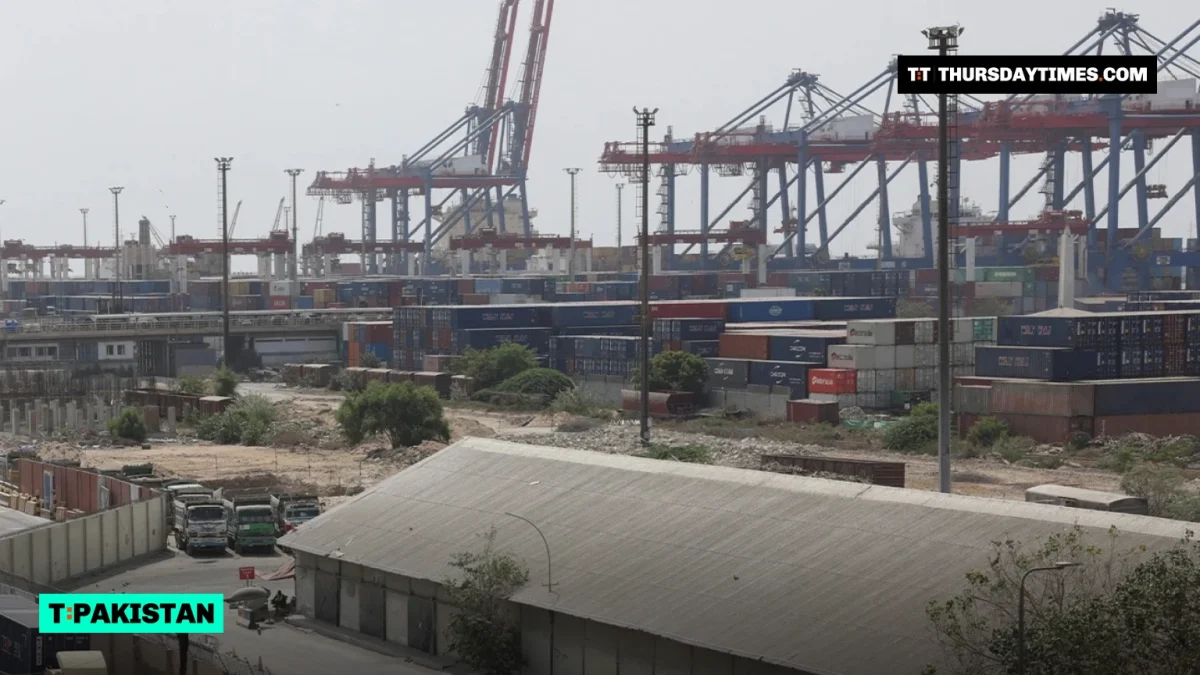
The ministry said the cost of shipping a 40-foot container from Karachi to Qatar’s Hamad port rose from $1,300–$1,900 to $8,500–$8,800. Shipments to Kuwait’s Shuwaikh port cost about $8,500, up from $1,800–$2,000, and freight to the UAE’s Jebel Ali rose to $5,000–$6,000 from $1,200–$2,000.
The UAE was the hardest-hit market in the first phase, with Pakistani exports there down 42.7%, or $264.8 million. Exports to Qatar fell 49.8%, Kuwait 38.7%, Oman 25.1%, and Bahrain 13.3%, while Saudi Arabia recorded a fall of only 1.7%, according to the ministry.
The government set up an inter-ministerial committee in March, arranged dedicated cargo flights, particularly for meat exports, negotiated lower air freight rates with Emirates, Gulf Air, and Jazeera Airways, and secured cuts of up to 60% in port handling charges, Paul said. Some exporters switched to the Khunjerab–Sost border with China or redirected shipments to Southeast Asian and African markets.
The war has also weighed on the Gulf economies themselves, which a credit insurer estimates will lose $790 billion in output by 2030.
Afghan trade and GSP+
Paul defended the suspension of bilateral and transit trade with Afghanistan on national security grounds, saying it had cut Pakistan’s exports by around $1 billion. “National security is the most important,” he told the committee.
He said Pakistan’s total exports, including services, stood at $40 billion in the 2025–26 fiscal year, with merchandise exports at about $32 billion, and that he expected merchandise exports to reach $35 billion in 2026–27.
On the European Union’s GSP+ trade preferences, Paul said the EU’s new mechanism would take effect from 2029 and that Pakistan would need to comply with five more international conventions on top of the existing 27. “We are safe till 2029,” he said.