PESHAWAR (The Thursday Times) — Khyber Pakhtunkhwa’s debt rose 7.7% in the last fiscal year to Rs836.4 billion, up from Rs776.3 billion a year earlier, according to the provincial finance department’s annual debt bulletin.
The Annual Debt Statistical Bulletin, released on November 11 and published on the department’s website, shows that the province spent Rs50.5 billion on servicing its debt between July 2025 and June 2026. Of that, Rs33.3 billion went on repaying principal and Rs17.2 billion on interest.
The debt is made up of loans from international development partners for 101 projects, the bulletin says. Thirty of those projects are still active and drawing money, while the other 71 have closed and are being repaid.
The World Bank’s International Development Association is the largest lender, with 45 loans and Rs377.5 billion outstanding, about 45% of the total. The Asian Development Bank follows with 44 loans and Rs352.6 billion, or 42.1%.
The rest is owed to the Asian Infrastructure Investment Bank (Rs40 billion), the French Development Agency (Rs36.6 billion), the Japan International Cooperation Agency (Rs20.9 billion), the International Fund for Agricultural Development (Rs7.1 billion), and the International Bank for Reconstruction and Development (Rs1 billion).
The loans are in foreign currencies, so the rupee’s value affects what the province owes. Eighty-seven loans worth Rs612.7 billion are in US dollars, four worth Rs122 billion are in euros, and seven worth Rs99.7 billion are in Japanese yen.
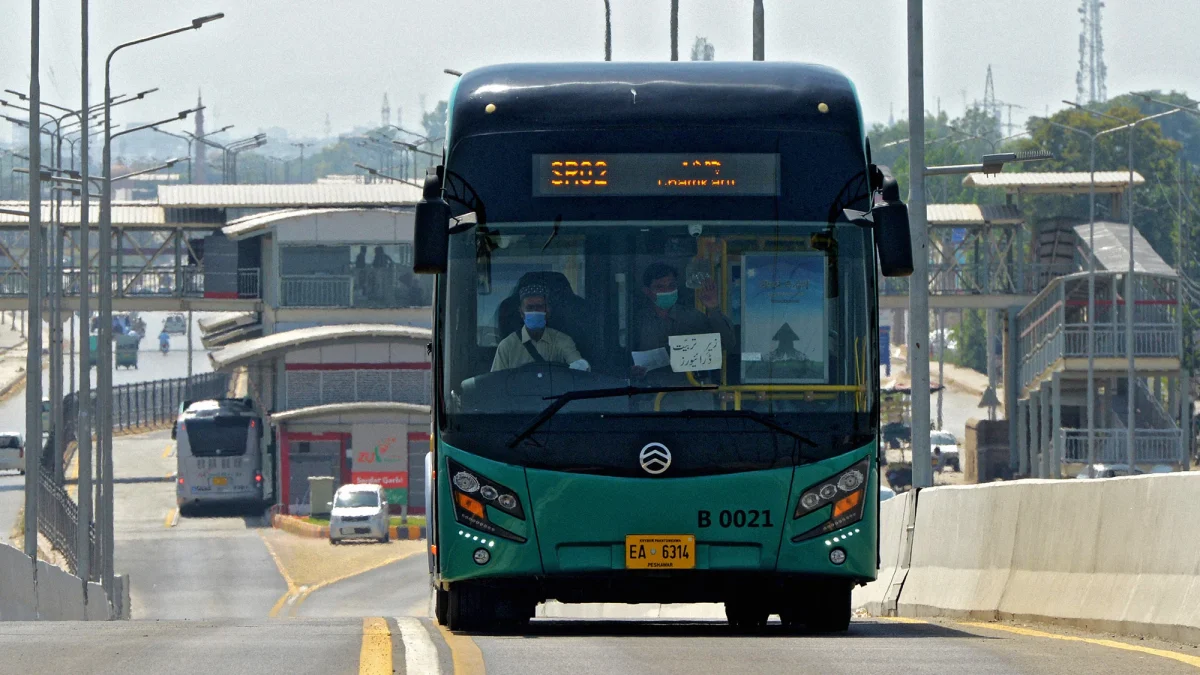
Transport and communications account for the largest share, Rs202.3 billion or just over 24% of the total. Energy and power follow with Rs106.2 billion, and finance with Rs104.7 billion, each just over 12%. The Peshawar Bus Rapid Transit, which opened in 2020, was built largely with Asian Development Bank financing.
Other sectors include water and urban infrastructure at Rs82.9 billion, economic development at Rs76.2 billion, rural development at Rs76.1 billion, agriculture at Rs47.4 billion, irrigation at Rs36.1 billion, health at Rs27 billion, and tourism at Rs19.7 billion. Education accounts for Rs7.8 billion.
Although the debt grew, the bulletin says the burden of carrying it eased. Debt servicing took 3.5% of the province’s total receipts of Rs1.4 trillion in 2025-26, down from 4.1% in 2024-25, when repayments cost Rs49.3 billion against receipts of Rs1.2 trillion. Interest payments fell to 1.21% of receipts from 1.51%.
At the federal level, the central government’s debt fell by Rs937 billion in the first quarter of this fiscal year, State Bank figures showed this week.