ইসলামাবাদ (দ্য থার্সডে টাইমস) — 2023 সালে যে রুপিকে মূল্যহীন বলা হয়েছিল, সেটি এখন ভারতীয় রুপিকে ছাড়িয়ে যাচ্ছে। অপারেশন সিন্দুরের এক বছর পর পাকিস্তানের মুদ্রার বিপরীতে ভারতীয় রুপি তার মূল্যের প্রায় 13 শতাংশ হারিয়েছে। এই পরিবর্তন বিশ্লেষকদের বিস্মিত করেছে এবং গোটা অঞ্চলজুড়ে উল্লেখযোগ্য বিতর্কের জন্ম দিয়েছে। পরিসংখ্যান আসলে কী দেখাচ্ছে, তা নিয়ে দ্য থার্সডে টাইমসের এই প্রতিবেদন।
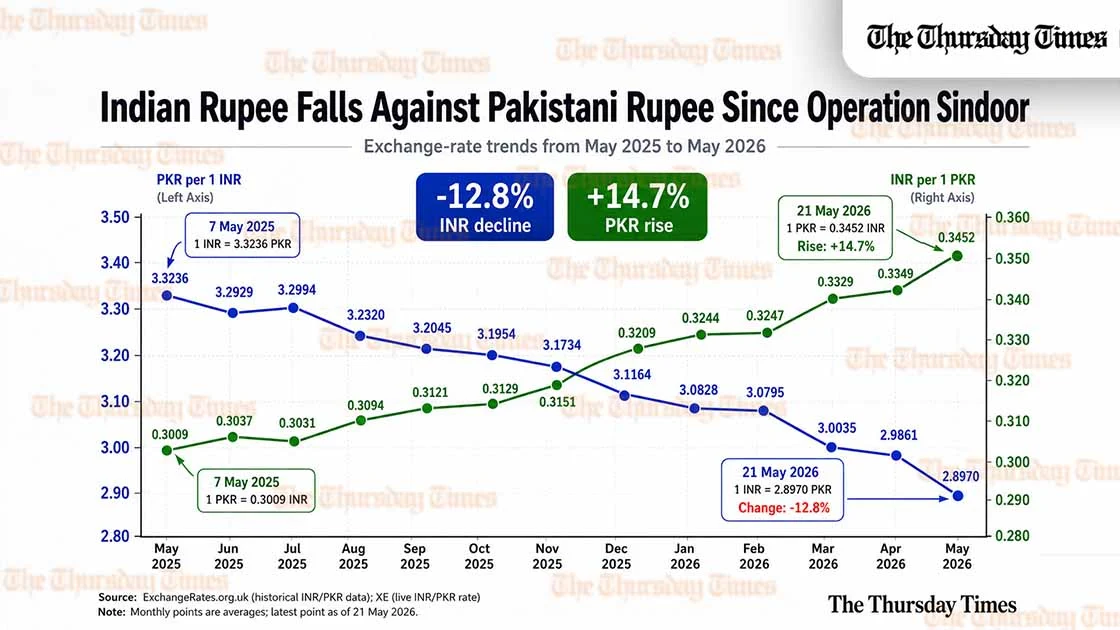
2025 সালের 7 মে অপারেশন সিন্দুর শুরুর দিন এক ভারতীয় রুপি দিয়ে প্রায় 3.32 পাকিস্তানি রুপি কেনা যেত। 2026 সালের মে মাসে এসে তা নেমে দাঁড়িয়েছে প্রতি ভারতীয় রুপিতে প্রায় 2.90 পাকিস্তানি রুপিতে, অর্থাৎ অপারেশন সিন্দুর শুরুর পর থেকে প্রায় 13 শতাংশ পতন। বারো মাসে এই অবমূল্যায়ন 12 শতাংশের বেশি, যার 6.8 শতাংশই ঘটেছে শুধু 2026 সালে।
পরিবর্তনের নেপথ্যের সংখ্যা
বিনিময় হারের তথ্য একটি সরল চিত্র তুলে ধরে। 2025 সালের 7 মে অপারেশন সিন্দুর শুরুর দিন এক ভারতীয় রুপির মূল্য ছিল প্রায় 3.32 পাকিস্তানি রুপি। 2026 সালের মে মাসে তা নেমে এসেছে প্রতি ভারতীয় রুপিতে প্রায় 2.90 পাকিস্তানি রুপিতে। মার্কিন ডলারের বিপরীতেও ভারতীয় রুপি টানা চাপের মুখে রয়েছে। সাম্প্রতিক লেনদেনের দিনগুলোতে প্রতি ডলারে 96.47 রুপির রেকর্ড সর্বনিম্ন অবস্থানে পৌঁছেছে, ফলে 2025 এবং চলতি বছর, দুই বছরই এশিয়ার সবচেয়ে খারাপ ফলাফলকারী মুদ্রা এটি।
২০২৩ ও ২০২৪ সালের বেশির ভাগ সময় ধরে লাগামহীনভাবে পতনের মুখে থাকা পাকিস্তানি রুপি আইএমএফ (IMF) কর্মসূচি ও রাজস্ব সুসংহতকরণ পদক্ষেপের আওতায় উল্লেখযোগ্যভাবে স্থিতিশীল হয়েছে। পাকিস্তানে মূল্যস্ফীতি ২০২৫ সালে ৪.৫ শতাংশে নেমে এসেছে, যা সাম্প্রতিক বছরগুলোর অতিমূল্যস্ফীতির শীর্ষ পর্যায়ের তুলনায় অনেক কম। পাকিস্তানি মুদ্রার স্থিতিশীলতা ও ভারতীয় মুদ্রার দুর্বল হয়ে পড়ার সম্মিলিত প্রভাবে এমন এক উল্টো চিত্র তৈরি হয়েছে, যা বারো মাস আগে খুব কম বিশ্লেষকই অনুমান করেছিলেন।
ভারতীয় রুপি কেন দুর্বল হয়েছে
ভারতীয় রুপির পতনের একাধিক কারণ রয়েছে, যা পাকিস্তানের সঙ্গে দ্বিপক্ষীয় সম্পর্কের গণ্ডি ছাড়িয়ে বহুদূর বিস্তৃত। বৈশ্বিক পণ্যমূল্য বৃদ্ধি এবং পশ্চিম এশিয়ায় দীর্ঘস্থায়ী উত্তেজনার মধ্যে বিদেশি বিনিয়োগকারীরা উদীয়মান বাজার থেকে সরে আসায় ২০২৬ সালে ভারত থেকে শেয়ারবাজারের অর্থ বহিঃপ্রবাহ আনুমানিক ২৩ বিলিয়ন ডলার ছাড়িয়ে গেছে। ভারতের রাষ্ট্রায়ত্ত ব্যাংকগুলো রুপিকে সহায়তা দিতে ডলার বিক্রি করছে, যা স্বাভাবিক শক্তির নয়, বরং হস্তক্ষেপের লক্ষণ। মানিকন্ট্রোলের তথ্য অনুযায়ী, বহু বছরের মধ্যে প্রথমবারের মতো বাজার মূলধনের বিচারে বিশ্বের শীর্ষ ১০০ তালিকাভুক্ত প্রতিষ্ঠানের মধ্যে ভারতের একটি কোম্পানিও নেই, যা দেশীয় শেয়ারবাজারে বিক্রির চাপ কতটা গভীর ক্ষত তৈরি করেছে তা তুলে ধরে।
প্রধানমন্ত্রী নরেন্দ্র মোদি যাকে “কৃচ্ছ্রসাধন” অবস্থান বলে বর্ণনা করেছেন, তা এবং পরপর জ্বালানির দাম বৃদ্ধি ভারত সরকারের প্রতিক্রিয়ার অন্তর্ভুক্ত। এসব পদক্ষেপ রুপির পতন ঠেকাতে সামান্যই কাজে এসেছে। বিশ্লেষকেরা এই পতনের জন্য অর্থনৈতিক ব্যবস্থাপনার মৌলিক দুর্বলতার পাশাপাশি অপরিশোধিত তেলের ক্রমবর্ধমান দাম ও বিশ্বব্যাপী শক্তিশালী ডলারের বাহ্যিক চাপকেও দায়ী করেছেন।
| May 2025 (Operation Sindoor) | 1 INR = around 3.32 PKR |
| May 2026 | 1 INR = about 2.90 PKR |
| 12-month depreciation | Nearly 13 per cent |
| 2026 alone | 6.8 per cent fall |
| INR vs USD record low | 96.47 rupees per dollar |
| India Asia currency rank | Worst performing in Asia 2025 and 2026 |
What it means for Pakistan
For Pakistan, the reversal carries both symbolic and practical weight. Symbolically, a currency that was widely mocked as worthless during Pakistan’s near-default in 2023 is now outperforming the currency of what is considered one of the world’s fastest-growing major economies. Practically, the shift affects remittances, informal cross-border trade in border communities, and the relative purchasing power of citizens on both sides.
Pakistan’s economic stabilisation has come at a significant cost. IMF conditionalities, fuel price adjustments, and tax base expansion have squeezed household incomes. The country’s nominal GDP remains at approximately $410 billion, ranking 42nd globally, against India’s position as one of the world’s top five economies. The currency movement does not change that fundamental gap. What it does reflect is the relative direction of travel of two economies at a specific moment in time.
The context that gets left out
The exchange rate shift has generated significant social media commentary in Pakistan, with some graphics circulating online describing it as evidence of a broader economic reversal. That framing requires caution. Currency movements between two countries that do not directly trade in each other’s currencies, and where cross-border commerce is severely limited by political relations, carry less practical significance than movements against a reserve currency like the dollar. Both the Indian rupee and the Pakistani rupee are priced primarily against the US dollar, and their bilateral rate is a derived calculation rather than a market signal of direct economic competition.
What the data does confirm is that India’s currency has faced genuine structural pressure over the past twelve months, that Pakistan’s stabilisation programme has produced measurable results, and that the economic consequences of Operation Sindoor extended beyond the immediate military and diplomatic sphere into financial markets on both sides of the border.
What comes next
The direction of the rupee on both sides will depend heavily on factors largely outside bilateral control. For India, the trajectory of crude oil prices, the pace of foreign equity outflows, and the Reserve Bank of India’s intervention capacity will determine whether the rupee recovers or continues to slide. For Pakistan, the sustainability of the IMF programme, the outcome of the China visit by Prime Minister Shehbaz Sharif, and the impact of CPEC Phase II investment will shape whether the stabilisation holds.
The Thursday Times will continue to track the exchange rate and the broader economic picture on both sides of the border.
Sources: The Wire, GeniusWindow, Currency.Wiki, Trading Economics, IMF World Economic Outlook April 2026, Moneycontrol. Exchange rate data sourced from publicly available currency tracking services. The Thursday Times notes that INR-PKR bilateral rates are derived calculations and that both currencies are primarily priced against the US dollar in international markets.