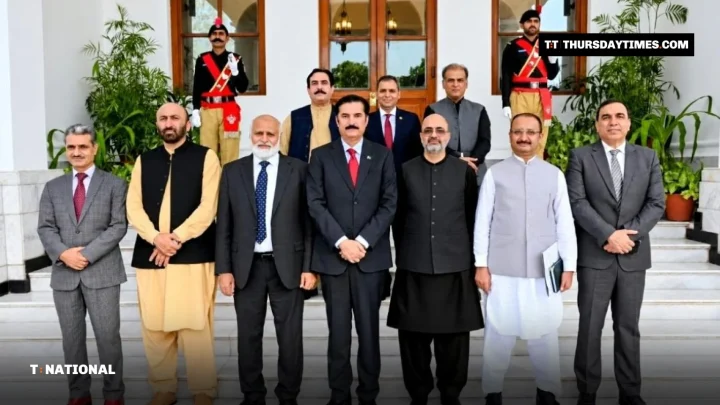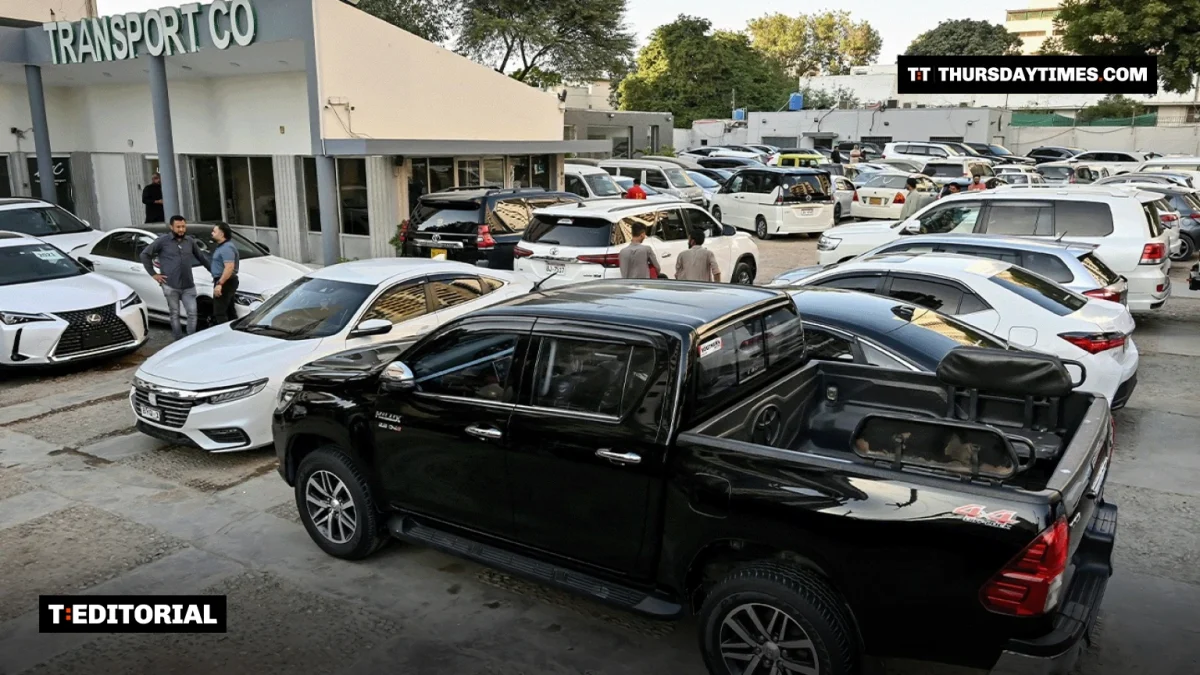
For as long as most Pakistanis can remember, buying a car has meant paying more for less. The new auto policy announced in Islamabad on Saturday promises to change that: lower prices for everything but luxury models, tariffs that fall every year for five years, a hard push towards electric vehicles and 45 safety standards that cars made here and cars shipped in second-hand will both have to meet. It is the most ambitious reset of the industry in a generation. Whether it becomes more than a news conference depends on three things the government has not yet shown: the dates, the enforcement and the sums.
Start with what deserves praise. Information Minister Attaullah Tarar said plainly that decades of protectionist tariffs had failed to bring innovation or value addition to the local industry. That is an unusual admission from any government, and a correct one. Protection was meant to nurture an industry that would one day stand on its own feet. Instead it produced a small number of assemblers selling a small number of models at high prices, with features that buyers in neighbouring markets take for granted offered here as extras, if at all.
The policy’s answer is a five-year glide path. Duties on fully built imported cars, on assembly kits and on components will fall every year until, in the words of Haroon Akhtar Khan, the prime minister’s adviser on industries, tariffs become competitive. Carmakers that export will earn rebates; those that do not meet their export and localisationMaking more of a car’s parts inside Pakistan instead of importing them in kits. Higher localisation means more local jobs and a smaller import bill. targets will pay penalties. Electric vehicles get the lowest taxes, the cheapest finance and the most help. And every vehicle on the road is meant to be safer.
The new auto policy in five numbers
Safety cannot be the last pillar built
Of the policy’s six pillars, safety matters most and costs the least to explain. Pakistan’s roads kill people in numbers that the official figures barely capture: the World Health Organization’s estimates run many times higher than police counts, because most crashes are never fully recorded. Behind every one of those deaths is a car, a bus or a motorcycle, and very often a vehicle sold without the basic protections that the rest of the world made compulsory years ago.
The 45 standards are to follow WP.29The United Nations World Forum for Harmonization of Vehicle Regulations, which sets common international rules on brakes, seat belts, airbags, crash protection, lights and much more., the United Nations forum whose vehicle rules are used across Europe, Japan and much of Asia. Khan promised that Pakistan’s cars would be “the world’s safest vehicles — both manufactured and used”. That is a large claim. It will be judged not on Saturday’s promise but on the first car that fails a test and is kept off the market.
That is where the policy is thinnest. A standard is only as strong as the body that checks it. Pakistan needs an independent authority that tests vehicles, publishes the results, and has the power to stop a model from being sold, whether it rolls off a line in Karachi or arrives at the port from Japan. It needs a published list of all 45 standards, with a date against each one, so that buyers know what they are entitled to and manufacturers know what they must deliver. Without those, the safety pillar will become what such pledges have become before: a paragraph in a policy document, and a set of optional extras in the showroom.
“A safety standard is only as strong as the body that checks it.”
Second-hand imports deserve particular care. Applying the same standards to used cars is right, and it closes a door through which older, less protected vehicles have long entered the country. But the rules must be enforced at the port with the same seriousness as at the factory gate. Families who save for years to buy a used import should not discover after the fact that its airbags were removed, or that its brakes were never meant for the roads it now drives on.
The electric bet
The electric vehicle package is generous, and in parts it is clever. Pure electric cars would pay 1 per cent sales tax, range-extended models 6 per cent and hybrids 9 per cent. Electric cars priced up to $50,000 would pay no capital value tax, withholding tax or federal excise duty. Banks could lend up to Rs10 million for an electric vehicle, over five years. Charging equipment would pay 1 per cent sales tax and no customs duty, and the government would cover the viability gapThe shortfall between what a project earns and what it needs to be worth building. Here, the government would pay charging stations the difference until enough electric cars use them. for charging stations until demand catches up.
Proposed sales tax by type of vehicle
The new rates are proposals and need the International Monetary Fund’s approval.
There is evidence that this kind of help works when the product is affordable. Sales of electric two-wheelers rose to 240,000 in 2025-26 from 60,000 the year before, after the New Energy Vehicle Policy 2025-30 was launched. That is a fourfold jump in a single year, and it happened at the bottom of the market, among people who ride to work, not among the few who can afford a new sedan.
Electric two-wheelers sold in Pakistan
Cars are harder. An electric car is still far beyond the reach of most families, even with lower taxes, and it is only as useful as the electricity behind it. A household that loses power for hours at a time cannot rely on charging at home, and a highway charger that sits idle during a shutdown is no use to anyone. If the government wants 30 per cent of new vehicles to be electric by 2030, its energy ministry will have as much to do with the result as its industries ministry. The power grid has to be part of this policy, not a separate conversation.
The tax rates also come with a large condition: they are “subject to approval” from the International Monetary Fund. That is honest, and it is also a warning. Buyers and investors make decisions on announced rates. If the final figures change after the fund has its say, the government should explain why, and quickly, rather than leave the market guessing.
Export or pay
The most important change may be the least noticed. Localisation is to become compulsory, with targets for each manufacturer. Carmakers that export would get a 5 per cent duty drawback on local taxes and levies, rising by up to a further 10 per cent as exports grow, but only if they meet both their export and their local manufacturing targets. “But if you do not achieve the targets, a penalty will be imposed as well,” Khan said.
That is the right bargain. For decades the industry has been asked to export and promised to localise, and the country has received neither in meaningful measure. Tying rewards to results, and attaching a cost to failure, is how most successful car-making nations built their industries. The test is enforcement. The targets for each company should be published, and so should each company’s results, every year. If the penalties are quietly waived the first time a large manufacturer misses its numbers, the policy will have taught the industry the same lesson as every policy before it.
Parts makers are worried, and their worry is real. The small and medium firms that supply bumpers, seats, wiring and castings employ hundreds of thousands of people, and falling tariffs on imported components will expose many of them to competition they have never faced. The government should not slow the reform to protect them, because protection is what produced the problem. But it should offer them a path: cheaper credit to upgrade machinery, testing laboratories they can share, and early sight of the export contracts that the policy hopes to create. A reform that turns skilled workers in Lahore and Karachi into casualties will not keep its public support for five years.
“For decades the industry has been asked to export and promised to localise, and the country has received neither.”
Who pays
Because Pakistan is in an IMF programme, the incentives are meant to be revenue-neutral. The money is to come from petrol and diesel vehicles above 1,000cc, and it will fund the export rebates and spending on research and development. Small petrol cars under 1,000cc are untouched, a sensible protection for the many people who, as Tarar said, still depend on them.
But the families who drive a 1,300cc or 1,500cc car are not all wealthy. Many of them are the same middle class the policy says it wants to help. If prices for their cars rise while prices for electric models and imports fall, they deserve to know by how much, and why. The government should publish the arithmetic: how much revenue it expects to lose from each incentive, how much it expects to raise from each levy, and over what period the two balance. A policy that asks one group of buyers to pay for another group’s discount should be able to show its working.
What the policy needs next
Tarar said cabinet approval was still under way, and that the government had spoken early to end speculation. That is reasonable. Speculation in a market as thin as Pakistan’s car market freezes sales, and buyers who expect prices to fall will wait. But the same logic argues for speed now. Every week between the announcement and the final rules is a week in which showrooms are quiet and assemblers hold back orders.
The government should do four things before the year is out. It should put the tariff schedule for all five years into law, so that no future budget can quietly reverse it. It should publish the 45 safety standards with an enforcement date for each, and name the authority that will test cars and stop unsafe ones from being sold. It should publish each manufacturer’s localisation and export targets, and report against them every year. And it should set out the full fiscal arithmetic of the incentives, so that taxpayers can see who gains and who pays.
Pakistan has written good auto policies before. What it has not done is see one through. This one starts from an honest diagnosis, and it asks the right questions of the right people. If the government holds its nerve on tariffs, refuses to waive its own penalties and treats safety as a duty rather than a slogan, the next generation of Pakistani drivers could buy cheaper, cleaner and safer cars than their parents ever could. That would be worth a news conference. It would be worth a great deal more if it reached the showroom floor.