LONDON (The Thursday Times) — Russian naval activity around the United Kingdom rose by 41 per cent in the first nine months of the year, a British defence minister said, as London announced £90 million for underwater drones and sensors to guard undersea cables and hunt submarines in the North Atlantic.
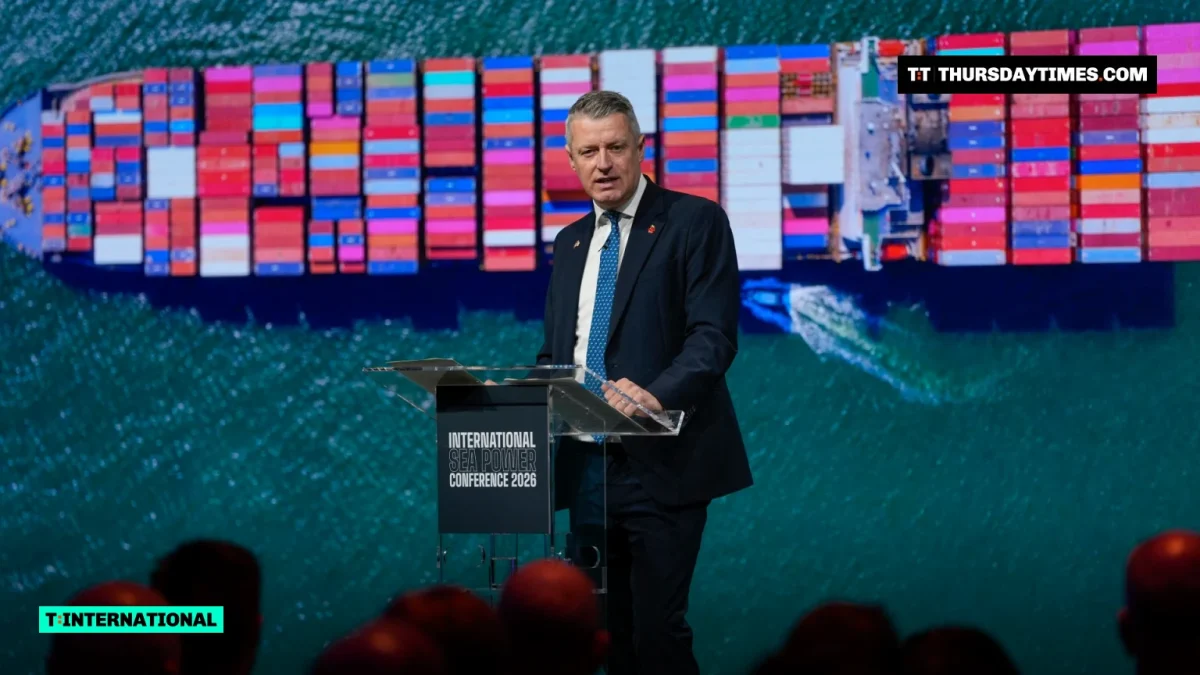
Luke Pollard, the minister for defence readiness, called the rise “a huge increase” as he spoke at the Royal Navy’s International Sea Power Conference, held this week aboard the aircraft carrier HMS Prince of Wales in Oslo.
He said Russian spy ships such as the Yantar had sailed near British waters this year trying to build “an increased picture of our critical national infrastructure”, including “mapping our undersea cables”. Moscow has denied such claims in the past and accused Britain of “anti-Russian alarmism”.
A net under the Atlantic
The new system, called Atlantic Net, will be built under a framework with the Hampshire company Ocean Infinity Solutions, the Ministry of Defence said. It will link sensors and uncrewed vessels into a single surveillance service, giving submarine-hunting warships and Astute-class submarines earlier warning of threats, including in the Greenland-Iceland-UK gap.
“The threats beneath the North Atlantic are changing, and we are changing with them,” Pollard said. Britain is also leading a 10-nation Northern Navies Initiative with the Netherlands and Nordic and Baltic states, under which British sea drones are meant to work with allied warships.
Ireland’s exposed waters
The concern is sharpest next door. About 75 per cent of transatlantic subsea cables pass through or near Irish waters, according to the Irish government, and the country hosts major data centres for American technology companies.
Ireland, which is militarily neutral, outside NATO, and has no submarines, has recently given its navy powers to board and inspect suspicious vessels. Defence Minister Helen McEntee has named “vessels linked to the Russian shadow fleet” as a priority threat in Irish waters. In November 2024 the Irish Navy escorted the Yantar out of Ireland’s exclusive economic zone after it was monitored near undersea infrastructure in the Irish Sea.
Daniel Mulhall, a former Irish ambassador to Washington, said no country could guarantee the cables’ safety alone, but that collective effort could strengthen protection “from malign actors that might wish to interfere with them”.