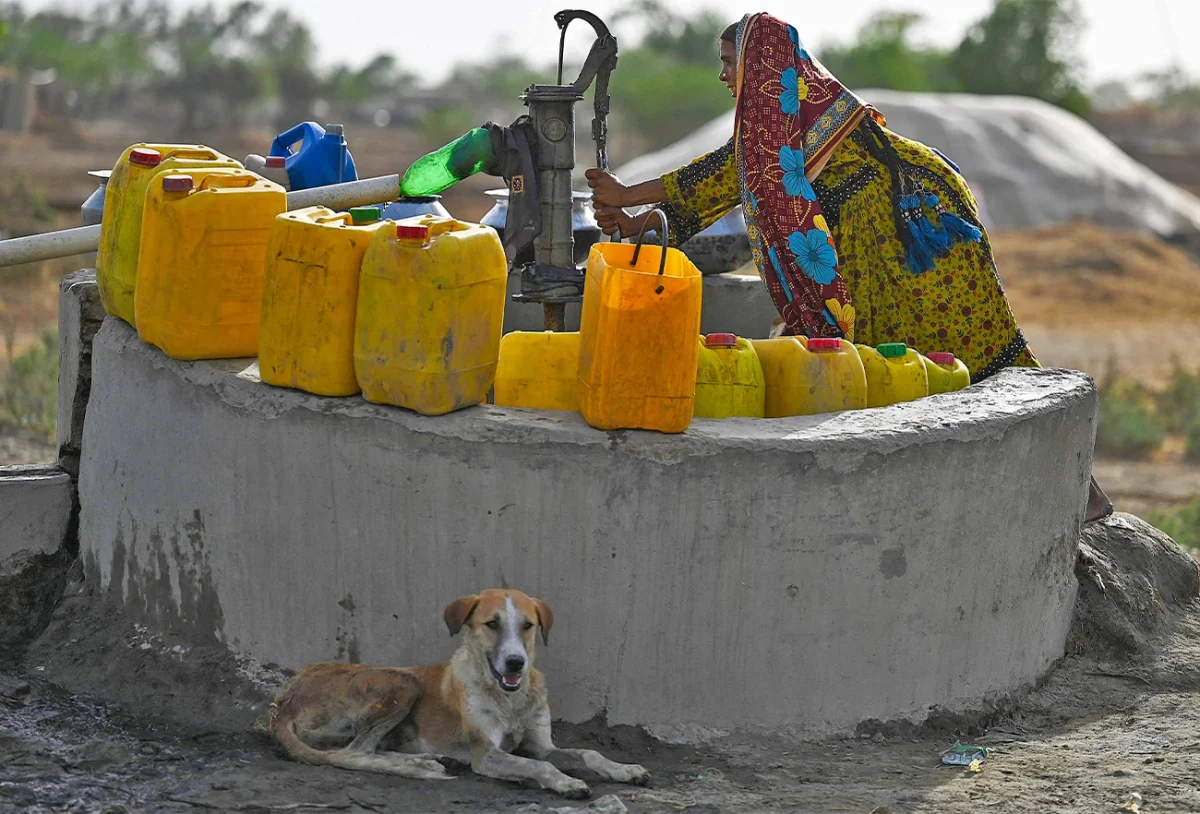
ISLAMABAD (The Thursday Times) — The World Bank has approved $300 million to bring safe drinking water, sanitation, and hygiene services to 1.5 million people in rural Sindh, where it says more than half of children under five are stunted.
The bank’s Board of Executive Directors approved the financing on Friday for the first phase of the Sindh Transformational Accelerated Rural Water Supply, Sanitation and Hygiene Services Project, known as STAR WASH-1. It is the first stage of a 10-year programme for the province.
The first phase will cost $540 million in all. Besides the World Bank’s $300 million, the Asian Development Bank is contributing $150 million and the Sindh government $90 million.
“Stunting is among Pakistan’s most severe and persistent human capital challenges, and unsafe water, sanitation and hygiene is a major underlying driver,” said Bolormaa Amgaabazar, the World Bank’s country director for Pakistan.
According to the bank, unsafe drinking water and poor sanitation expose young children to repeated bouts of diarrhoea, which stop their bodies from absorbing nutrients and hold back their physical and mental growth.
The money will pay for solar-powered water supply schemes, upgraded sanitation, and wastewater systems in selected rural areas, along with a campaign to change hygiene habits at home and in communities. The project aims to halve contamination of water at the point where people use it and to connect 80 per cent of the targeted rural communities to a professional water and sanitation provider.
It is expected to create more than 14,000 jobs. It will also turn the Sindh People’s Housing for Flood Affectees, a government-owned, not-for-profit body set up after the 2022 floods, into a dedicated rural water and sanitation utility, so that the new services are run professionally and can pay their way.
Rural Sindh has been hit by drought as well as floods. Earlier this week, the provincial government ordered a survey of drought damage in Tharparkar and Umerkot, where officials say most crops have failed.