DHAKA (The Thursday Times) — Bangladesh’s garment manufacturers have threatened to walk out of minimum-wage negotiations and shut factories indefinitely unless the vandalism that has accompanied weeks of worker protests stops, raising the stakes in a dispute over the industry that earns four-fifths of the country’s export income.
The Bangladesh Garment Manufacturers and Exporters Association (BGMEA) and the Bangladesh Knitwear Manufacturers and Exporters Association (BKMEA) said on Saturday that they were questioning whether to stay in the talks without any assurance that factories would be protected. “If the situation persists, we must reconsider,” BGMEA president Mahmud Hasan Khan told a news briefing in Dhaka.
Khan said factories that had been unable to keep working because of the unrest would stay closed indefinitely from Sunday under the “no work, no pay” provision of Bangladesh’s labour law, Section 13(1) of the Labour Act, which lets owners suspend operations without paying wages.
Some 147 factories were shut on Saturday across Savar, Ashulia, and Gazipur, the main manufacturing hubs on the edge of the capital. Managers at several of the closed units in Ashulia posted notices announcing indefinite shutdowns. In Gazipur, workers blocked traffic for more than an hour before law enforcement officers dispersed them.
A 140% demand
The government formed a Minimum Wage Board of employer and worker representatives on November 1, and it is due to meet again on Monday. Workers want the monthly minimum raised to 30,000 taka (about $240) from 12,500 taka, the level set in December 2023, an increase of 140%. Some labour groups have put the figure at 32,000 taka. Employers have yet to table a formal counter-offer, and the board is expected to announce a new wage by December.
Workers say food, rent, transport, and healthcare costs have outrun their pay, with inflation at around 8%. The unrest began in October and has turned violent at times, with protesters torching police vehicles and damaging factories during clashes this month. On Friday, union leaders appealed for calm. “Do not get involved in any subversive activities that could jeopardise the ongoing work of the wage board,” union leader Meer Abul Kalam Azad told workers.
Mazharul Islam, general manager of S-21 Apparels in Ashulia, said about 95% of his workers had turned up on Thursday before a small group began shouting and forcing others to leave. “They vandalised the facility, and we had to announce its closure to protect the factory,” he said.
Christmas orders at risk
Bangladesh is the world’s second-largest garment exporter after China. The industry earns about $38 billion a year, employs more than four million people, and makes clothes for brands such as Levi Strauss and VF Corp, the owner of Vans, Timberland, and The North Face. More than 4,500 factories are registered with the two trade bodies.
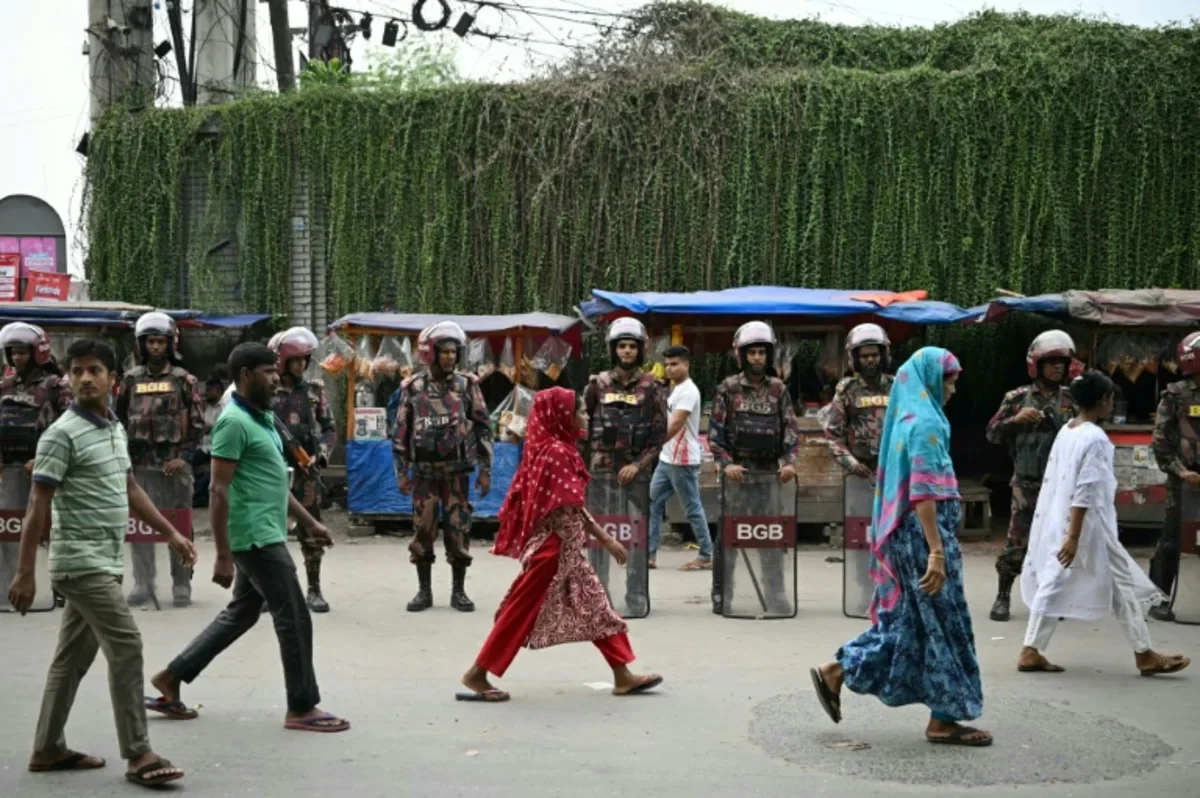
The dispute comes in the run-up to Christmas, the busiest shipping season of the year. Islam said the war in the Middle East had already added about 10 days to delivery times, “and now with this unrest… the sector is surely under threat”. Border Guard Bangladesh and police have stepped up patrols across the industrial zones.
The labour standoff comes as Dhaka says it has completed the legal work for the return of former prime minister Sheikh Hasina from India.