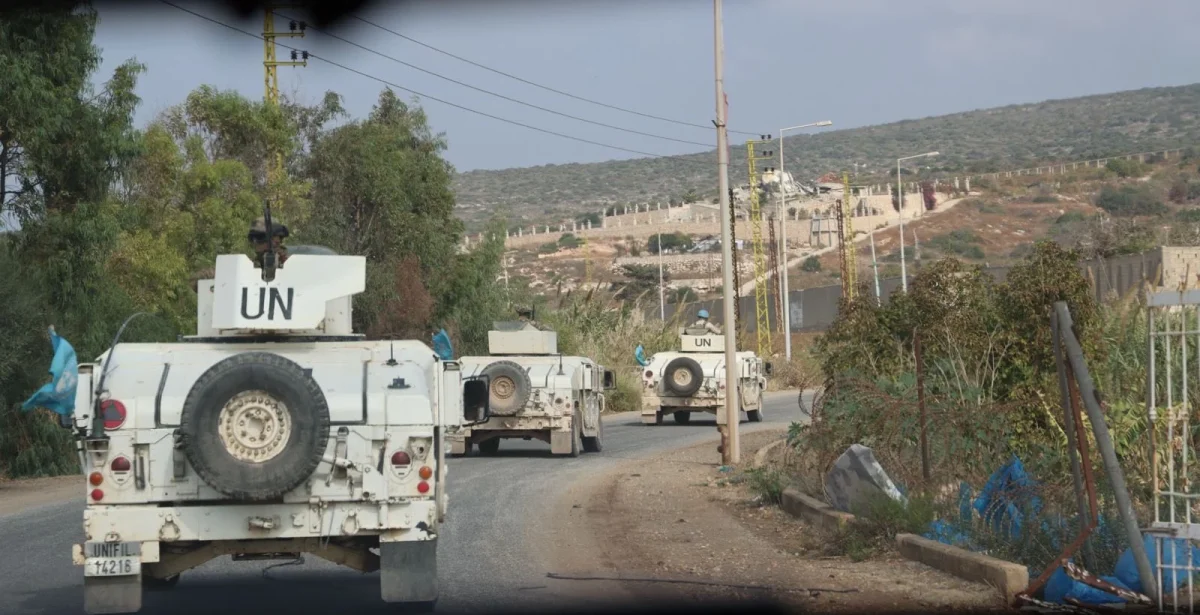
BEIRUT (The Thursday Times) — The US ambassador to the United Nations, Mike Waltz, is due in Beirut early next week for talks on what will replace the UN peacekeeping force in southern Lebanon when its mandate ends on December 31, as Lebanese officials warn of a security vacuum along the border with Israel.
Waltz is scheduled to meet President Joseph Aoun, Prime Minister Nawaf Salam, and Parliament Speaker Nabih Berri on Monday and Tuesday, Lebanese officials said.
Lebanon’s preferred option is still an extension of the mandate of the UN Interim Force in Lebanon, known as UNIFIL, but Washington opposes that, the officials said. Failing an extension, Beirut hopes for a new force under the UN umbrella, and it rejects any direct military coordination between the Lebanese and Israeli armies.
“No formula has been agreed so far, and we hope Waltz will bring some developments on this front,” one Lebanese official said. “There is agreement on the need to avoid an international security vacuum in the south, and Lebanon is counting on European pressure to help resolve this crisis.”
Secretary of State Marco Rubio said on Monday that he had discussed the issue with French President Emmanuel Macron, and that whatever replaces UNIFIL “doesn’t have to be a military mission, it could be a civilian mission.”
“We need a verification system trusted by everyone and trusted by both sides that both sides are complying with their obligations under the agreements that are in place,” Rubio said.
The administration is weighing several proposals, including a mechanism modelled on the Multinational Force and Observers, which has monitored the Egypt–Israel peace treaty in Sinai since 1982, according to regional reports. Unlike UNIFIL, that force was created under a peace treaty between the two sides.
Foreign ministers of the Group of Seven agreed on Tuesday on “the need to avoid a security void” in Lebanon and backed moving “quickly toward a new security architecture” once the mandate expires. A European diplomat said a transitional arrangement using UNIFIL troops was among the options, but warned that it could need a Security Council resolution and so run into an American veto. European governments are also pressing for an international coalition to support the Lebanese army as it works to disarm Hezbollah.
A force that has served since 1978
Under US pressure, the Security Council voted unanimously in August 2025 to extend UNIFIL’s mandate for a final time, to December 31, 2026, followed by a year for an orderly withdrawal. The force has been deployed in the south since 1978. It said on November 5 that peacekeepers from 45 countries would carry on monitoring the area, liaising with the parties, and supporting the Lebanese army until the mandate ends.
Washington argues that the mission failed, and Israel says it did not stop Hezbollah from building tunnels and other military infrastructure near the border. Lebanon says parts of the south remain under Israeli occupation, and Israeli strikes and the demolition of homes with explosives were reported in southern towns again on Saturday.
Beirut and Israel signed a US-sponsored framework agreement in late June that provides for a gradual Israeli withdrawal, the deployment of Lebanese troops in designated pilot zones, and the disarmament of Hezbollah. Beyond progress in three pilot zones over the summer, implementation has been slow, and two meetings between the countries’ military delegations in Florida produced no announced progress.
Weapons seized in Beirut’s southern suburbs
The Lebanese army, which is expected to take over security in the south, said on Friday that its intelligence directorate had seized a large quantity of weapons and ammunition from a warehouse in the Musharrafieh area of Beirut’s southern suburbs, a Hezbollah stronghold, and had arrested a Lebanese citizen identified by the initials A.A.
The army said the raid followed the monitoring of weapons transfers and trafficking. It did not name the owner or link the weapons to any group. Mustafa al-Asaad, a military affairs observer who examined photographs of the haul, said it looked more like the stock of an experienced arms dealer than a military stockpile, and that it was unlikely to be part of shipments from Iran.
In March, the government banned Hezbollah’s military and security activities and ordered the group to hand its weapons to the state. Hezbollah has refused to disarm while Israeli forces remain on Lebanese territory. The United States has given the Lebanese army more than $3 billion in military aid since 2006, according to the State Department. More than a million people in Lebanon face acute hunger, UN agencies warned this week.