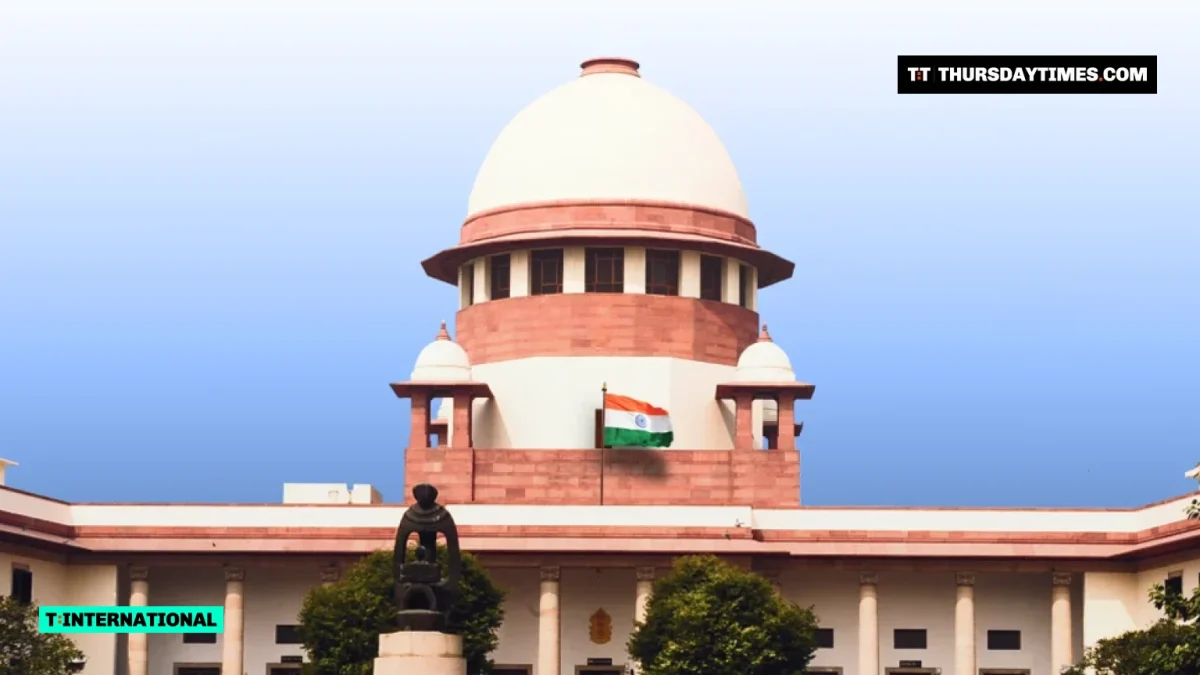
NEW DELHI (The Thursday Times) — India’s Supreme Court on Monday upheld the power of the National Company Law Appellate Tribunal (NCLAT) to send an approved insolvency resolution plan back to the lenders, and dismissed the appeals against its 2022 order on a Rs 2,962 crore bid for 13 Videocon group companies.
A bench of Justice PS Narasimha and Justice Alok Aradhe announced the operative part of the judgment in court. “We have upheld the power of the NCLAT to send the approved resolution plan to the CoC,” the bench said, adding that all the appeals were dismissed for the reasons it had assigned. The bench also laid down guidelines on how that power may be used. The detailed judgment is awaited.
A 95 percent haircut
Twinstar Technologies had offered to take over the 13 Videocon companies under the Insolvency and Bankruptcy Code. The National Company Law Tribunal in Mumbai approved its Rs 2,962 crore plan on 8 June 2021. Admitted liabilities were about Rs 65,000 crore, which meant a haircut of more than 95 percent for creditors. Lenders holding 95.09 percent of the committee of creditors’ voting share had backed the plan.
Bank of Maharashtra, IFCI, and SIDBI challenged the approval before the NCLAT. They objected to the amounts set aside for them and to a proposal to pay them through non-convertible debentures that would be redeemed after about five years.
What the appellate tribunal found
On 5 January 2022 the NCLAT set the approval aside and returned the plan to the committee of creditors. It held that the plan did not meet the safeguards the Code sets for payments to dissenting financial creditors, who cannot be made to accept securities in place of the money due to them. It also noted discrepancies between the figures in the resolution professional’s compliance certificate and the distribution calculations.
The NCLAT further found that the Competition Commission of India’s approval had not been obtained before the creditors voted. Statutory compliance, it said, cannot be treated as a matter of the creditors’ commercial wisdom. Lenders representing 94.98 percent of the voting share, who had first backed the plan, later asked for it to be reconsidered, citing the steep haircut. Twinstar then appealed to the Supreme Court.
Why it matters
Courts have long treated the commercial wisdom of the creditors as largely beyond judicial scrutiny once a plan is approved. The ruling confirms that this deference has limits: where a plan falls short of statutory requirements, the appellate tribunal can return it to the creditors instead of simply approving or rejecting it. The decision opens the way for Videocon’s lenders to revisit the plan, and the guidelines are expected to shape future challenges once the full judgment is released.